
Why Major Church Decisions Need Spiritual Preparation
Church leaders often know a difficult decision is coming long before the congregation does.
Attendance has been falling. Giving is tightening. A building has become more burden than blessing. A neighborhood has changed. A pastor is leaving. A merger, replant, relaunch, or major ministry shift is moving from possibility to necessity.
The temptation is to spend months solving logistical questions and then present the congregation with a polished proposal.
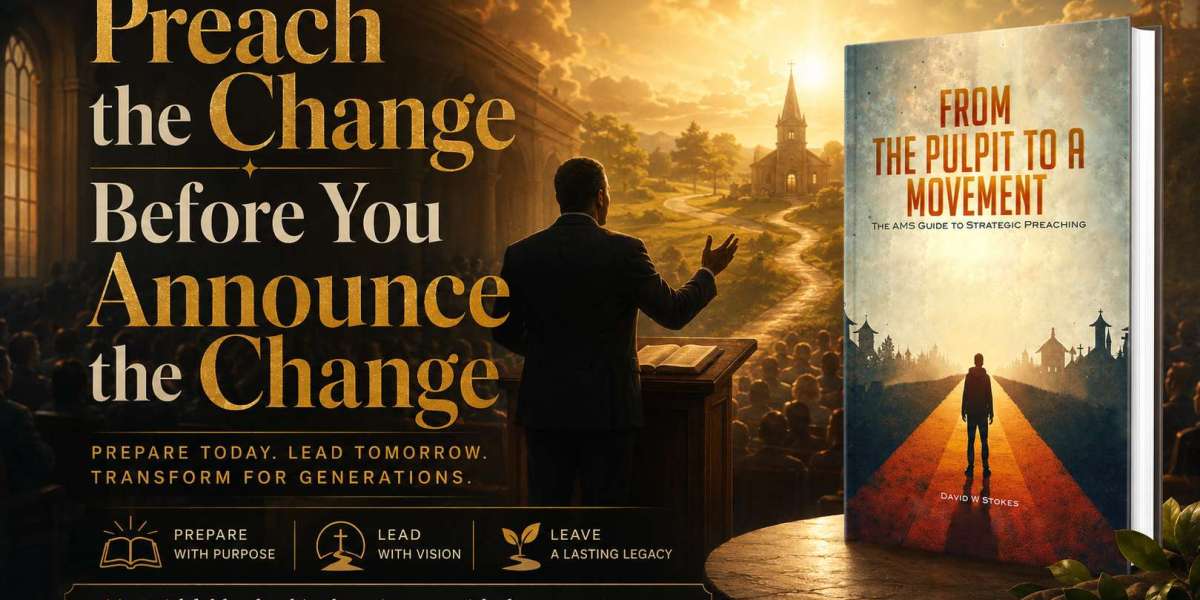
David W. Stokes argues for a different order in From the Pulpit to a Movement. Before a church is asked to vote on major change, it should be given time to think, pray, repent, heal, rediscover its mission, and remember what Scripture says about the kind of people God calls it to be.
In other words, do not wait until decision day to begin spiritual preparation.
The Calendar Can Become a Leadership Tool
One of the manuscript’s most distinctive sections is a model strategic preaching calendar for renewal, revitalization, and replanting.
At first glance, a preaching calendar sounds administrative. In Stokes’s framework, it is pastoral architecture. The sequence of themes is designed to help a congregation move through change in an order that respects both theology and human reality. It gives the congregation language for change before change becomes a loyalty test.
People rarely embrace a major transition simply because leaders have a strong argument. They interpret change through trust, memory, fear, identity, relationships, and spiritual maturity. A church that has not dealt with division may hear a replant proposal as another threat. A church that has forgotten its mission may evaluate change only by what it might lose. A congregation exhausted by conflict may not have enough emotional energy to imagine a different future.
Strategic preaching does not manipulate those emotions. It creates space for Scripture to address them before a decision forces them to the surface.
Start with Unity, Not the Proposal
Stokes’s model begins with unity.
That choice is significant. Leaders who are eager to move may want to begin with urgency: the numbers are bad, the community is changing, the building is aging, or the current model is unsustainable.
A church first needs to remember how Christians are called to live together.
A series from Philippians can address humility, sacrificial love, shared purpose, and the mind of Christ. The goal is not artificial harmony or the suppression of honest disagreement. It is to establish a biblical way to disagree and decide.
Unity does not mean everyone prefers the same option. It means the congregation learns to value the mission and one another more than winning.
Repair the Altar Before Building the Future
The next movement in Stokes’s calendar emphasizes spiritual renewal and repentance, drawing on passages such as 1 Kings 18.
This is another important refusal to treat revitalization as a branding project.
Decline can have demographic, economic, leadership, and cultural causes, but the book insists that church renewal must also ask spiritual questions. Have prayer and dependence on God weakened? Has maintenance replaced the mission? Have unresolved conflicts hardened into culture? Has comfort become more important than obedience?
It is easier to blame the neighborhood than to ask whether the church stopped loving the neighborhood. It is easier to blame younger generations than to ask whether the congregation still knows how to make disciples. It is easier to blame leadership than to ask what every member has contributed to the current condition.
Repentance makes revitalization personal before it becomes organizational.
Recover the Mission Before Debating the Method
After unity and renewal, the model moves toward evangelism, discipleship, and the Great Commission.
Now the congregation is being reminded why it exists.
This matters because major change often becomes trapped in arguments about methods. Which service time? Which name? Which building? Which leadership model? Which program survives? Which tradition remains?
Those questions matter, but they are downstream from mission.
If a church recovers a shared conviction that it exists to make disciples, reach people, and participate in God’s Kingdom work, methods can be evaluated by a larger standard. The question changes from “Which option protects what I value?” to “Which option helps us obey what Christ has called us to do?”
Strengthen Faith for the Middle
Stokes also includes Psalms, doctrinal teaching, worship, and gratitude in the journey.
People need more than a reason to leave the old. They need spiritual resources for living in the uncertain middle between what was and what will be. Worship reminds a congregation that God is larger than the transition. Doctrine steadies identity when structures are changing. Gratitude helps people honor the past without becoming imprisoned by it.
A church can thank God for what a ministry, building, pastor, or tradition meant without believing faithfulness requires preserving it forever.
Gratitude is especially powerful before a difficult decision because it lowers the emotional pressure to choose between honoring history and embracing the future. Both can be possible.
The Closing Argument Comes Last
Only after this long process does Stokes envision a capstone message before a major decision such as a replanting vote.
By then, the final sermon is not introducing an idea from nowhere. It is gathering threads the congregation has already been living with: unity, repentance, mission, faith, doctrine, worship, gratitude, and obedience.
The preacher can review the journey and make a clear biblical case for the next step.
This is what the manuscript calls a kind of closing argument. The phrase is useful because a good closing argument does not create the evidence at the last minute. It helps people see how the evidence fits together.
Likewise, strategic preaching does not use one emotional Sunday to force a decision. It builds understanding over time.
Preaching Is Not a Substitute for Leadership
Stokes is equally clear that sermons alone are not enough.
Leaders must hold listening sessions, meet with key people, answer questions, address resistance, create practical plans, and communicate consistently outside the pulpit. A sermon can establish spiritual direction, but trust is often built in smaller rooms.
The strongest approach is integrated: preaching and leadership reinforce one another.
If the sermon calls for unity, the process should not silence dissent. If the message celebrates transparency, leaders should not hide important facts. If the church is asked to trust God, leaders should still do careful planning. Spiritual conviction and practical competence belong together.
A Better Way to Lead Through Change
The lasting value of Stokes’s preaching calendar is not that every church should copy the exact sequence. His larger point is that transformation has a spiritual pace.
Leaders should ask what a congregation must understand, surrender, recover, and practice before it can make a healthy decision.
That principle applies far beyond replanting. It can guide a pastoral transition, merger, mission initiative, leadership restructure, or season of recovery after conflict.
A church should not be ambushed by its future.
Preach the truths that will help people meet that future faithfully. Give them time to pray, wrestle, heal, remember, and act.
Then, when the decision arrives, it will not feel like the beginning of the conversation.
It will feel like the next step in a journey the church has already begun.