A Finch at the Window
During recovery from head and neck cancer, William “Bill” Allen began waking to a tapping sound at his bedroom window. He was weak, exhausted, and still living with the aftermath of aggressive treatment. At first, he wondered whether the sound was another strange side effect of medication. Then he pulled back the curtain and saw a bright yellow-gold finch.
The bird kept returning. Allen eventually called him Midas.
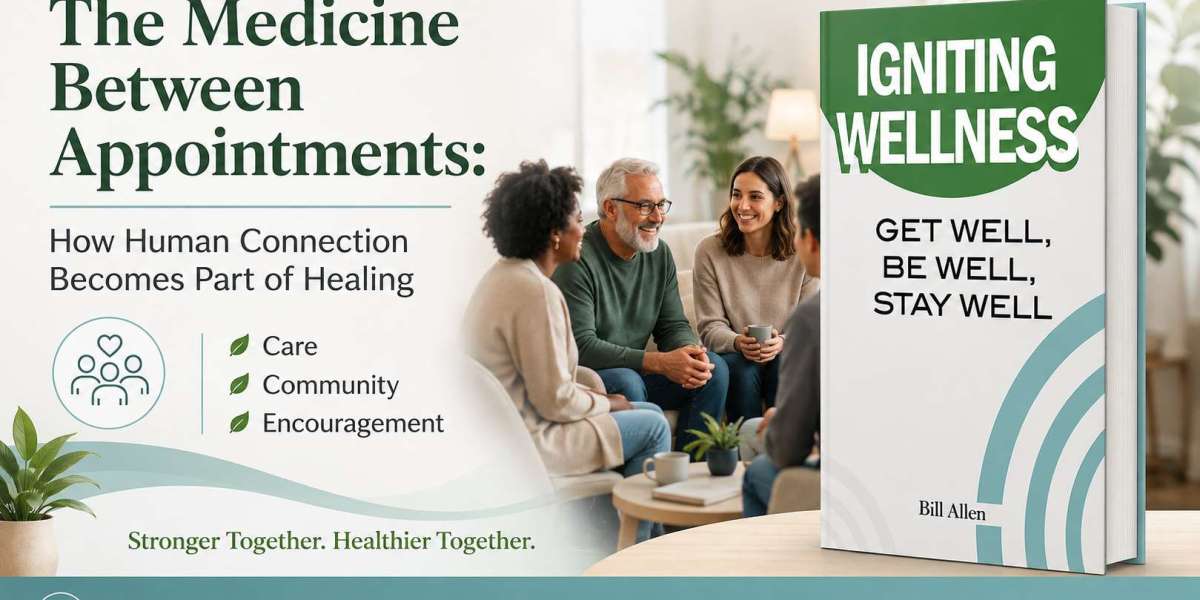
That small ritual became one of the quietest but most revealing images in Igniting Wellness: Get Well, Be Well, Stay Well. Midas did not deliver a diagnosis, change a prescription, or reverse the physical damage caused by chemotherapy and radiation. The bird simply appeared. Yet the visits lifted Allen’s mood, sharpened his gratitude, and gave him a moment of hope during a period when his body and confidence had both been battered.
That is the territory Allen’s book explores: the space between medical intervention and lived recovery. It asks who helps a person keep going after the procedure, the discharge papers, and the doctor’s departure.
The answer is people.
When Treatment Is Only Part of the Story
Allen does not argue that compassion replaces medicine. A severe heart attack required a life flight, catheterization, and a stent. Heart failure later required continuing cardiology care, defibrillators, medication, and a ventricular ablation. Cancer demanded radiation and chemotherapy with lasting effects.
Medicine kept him alive.
But survival did not automatically teach him how to live inside the life that remained.
After his heart attack, Allen faced fear that did not show up neatly on a monitor. He became afraid to sleep during certain hours after hearing frightening comments about ventricular tachycardia. He feared taking a shower after learning how another man had died. He struggled with the psychological shock of becoming a person with a disability while working professionally in vocational rehabilitation.
Clinical facts did not solve those moments. Family pushed him toward ordinary routines. Friends checked in. Colleagues wrote. Nurses reassured him. A friend connected him to another cardiac center when his care needed a different direction.
The practical lesson is easy to miss because it sounds simple: people influence whether another person feels alone while facing something frightening.
Visit: https://wellnessdelta.org/
The Human Tone of Healthcare
Some of the most memorable passages in Igniting Wellness are not about the complexity of disease. They are about tone.
Allen remembers clinicians whose words increased his fear and others whose manner helped restore his confidence. During his cancer journey, he encountered conflicting recommendations and communication that sometimes felt cold or insensitive. In contrast, Dr. Peter Levine offered something different: knowledge joined with personal understanding. Levine, who had faced his own serious illness, shared what Allen calls a “hope prescription," encouraging purposeful living, meaningful conversations, new goals, giving support, accepting support, and involvement in community.
The medical expertise mattered. So did the way it was delivered.
Allen describes this relationship with a metaphor. Drawing on Herbert Benson’s “three-legged health stool” of pharmaceuticals, surgery or procedures, and self-care, he proposes adding a fourth leg: “instinctive humanity.”
It is an effective phrase because it gives human connection structural weight. Compassion is not decoration placed around serious care. In Allen’s framework, it helps support the person who must endure, understand, and participate in that care.
The Cards He Could Not Throw Away
Perhaps the most persuasive evidence in the book is also the least technical: Allen saved his get-well cards.
Decades after his heart attack and cancer treatment, he returned to the messages sent by relatives, coworkers, friends, classmates, professional contacts, and people who simply wanted him to know he mattered. The notes range from prayerful to funny, practical to sentimental. Some offer rides. Some tell him to rest. Some tease him. Some say the workplace is not the same without him. Some simply say they are thinking about him.
Collected together, they become a record of social presence.
Allen’s insight is not that every cheerful sentence magically changes an outcome. In fact, his later Wellness Delta framework distinguishes between generic contact and support that feels deeply meaningful. What matters is authenticity, attention, follow-through, and the sense that another person has actually entered the situation rather than sent a routine phrase and disappeared.
That distinction is important for anyone who has ever stood awkwardly outside another person’s crisis wondering what to say.
You do not need perfect language.
You need to mean it.
Receiving Is Also a Form of Participation
There is another tension running through Allen’s story. He spent much of his professional life helping other people, particularly individuals with disabilities seeking employment and independence. Being useful was part of his identity. Serious illness forced him into the opposite position.
He had to receive.
That meant accepting rides, medical advocacy, food, company, phone calls, practical help, emotional reassurance, and sometimes the unwelcome but necessary insistence of people who knew he was pushing too hard.
For habitual helpers, that reversal can be uncomfortable. Yet Igniting Wellness treats receiving support not as passivity but as part of recovery. Accepting care allows relationships to become reciprocal. It also gives other people an opportunity to act on their concern rather than watch helplessly from a distance.
The book’s phrase “give to live” therefore works in two directions. We may strengthen ourselves by helping someone else, but we also strengthen community when we allow others to help us.
Wellness as a Shared Practice
By the final chapters, Allen turns his experiences into the Wellness Delta, a reflection system for both givers and recipients. Readers rate the impact of actions, communication, support, habits, care-team engagement, and other parts of the wellness journey.
The scoring tool is less interesting as arithmetic than as a habit of attention.
Who made you feel understood?
What kind of help actually mattered?
Did you ask questions?
Did you seek another perspective when needed?
Did someone listen without trying to control the conversation?
When you supported someone else, did you adjust your approach based on what that person needed?
These questions turn compassion from a vague virtue into something observable.
A More Complete Picture of Recovery
Igniting Wellness is ultimately not a story about defeating illness and returning untouched to an earlier version of life. Allen does not return untouched. He lives with the consequences of heart disease and cancer treatment. His body changed. His relationship with work changed. His understanding of vulnerability changed.
What also changed was his definition of wellness.
Wellness, in this book, is not the absence of every diagnosis. It is the continuing work of building a meaningful life with the body, circumstances, relationships, and choices available now.
That may be why the image of Midas stays with the reader. A small bird could not cure cancer. But it could interrupt a hard morning with beauty. A friend could not perform a cardiac procedure. But she could make a crucial phone call. A coworker could not repair damaged heart muscle. But a funny card could make a frightened patient laugh.
Healing has experts, machines, medicines, and protocols.
It also has people who show up.
Sometimes, the medicine between appointments is knowing that they will.