
Introduction – Why This Topic Matters Today
Enterprise networks are under unprecedented pressure. Hybrid work, cloud-first strategies, AI-driven applications, and real-time digital experiences have dramatically increased network complexity. Traditional network management approaches—largely manual, reactive, and tool-heavy—are no longer sufficient to support always-on business operations.
This is where the AI-Native Networking Platform emerges as a foundational shift rather than an incremental upgrade. Built with artificial intelligence at its architectural core, these platforms enable networks to become adaptive, self-learning, and self-healing. For organizations seeking agility, resilience, and operational efficiency, AI-native networking is rapidly becoming a strategic necessity, not a future aspiration.
Market / Industry Overview – Understanding the AI-Native Networking Domain
An AI-Native Networking Platform is designed with embedded AI/ML models that operate across the entire network lifecycle—design, deployment, monitoring, optimization, and remediation. Unlike traditional solutions that bolt AI onto legacy systems, AI-native platforms continuously learn from telemetry, traffic patterns, and user behavior to automate decision-making in real time.
From a business perspective, this domain is gaining strong momentum as enterprises prioritize digital employee experience (DEX), application performance, and network resilience. As networks become more software-defined, distributed, and cloud-integrated, AI-native networking plays a critical role in aligning network operations with broader digital transformation initiatives.
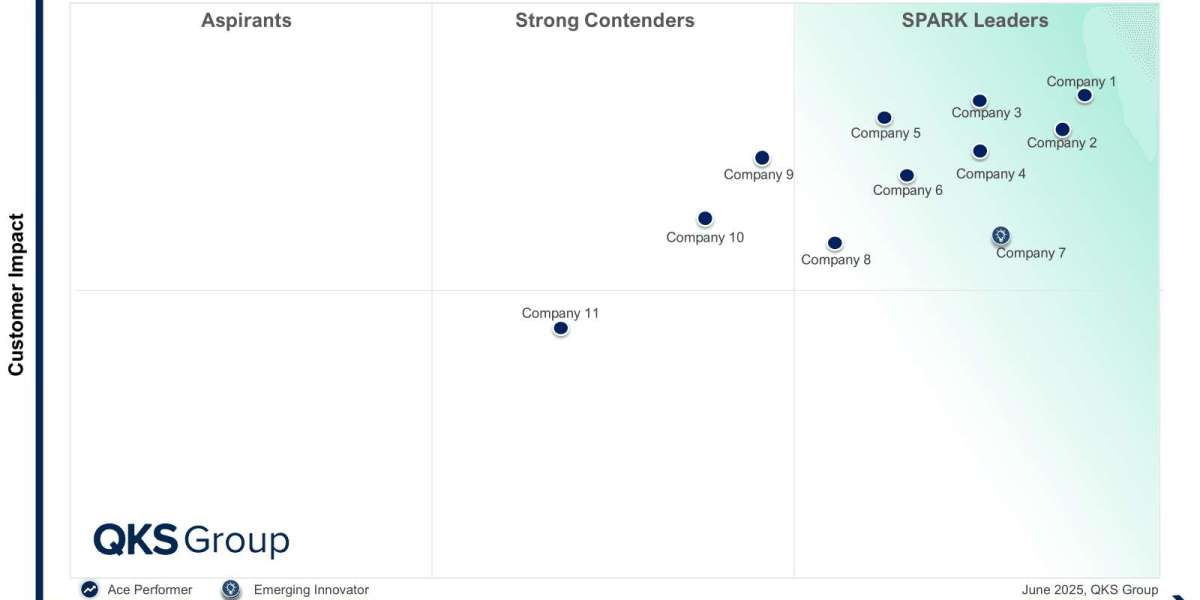
Research in this space also evaluates vendor maturity, innovation depth, and competitive positioning. Through structured frameworks such as the SPARK Matrix™, enterprises and vendors gain clarity on market leadership, technology excellence, and strategic differentiation.
Key Challenges Businesses Face
Despite advances in networking technologies, enterprises continue to struggle with persistent operational challenges, including:
- Growing network complexity across hybrid, multi-cloud, and edge environments
- Manual and reactive NetOps processes leading to slower issue resolution
- Limited visibility into real-time network performance and user experience
- Skill shortages and rising operational overhead for NetOps teams
- Downtime and performance degradation impacting productivity and customer trust
These challenges directly affect business continuity, employee experience, and the ability to scale digital initiatives effectively.
Key Trends & Innovations Shaping the Market
Several technology and operational trends are accelerating adoption of AI-Native Networking Platform solutions across industries:
- AI-driven automation: Autonomous configuration, optimization, and remediation reduce human intervention
- Predictive analytics: AI models anticipate failures and performance issues before they impact users
- Cloud-native architectures: Support for dynamic, elastic, and distributed network environments
- Intent-based networking: Translating business intent into automated network policies
- Advanced telemetry and observability: Real-time insights across network, application, and user layers
Together, these innovations shift network operations from reactive troubleshooting to proactive and predictive management.
Benefits & Business Impact
Adopting an AI-native approach delivers measurable business value beyond IT efficiency. Key benefits include:
- Improved network uptime and reliability through self-healing capabilities
- Faster mean time to resolution (MTTR) with automated root-cause analysis
- Lower operational costs by reducing manual workflows and tool sprawl
- Enhanced digital employee experience with consistent performance and availability
- Scalable operations that support business growth without proportional increases in NetOps headcount
For CXOs and IT leaders, the ROI is realized through improved productivity, reduced risk, and stronger alignment between network performance and business outcomes.
Use Cases & Real-World Applications
AI-native networking platforms are being deployed across multiple enterprise scenarios:
- Large distributed enterprises: Automated network optimization across thousands of sites
- Cloud-first organizations: Continuous performance monitoring across hybrid and multi-cloud networks
- Digital workplaces: Ensuring seamless collaboration, video, and SaaS application performance
- Service providers and managed services: Proactive SLA assurance and customer experience management
In each case, AI-driven insights replace manual diagnostics, enabling faster and more accurate operational decisions.
How Organizations Can Choose the Right Solution
Selecting the right AI-Native Networking Platform requires a structured evaluation approach. Organizations should assess vendors based on:
- Depth of AI integration across the full network lifecycle
- Quality of automation, self-healing, and predictive capabilities
- Scalability across cloud, on-premises, and edge environments
- Vendor roadmap, innovation strategy, and ecosystem support
- Independent competitive benchmarking, such as SPARK Matrix™ analysis
Decision-makers should align platform capabilities with business priorities, operational maturity, and long-term digital strategies.
Future Outlook (2025–2028)
Between 2025 and 2028, AI-native networking will transition from early adoption to mainstream enterprise deployment. Networks will increasingly operate as autonomous systems, capable of optimizing themselves in real time based on business intent and user experience metrics.
We will also see tighter integration with security, observability, and digital experience platforms, creating unified operations ecosystems. Vendors that combine strong AI foundations with execution excellence will emerge as long-term market leaders.
Conclusion – Reinforcing Strategic Value
As enterprise networks become more complex and business-critical, traditional management approaches will continue to fall short. AI-native networking represents a fundamental evolution in how networks are designed, operated, and optimized.
By enabling autonomous operations, predictive intelligence, and superior digital experiences, AI-Native Networking Platforms empower organizations to move faster, operate smarter, and scale with confidence. For technology vendors and enterprise buyers alike, understanding this market is essential to shaping sustainable growth and competitive advantage.