
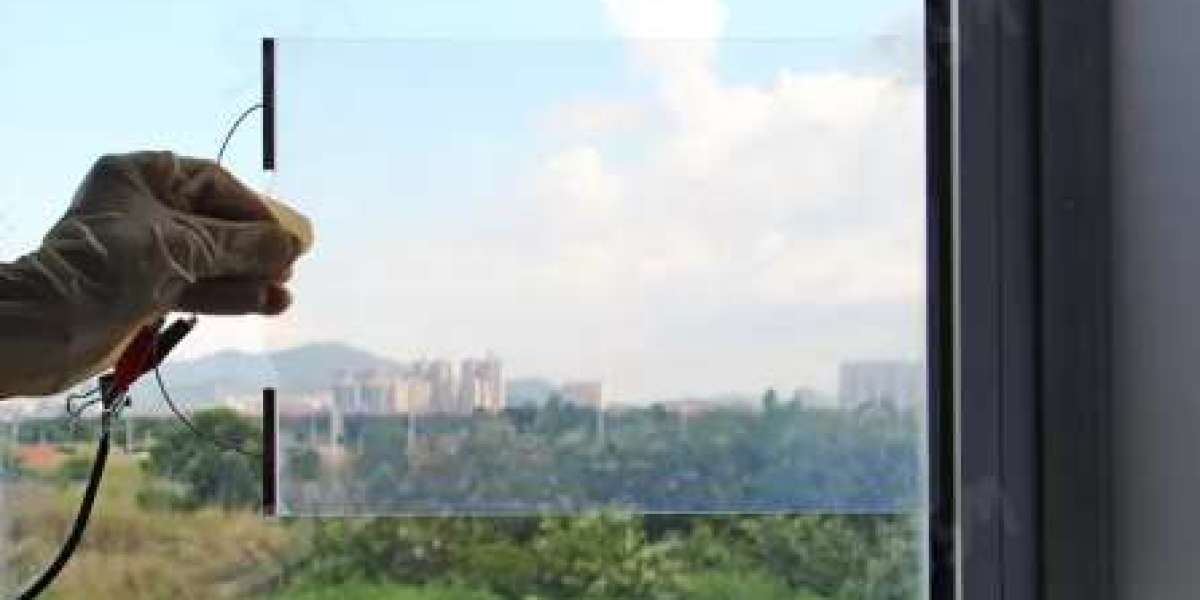
Modern buildings are increasingly designed around glass. From office towers and luxury hotels to healthcare facilities and high-end residences, large glass surfaces help create brighter interiors, stronger visual connections, and a clean architectural appearance.
However, extensive glazing also creates new challenges. Too much sunlight can cause glare, reduce visual comfort, and increase cooling demands, while transparent glass may not provide sufficient privacy when spaces are in use.
Traditional Venetian blinds have been used for decades to address these issues. Although they remain practical, they also come with visible hardware, moving components, cleaning requirements, and ongoing maintenance. As smart building technologies continue to develop, architects and developers are looking for more integrated ways to control daylight and privacy.
This is one reason Venetian Blind Dimming Film is receiving increasing attention as an alternative to conventional blinds.
The Limitations of Traditional Venetian Blinds
Traditional blinds provide a familiar method of controlling sunlight and privacy. By adjusting the angle of individual slats, occupants can change the amount of light entering a room.
However, mechanical blinds are not always ideal for modern architectural environments.
Dust can accumulate on the slats, requiring regular cleaning. Cords, tracks, motors, and other moving components may also experience wear after repeated operation. In large commercial buildings, maintaining hundreds or even thousands of window coverings can become a significant operational task.
There is also an aesthetic consideration.
Contemporary architecture often emphasizes clean lines, open spaces, and uninterrupted glass surfaces. External or internal blinds can visually interrupt this minimalist appearance.
For projects where design consistency and low maintenance are important, integrated glazing technologies offer an attractive alternative.
How Venetian Blind Dimming Film Works
Venetian Blind Dimming Film is designed to create a controllable louver-like visual effect within a glass system without relying on conventional movable slats.
Instead of physically rotating blinds, the optical properties of the film can be controlled electrically. This allows users to adjust privacy and light conditions according to the requirements of the space.
The concept combines the appearance and functionality associated with Venetian blinds with the advantages of electronically controlled glazing.
Depending on the specific product configuration, the film can be incorporated into laminated glass or used as part of an intelligent glazing system. It can then be connected to switches, remote controls, automation systems, or other building control solutions.
The result is a cleaner and more integrated approach to light and privacy management.
A Cleaner Solution for Modern Glass Interiors
One of the biggest advantages of integrated dimming film is its visual simplicity.
Traditional blinds are installed in front of the glass, meaning that the shading system remains visible even when it is not being used. Venetian Blind Dimming Film, by contrast, becomes part of the glazing assembly.
This can be particularly valuable in spaces such as:
- Corporate offices
- Conference rooms
- Executive meeting areas
- Luxury hotels
- Healthcare facilities
- Retail showrooms
- High-end residential interiors
- Glass partitions
By eliminating exposed slats and cords, the glazing maintains a more streamlined appearance.
For architects working with minimalist interiors, this can make it easier to achieve a consistent design language throughout a project.
Flexible Privacy Without Blocking Natural Light
Privacy is one of the most important reasons businesses and property owners consider switchable glazing technologies.
A conventional blind generally creates a physical visual barrier. When the blinds are closed, outside views and incoming daylight are also significantly reduced.
A smart dimming solution provides greater flexibility.
Glass can remain visually open when transparency is preferred and change its optical condition when privacy is required. This makes the same space suitable for multiple activities throughout the day.
For example, a glass conference room can remain visually connected to an open office during normal operations. When a confidential meeting begins, the glazing can be switched to a more private state.
This adaptability is especially useful in offices where rooms frequently change between collaborative, private, and presentation-oriented functions.
Better Daylight Management for Occupant Comfort
Natural light is an important part of modern building design, but uncontrolled sunlight can create discomfort.
Strong sunlight may produce screen glare in offices, uneven brightness in meeting rooms, and excessive solar exposure near large windows. Occupants may respond by closing blinds completely, which removes the benefits of daylight.
A more flexible shading strategy can help balance these competing requirements.
Dynamic glazing and shading technologies are increasingly being considered as part of broader daylight-management strategies. By controlling how much light enters a space, smart glazing can help create a more comfortable indoor environment while maintaining the visual benefits of glass.
Venetian Blind Dimming Film can therefore be considered not simply as a privacy product, but as part of a broader approach to managing the relationship between sunlight, visibility, and interior comfort.
Supporting Smart Building Automation
Another important advantage is compatibility with modern building automation.
Traditional blinds can be motorized, but this usually requires additional mechanical systems, motors, wiring, and control components. Integrated smart glazing can be designed to work more naturally with electronic control systems.
Depending on the project, control may be provided through wall switches, remote controls, centralized building systems, or smart automation platforms.
This creates opportunities for automated scenarios.
For example, glazing could be programmed to provide greater privacy during scheduled meetings or adjust according to occupancy. In a hotel, room controls could allow guests to manage privacy without manually operating curtains or blinds.
As smart buildings become more connected, electronically controlled glazing can become another component within the building's overall automation ecosystem.
Applications Across Different Building Types
The potential applications of Venetian Blind Dimming Film extend beyond office buildings.
In hospitality, integrated glazing can help create premium interiors while reducing the visual clutter associated with conventional window coverings. Guestrooms, bathrooms, conference areas, restaurants, and executive lounges can all benefit from flexible privacy and daylight control.
Healthcare facilities have different priorities. Privacy, hygiene, ease of cleaning, and efficient space utilization are especially important. A glazing solution with fewer exposed components can be attractive in areas where cleanliness and maintenance are major concerns.
In residential projects, smart glazing can complement home automation systems. Homeowners may use electronically controlled glass for bathrooms, bedrooms, home offices, entertainment areas, and other spaces where privacy requirements change throughout the day.
Retail and commercial spaces can also use dynamic glazing to create adaptable visual environments without relying entirely on curtains or physical blinds.
Reduced Maintenance and Long-Term Convenience
Maintenance is often overlooked when comparing shading technologies.
Traditional Venetian blinds contain multiple individual slats and, depending on the design, cords, chains, tracks, or motors. These components can collect dust and may eventually require adjustment or replacement.
An integrated film solution removes many of these exposed mechanical elements.
This does not mean that every smart glazing system is maintenance-free. Electrical connections, controllers, glass surfaces, and other system components still need to be properly installed and maintained.
However, reducing the number of moving parts can simplify long-term operation and contribute to a cleaner interior environment.
For large commercial properties, these considerations can become increasingly important as building operators look beyond initial installation costs and evaluate total lifecycle requirements.
Why Smart Glazing Fits the Future of Architecture
Modern architecture is moving toward buildings that are more responsive to their occupants and environmental conditions.
Glass is no longer viewed simply as a passive material. With the development of smart films, switchable glass, dynamic shading, and automated building systems, glazing can become an active part of the building environment.
This shift reflects a broader trend toward adaptable spaces.
A meeting room may need to be transparent in one situation and private in another. A hotel room may require an open view during the day but complete privacy at night. An office may need maximum daylight in the morning while reducing glare during afternoon working hours.
Traditional blinds can address some of these requirements, but electronically controlled glazing provides another level of flexibility without changing the physical appearance of the room.
Choosing the Right Dimming Film Supplier
The performance of any smart glazing project depends heavily on product quality and installation expertise.
When selecting a Venetian Blind Dimming Film Supplier, buyers should consider more than the initial product price.
Important factors include manufacturing consistency, optical performance, electrical reliability, available customization, technical documentation, installation guidance, quality control, and after-sales support.
For international projects, production capacity and export experience can also be important. Large architectural developments may require consistent products across multiple areas or even multiple buildings.
Working with an experienced manufacturer can help architects, contractors, distributors, and developers reduce project risks and ensure that the selected glazing technology matches the intended application.
The Growing Role of Intelligent Light Control
The transition from conventional blinds to smart glazing is not simply about replacing one shading product with another.
It represents a broader change in how buildings manage light, privacy, and interior space.
Traditional blinds remain useful in many applications, but they are no longer the only option. As architects place greater emphasis on clean aesthetics, flexible interiors, automation, and lifecycle efficiency, technologies such as Venetian Blind Dimming Film provide a compelling alternative.
The ability to combine a louver-inspired appearance with electronically controlled privacy and light management makes this technology particularly suitable for modern glass architecture.
As smart building systems continue to evolve, intelligent glazing is likely to become an increasingly important part of commercial, hospitality, healthcare, and residential design.
Conclusion
Venetian Blind Dimming Film represents a new approach to a familiar architectural challenge: how to control sunlight and privacy without compromising the appearance and flexibility of modern glass spaces.
Compared with traditional Venetian blinds, integrated dimming film can offer a cleaner visual appearance, fewer exposed mechanical components, flexible electronic control, and greater compatibility with smart building concepts.
For architects, developers, and property owners, the decision is no longer simply about choosing between open glass and conventional blinds. Intelligent glazing creates an additional option—one that allows buildings to adapt to changing privacy, daylight, and occupant requirements.
As modern architecture continues to move toward smarter and more adaptable environments, Venetian Blind Dimming Film is positioned to become an increasingly valuable solution for the next generation of glass buildings.