Flowers have long played a meaningful role in funerals, memorial services, and other traditions surrounding death. They can communicate sympathy when words feel inadequate, honor the personality of the deceased, and create a peaceful setting for family and friends gathering to remember a life. Yet choosing an appropriate arrangement is not always straightforward. Flower type, color, arrangement style, cultural customs, religious traditions, and the sender's relationship with the deceased can all influence the decision. Understanding these considerations makes it easier to select respectful flowers for funeral services and memorial gatherings.
Why Flowers Are Used at Funerals
The use of flowers in mourning traditions stretches back through many cultures and historical periods. Today, their purpose is largely symbolic. Flowers can represent love, remembrance, respect, hope, peace, and the temporary nature of life.
They also serve a practical emotional role. A funeral environment can feel solemn and unfamiliar, while floral arrangements introduce elements of nature, color, and softness. For some families, particular flowers may recall a garden, wedding, anniversary, favorite season, or another meaningful part of the deceased person's life.
There is no single universal meaning attached to every bloom. Interpretations vary between cultures, families, and religious traditions, so symbolism is best treated as guidance rather than a strict rule.
Understanding Common Funeral Flower Types
Certain flowers appear frequently in funeral and sympathy arrangements because of their traditional associations and suitability for floral displays.
Lilies
Lilies are among the flowers most commonly associated with funeral services in many Western traditions. White lilies are often connected with peace, purity, and innocence. Their large blooms also make them suitable for standing arrangements and mixed floral tributes.
Roses
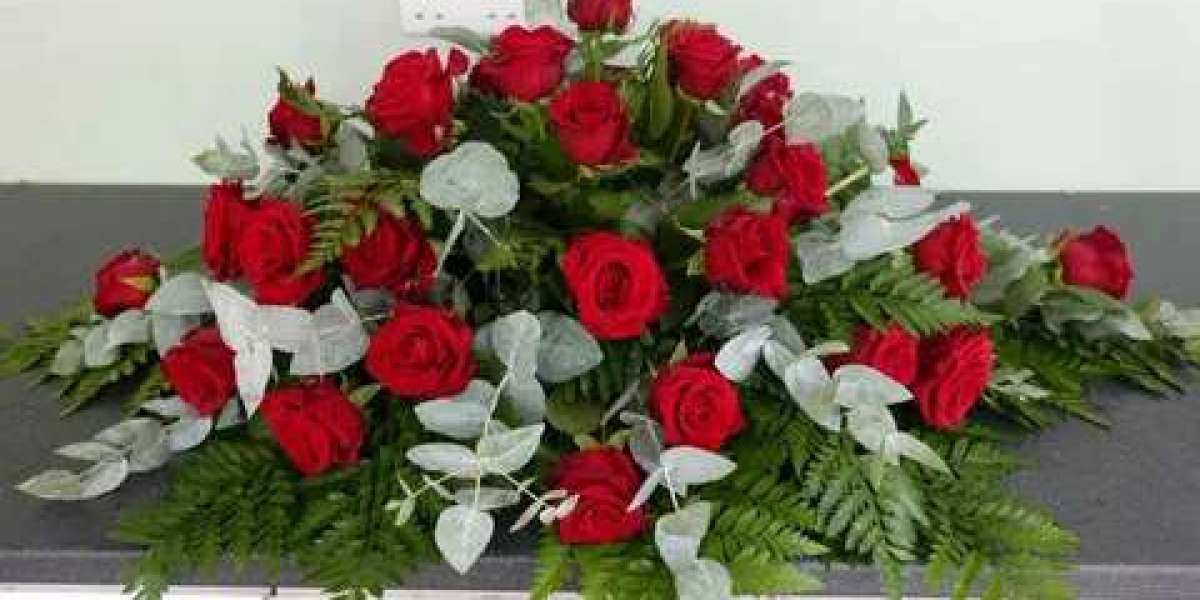
Roses can communicate different sentiments depending on their color. Red roses are commonly associated with deep love, while white roses may represent reverence, innocence, or remembrance. Pink roses can express affection and appreciation.
Because roses have strong personal associations outside funerals as well, they can be particularly meaningful when they were favorites of the deceased.
Carnations
Carnations are widely used in memorial arrangements because they are durable and available in numerous colors. White carnations traditionally suggest remembrance or purity, while pink varieties can communicate affection and gratitude.
Their longevity makes carnations useful in wreaths, standing sprays, and arrangements intended to remain displayed throughout a service.
Chrysanthemums
The meaning of chrysanthemums varies considerably by region. In several European countries, chrysanthemums are strongly connected with mourning, graves, and remembrance. Elsewhere, they have broader associations with friendship, longevity, or positivity.
This variation demonstrates why cultural context matters when selecting condolence flowers.
Orchids
Orchids can symbolize enduring affection, beauty, and remembrance. White and pale-colored orchids are often chosen for sympathy arrangements because their appearance is understated and elegant. A potted orchid may also be sent to a family's home rather than directly to a funeral venue.
Choosing the Right Type of Arrangement
Selecting individual flowers is only part of the process. Funeral flowers come in several arrangement styles, and each serves a somewhat different purpose.
A casket spray is designed specifically to rest on a coffin. Because it occupies such a central position during a funeral, this arrangement is usually selected by immediate family members rather than acquaintances or colleagues.
Standing sprays are larger floral displays placed on an easel. They are commonly displayed near the casket, urn, or ceremonial area and may be appropriate from relatives, friends, organizations, or professional groups.
Funeral wreaths typically use flowers arranged in a circular form. The circle is often interpreted as representing continuity, eternity, or remembrance.
Floral baskets and vase arrangements are more flexible. They can be displayed at a funeral home, place of worship, memorial venue, or family residence.
Understanding these distinctions helps prevent an arrangement from unintentionally competing with flowers traditionally chosen by close family members.
Consider Your Relationship With the Deceased
The sender's relationship with the deceased or bereaved family can help determine the scale and style of a floral tribute.
Immediate family members may coordinate prominent pieces such as casket sprays. Extended relatives might select wreaths, standing sprays, or larger arrangements. Friends, neighbors, and coworkers often choose baskets, bouquets, vase arrangements, or sympathy plants.
Size does not determine sincerity. A modest arrangement accompanied by a thoughtful condolence message may be more appropriate than an elaborate display, particularly when the sender did not know the deceased closely.
Group arrangements can also be suitable. Coworkers, community organizations, clubs, or groups of friends sometimes contribute jointly to a single memorial tribute.
What Funeral Flower Colors Mean
Color can add another layer of meaning to a floral arrangement, although interpretations should not be considered absolute.
White is frequently associated with peace, reverence, innocence, and remembrance. For that reason, white lilies, roses, carnations, and chrysanthemums commonly appear in memorial displays.
Red traditionally communicates love and deep affection. Pink can represent gentleness, admiration, gratitude, or affection, while purple is sometimes associated with dignity and respect.
Yellow can have more varied meanings. It may symbolize friendship, warmth, or cherished memories, making it suitable when celebrating a person's optimistic personality.
Funeral flowers do not necessarily have to be subdued. A celebration of life may feature bright colors when they better represent the deceased. Families increasingly personalize memorial services, making individual preferences more important than rigid conventions.
Funeral Flowers and Sympathy Flowers Are Not Always the Same
Although the terms are sometimes used interchangeably, funeral flowers and sympathy flowers can serve different purposes.
Funeral arrangements are generally sent directly to the location where the service takes place. They are designed to form part of the memorial setting and may include wreaths, sprays, crosses, hearts, or large baskets.
Sympathy flowers are usually intended specifically for bereaved relatives and may be delivered to their home. These arrangements tend to be smaller and easier to maintain.
Timing also differs. Flowers intended for a funeral service need to arrive before the ceremony. Sympathy arrangements can be sent before or after the funeral, including several days later when visitors and immediate support may have decreased.
Respect Religious and Cultural Traditions
Not every culture or faith uses funeral flowers in the same way. This is one of the most important considerations before sending an arrangement.
Flowers are widely accepted in many Christian funeral traditions, although customs vary among denominations and individual families. Other religious or cultural traditions may emphasize different forms of condolence.
In some communities, particular colors carry meanings that differ substantially from Western conventions. A flower considered appropriate in one country may have a different symbolic meaning elsewhere.
When uncertain, check the obituary, funeral announcement, or instructions from the family. A funeral home or religious institution may also be able to clarify customary practices.
Respecting stated family preferences should take priority over general flower etiquette.
Check Whether the Family Has Requested Donations
Some funeral notices include wording such as "in lieu of flowers" and request donations to a charity, medical organization, community group, scholarship, or another cause associated with the deceased.
When such a request appears, it is generally considerate to follow it. The family may have chosen charitable contributions because they reflect the deceased person's interests or because the funeral venue has limited space.
This does not necessarily mean flowers are viewed negatively. Rather, the family has communicated how they would prefer expressions of sympathy to be directed.
Reading the complete obituary or memorial announcement before arranging a floral delivery can prevent misunderstandings.
Personalizing a Memorial Arrangement
Personalization can make a floral tribute more meaningful without making it extravagant.
Consider the deceased person's favorite flowers, colors, hobbies, profession, heritage, or connection with nature. Someone known for maintaining a colorful garden might be remembered with seasonal mixed blooms, while a person who preferred simplicity may be better represented by a restrained arrangement of white flowers and greenery.
Seasonal availability can influence the selection as well. Locally available flowers may provide a natural connection to the time of year while reducing the need for substitutions.
Personalization should remain sensitive to the setting. The purpose is to reflect the individual respectfully rather than create the most visually dominant arrangement.
Writing a Message to Accompany Funeral Flowers
A floral card usually has limited space, so a condolence message does not need to be lengthy. Clear, sincere language is generally most appropriate.
The message might express sympathy, acknowledge a cherished memory, recognize the deceased person's influence, or offer support to the family. Avoid attempting to explain the loss or using language that assumes how grieving relatives feel.
Signing the card clearly is important, especially at larger funerals where the family may receive numerous arrangements. When flowers come from a workplace or group, including the organization's or team's name helps the family identify the sender.
Practical Details Before Sending Flowers
Before ordering memorial flowers, confirm the deceased person's full name, service location, funeral date, and scheduled time. Funeral homes may conduct several services in a short period, so accurate information helps staff direct the arrangement correctly.
Delivery timing matters as well. Flowers should generally arrive with enough time for funeral staff to place them before guests enter.
For arrangements going to a private residence, consider maintenance. Large standing displays may be inconvenient in a home, whereas a vase arrangement, basket, or plant can be easier for the recipient to manage.
It is also worth checking whether the family will be traveling after the service. An arrangement requiring frequent watering may not be practical if the household will be temporarily unoccupied.
Making an Appropriate Choice
Choosing memorial flowers is ultimately less about following a rigid formula and more about understanding context. The deceased person's preferences, family wishes, cultural traditions, religious customs, service format, and relationship with the sender all matter.
Lilies, roses, carnations, chrysanthemums, and orchids remain common choices, but no flower is automatically appropriate for every funeral. Similarly, wreaths, standing sprays, casket flowers, baskets, and sympathy bouquets each have different uses.
The most thoughtful approach is to gather available information before making a decision. Check the funeral notice, respect requests regarding charitable donations, consider cultural expectations, and choose an arrangement proportional to your relationship with the deceased or family.
Funeral flowers cannot remove grief, nor are they intended to. Their value lies in communication: they provide a visible expression of remembrance, compassion, respect, and support at a time when finding the right words can be difficult.