Introduction
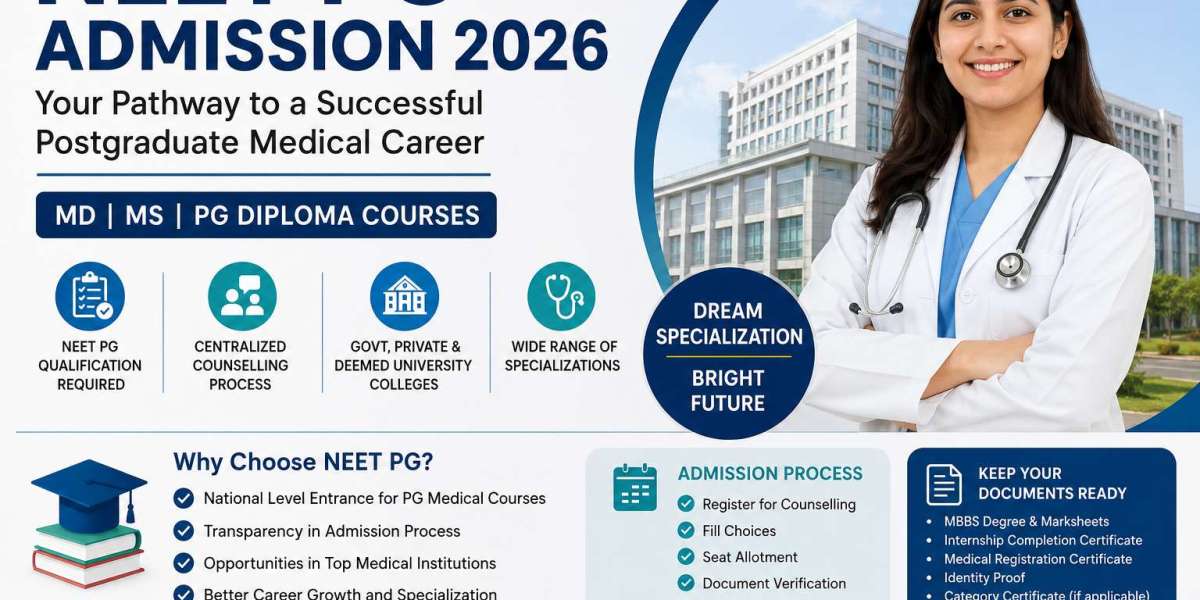
NEET PG Admission is the primary pathway for medical graduates who want to pursue postgraduate medical education in India. After completing an MBBS degree and fulfilling the required internship and registration conditions, eligible candidates can appear for the National Eligibility cum Entrance Test for Postgraduate courses, commonly known as NEET PG.
Through NEET PG, candidates can compete for postgraduate medical seats in MD, MS and PG Diploma courses offered by government medical colleges, private medical colleges, deemed universities and other participating institutions. The admission process is based on the NEET PG rank, eligibility criteria, category, seat availability, counselling rules and the preferences submitted by the candidate.
For many MBBS graduates, choosing the right postgraduate course is an important career decision. Understanding the NEET PG admission process before counselling begins can help candidates make better choices regarding specialisation, college, fees, location and future career opportunities.
This guide explains the major aspects of NEET PG Admission 2026, including eligibility, entrance examination, counselling, seat categories, documents, fees and important considerations.
What is NEET PG Admission?
NEET PG Admission is the process through which eligible medical graduates obtain admission to recognised postgraduate medical courses in India.
The examination is conducted as a national-level entrance examination for admission to postgraduate medical education. Candidates receive a rank based on their performance in the examination, and this rank plays an important role during the counselling and seat-allotment process.
Depending on the applicable counselling authority and seat category, candidates may be able to participate in counselling for MD and MS seats in government institutions, private medical colleges, deemed universities and other participating medical institutions.
The term "direct admission" is sometimes used by students while searching for postgraduate seats. However, candidates should understand that recognised MD/MS admission generally requires qualification in NEET PG and participation in the applicable counselling process. Management or institutional categories do not normally mean admission without the required entrance qualification.
NEET PG Admission 2026 Eligibility Criteria
Before applying for NEET PG, candidates should carefully check the eligibility requirements applicable to the admission year.
The major requirements generally include:
- The candidate should possess an MBBS degree or a recognised equivalent medical qualification.
- The candidate should have completed the required period of compulsory rotating internship by the prescribed date.
- The candidate should hold the required medical registration with the appropriate authority.
- The candidate should satisfy the eligibility requirements specified in the official NEET PG information bulletin.
- Candidates belonging to reserved categories may receive applicable relaxations according to prevailing rules.
The exact eligibility requirements, internship cut-off date and other conditions can vary according to the official notification for the particular admission cycle. Therefore, candidates should verify the latest requirements before completing the application.
NEET PG Examination and Rank
NEET PG is highly competitive because a large number of medical graduates compete for a limited number of postgraduate seats.
The examination performance determines the candidate's position in the merit list. A stronger rank generally provides access to a wider range of colleges and specialisations during counselling.
Candidates should not evaluate their chances solely on the basis of the previous year's closing rank. Cut-offs can change from one counselling cycle to another because of factors such as:
- Number of candidates appearing for the examination
- Difficulty level of the examination
- Number of available seats
- Candidate preferences
- Category-wise competition
- College reputation
- Specialisation demand
- Changes in counselling policies
Therefore, previous-year cut-offs should be treated as a reference rather than a guarantee for NEET PG Admission 2026.
MD and MS Courses Through NEET PG
NEET PG provides an opportunity to pursue several postgraduate medical specialisations.
Popular MD Specialisations
Some commonly preferred MD branches include:
- MD General Medicine
- MD Paediatrics
- MD Radiodiagnosis
- MD Dermatology
- MD Anaesthesiology
- MD Psychiatry
- MD Pathology
- MD Respiratory Medicine
- MD Pharmacology
- MD Anatomy
- MD Physiology
- MD Microbiology
- MD Biochemistry
Popular MS Specialisations
Common MS branches include:
- MS General Surgery
- MS Orthopaedics
- MS Obstetrics and Gynaecology
- MS Ophthalmology
- MS ENT
The choice of specialisation should be based on the candidate's interests, aptitude, long-term career plans, clinical exposure and future opportunities rather than only the popularity of a particular branch.
NEET PG Counselling Process 2026
After the examination and declaration of results, eligible candidates need to participate in the applicable counselling process.
The counselling procedure generally involves several stages.
Step 1: Registration
Candidates need to register on the counselling portal applicable to the seats for which they wish to compete. Different authorities may conduct counselling for different categories of seats.
Candidates should enter their personal, academic and registration details carefully.
Step 2: Payment of Counselling Fee
Candidates may need to pay the applicable registration, counselling and security fees. The amount can differ depending on the counselling authority and category of institution.
Candidates should keep proof of payment for their records.
Step 3: Choice Filling
Choice filling is one of the most important stages of NEET PG counselling.
Candidates can select their preferred colleges and postgraduate specialisations according to their eligibility and available options.
A practical preference list should consider:
- NEET PG rank
- Category
- College reputation
- Course preference
- Tuition fee
- Hostel facilities
- Clinical exposure
- Patient load
- Location
- Bond requirements
- Service obligations
- Future career plans
Candidates should avoid selecting a college simply because it is popular. The suitability of the course and institution should also be considered.
Step 4: Choice Locking
After completing the preference list, candidates must lock their choices within the prescribed period.
Once choices are locked, changes may not be possible. Candidates should therefore review their entire list before final submission.
Step 5: Seat Allotment
The counselling authority processes the choices according to applicable merit, category, seat availability and counselling rules.
A candidate may receive an allotted seat based on the combination of rank and preferences.
Step 6: Reporting to the College
Candidates who accept an allotted seat generally need to complete the required admission formalities within the prescribed deadline.
This may include document verification, payment of college fees and physical or online reporting, depending on the instructions issued for that counselling round.
Failure to complete the required process within the deadline may result in consequences such as cancellation or forfeiture of the allotted seat or security amount, depending on the applicable rules.
Types of NEET PG Seats
NEET PG seats can be available under different categories and counselling systems.
Government Medical College Seats
Government medical colleges generally have comparatively lower tuition fees than private institutions. Competition for popular clinical branches in reputed government colleges can be extremely high.
Private Medical College Seats
Private medical colleges offer postgraduate courses across various clinical and non-clinical specialisations. Fees are usually higher than government institutions and vary significantly between colleges and courses.
Deemed University Seats
Deemed universities conduct postgraduate admissions through the applicable NEET PG counselling mechanism. Their fee structures can differ considerably depending on the institution and specialisation.
Management Category Seats
Some private institutions may have seats under management categories according to applicable regulations. These seats still follow the prescribed eligibility and counselling requirements.
Students should verify the official fee structure, admission rules, seat matrix and applicable counselling authority before making financial commitments.
NEET PG Fees Structure
The cost of pursuing an MD or MS depends heavily on the institution, specialisation and seat category.
Government medical colleges generally have lower tuition fees, while private medical colleges and deemed universities may have substantially higher fees.
Apart from tuition fees, students should consider additional expenses such as:
| Expense | What It May Include |
|---|---|
| Tuition Fee | Academic fee for the postgraduate course |
| Hostel Fee | Accommodation and related charges |
| Examination Fee | University or examination-related charges |
| Security Deposit | Refundable or non-refundable amount as applicable |
| University Fee | Institutional or university charges |
| Miscellaneous Charges | Library, laboratory and other institutional expenses |
| Living Expenses | Food, transportation and personal expenses |
Candidates should obtain the latest official fee structure before taking admission because fees may change between academic sessions.
Documents Required for NEET PG Admission
Candidates should keep their documents ready before counselling and reporting.
Commonly required documents may include:
- NEET PG admit card
- NEET PG result or scorecard
- MBBS degree certificate
- MBBS marksheets
- Internship completion certificate
- Medical registration certificate
- Valid identity proof
- Passport-size photographs
- Category certificate, wherever applicable
- Disability certificate, wherever applicable
- Migration certificate, if required
- Transfer or leaving certificate, if applicable
- Counselling registration documents
- Seat allotment letter
- Other documents specified by the counselling authority or college
The exact list can vary, so candidates should carefully read the reporting instructions issued for their allotted institution.
How to Choose the Right MD/MS College
Selecting a postgraduate college involves more than checking the NEET PG cut-off.
Candidates should compare colleges based on clinical exposure, department strength, patient volume, faculty, infrastructure, academic environment and opportunities for practical training.
For clinical branches, patient flow and hands-on exposure can be particularly important. Candidates should also examine hostel availability, location, institutional policies and any applicable bond or service conditions.
Fee affordability is another important factor. A lower-ranked seat at an affordable institution may sometimes be financially more practical than a high-fee option.
What is the Role of NEET PG Rank in Admission?
NEET PG rank is one of the most important factors in postgraduate admission.
A better rank can improve a candidate's opportunity to obtain a preferred branch or institution. However, rank alone does not guarantee a particular seat.
The final allotment depends on several factors, including category, eligibility, available seats, candidate preferences and the rules of the counselling authority.
Candidates should therefore create a broad and realistic choice list instead of depending on a single college or specialisation.
Tips for NEET PG Counselling 2026
Candidates can follow several practical steps to make the counselling process easier:
- Understand the counselling authorities and seat categories before registration.
- Check the latest seat matrix before filling choices.
- Review previous closing ranks for reference.
- Prepare a preference list before the choice-filling window opens.
- Consider both clinical exposure and academic environment.
- Compare the complete fee structure rather than tuition fees alone.
- Check bond and service conditions carefully.
- Keep all documents ready in advance.
- Do not wait until the final day to complete registration or choice locking.
- Follow official counselling instructions throughout the admission process.
Common Mistakes Candidates Should Avoid
Several mistakes can create difficulties during NEET PG counselling.
One common error is filling choices without understanding the fee structure or seat category. Another is selecting only a small number of colleges and specialisations.
Candidates should also avoid relying completely on unofficial claims regarding "guaranteed seats" or "direct admission without NEET PG." Before paying any admission-related amount, students should verify the institution, seat category, counselling procedure and official fee information.
Missing a counselling deadline can also affect admission opportunities. Candidates should monitor the official notifications throughout the counselling cycle.
NEET PG Admission 2026: Why Early Preparation Matters
Postgraduate admission involves multiple stages, and preparation should begin before counselling starts.
Candidates can use the time after the examination to research specialisations, compare institutions, understand expected cut-offs and organise their documents.
Making a preliminary college preference list can also reduce pressure during the actual choice-filling period. However, the final list should always be updated according to the official seat matrix and counselling information available at that time.
Conclusion
NEET PG Admission 2026 is an important step for MBBS graduates planning to build a specialised medical career. The process involves examination qualification, registration, counselling, choice filling, seat allotment and completion of admission formalities.
Candidates should understand that recognised MD/MS admission is based on the applicable eligibility requirements and counselling system. Management or other institutional seat categories should not be confused with admission without NEET PG.
Choosing the right postgraduate college requires careful evaluation of specialisation, fees, clinical exposure, academic facilities, location, bond conditions and long-term career objectives. With proper planning and accurate information, candidates can approach NEET PG counselling with greater confidence and make a more informed decision about their postgraduate medical education.
Frequently Asked Questions
1. What is NEET PG Admission?
NEET PG Admission is the process through which eligible medical graduates obtain admission to postgraduate medical courses such as MD and MS through the applicable counselling system.
2. Is NEET PG required for MD/MS admission?
Yes. Candidates seeking recognised MD/MS admission generally need to qualify NEET PG and participate in the applicable counselling process according to the prevailing admission rules.
3. Can I get MD/MS admission without NEET PG?
Recognised MD/MS admission normally requires the prescribed entrance qualification. Claims of admission without NEET PG should be verified carefully against the applicable official regulations.
4. Which courses are available through NEET PG?
NEET PG can provide access to various MD and MS specialisations, including General Medicine, Paediatrics, Radiodiagnosis, Dermatology, Anaesthesiology, General Surgery, Orthopaedics, Obstetrics and Gynaecology, Ophthalmology and ENT, among others.
5. How is a NEET PG seat allotted?
Seat allotment is generally based on factors such as NEET PG merit or rank, category, candidate preferences, seat availability and applicable counselling rules.
6. Are private medical college fees higher for MD/MS?
Private medical college fees are generally higher than government medical college fees, although the exact amount varies by institution, specialisation and seat category.
7. What documents are needed for NEET PG counselling?
Candidates commonly require their NEET PG documents, MBBS certificates and marksheets, internship completion certificate, medical registration certificate, identity proof and category documents where applicable.
8. How should I select my MD/MS college?
Candidates should consider rank, specialisation, clinical exposure, patient load, faculty, infrastructure, fees, hostel facilities, location, bond conditions and long-term career plans.
9. Can the NEET PG cut-off change every year?
Yes. Cut-offs can vary because of changes in candidate performance, competition, seat availability, preferences, counselling policies and other factors.
10. What is the most important part of NEET PG counselling?
Choice filling is one of the most important parts because candidates need to arrange colleges and specialisations according to their priorities and realistic admission possibilities.