
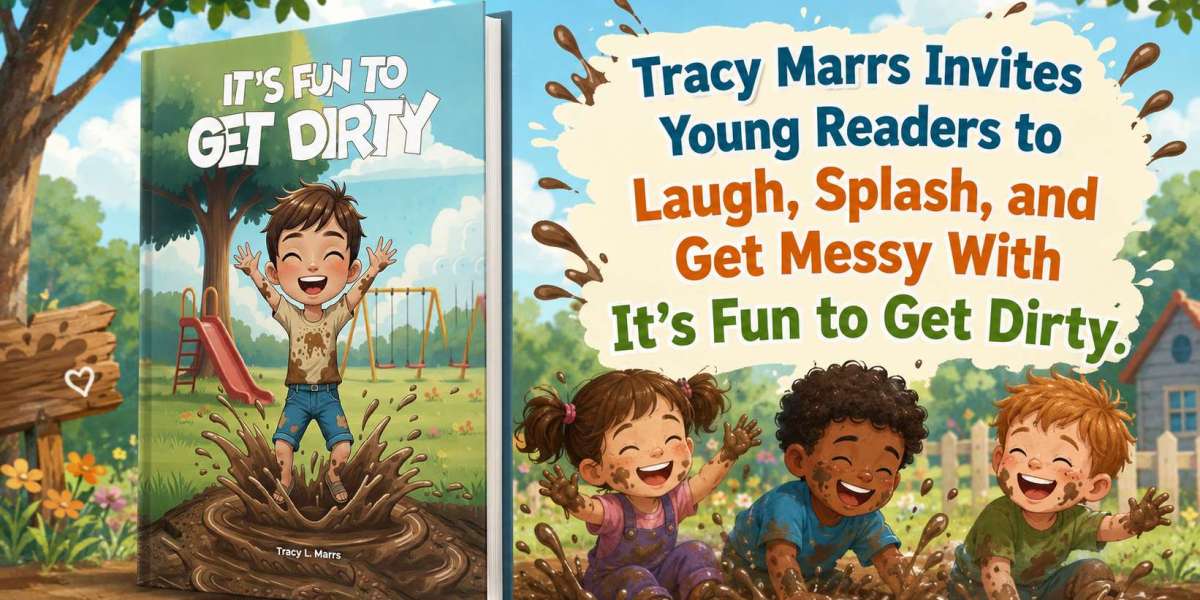
Clean clothes do not last long in It’s Fun to Get Dirty. Tracy Marrs’s children’s book introduces Sam, a boy whose idea of a perfect day involves dirt on his hands, dirt on his feet, dirt on his clothes, and eventually mud nearly everywhere. Rather than treating that outcome as a disaster, the story turns the mess into the punch line, the pattern, and the celebration.
Sam begins with a giant dirt pile made for him by his father. It is an ordinary backyard setup with an immediate promise: this child is going to get dirty. Sam happily delivers. He plays through the week, returning to the pile from Monday through Sunday and growing more enthusiastic about the experience instead of less.
The book’s humor comes from commitment. Sam does not dabble in dirt. He embraces it. Pages repeatedly show him smiling with soil on his face, knees, shirt, shorts, arms, and hair. In the full-page illustrations, his expressions make the joke clear before an adult needs to explain anything. Sam is having an excellent time, and the evidence is all over him.
Construction toys add another layer of visual fun. A bulldozer, dump truck, and backhoe appear throughout the story, giving Sam machines that belong naturally in his miniature backyard work zone. The bright vehicles stand out against the brown earth, and their buckets, beds, tracks, and tires help make each dirt scene feel active even when the text follows a familiar pattern.
Repetition gives the read-aloud its rhythm. Days of the week return. Vehicle names return. Dirt returns. The phrase patterns become easy to anticipate, which can make shared reading feel more like participation than performance. Children can guess the next day, recognize the next machine, or simply enjoy knowing that Sam is about to become even messier.
Halfway through the book, Marrs raises the stakes with rain.
The dry dirt turns to mud, and the illustrations shift into a wetter, splashier world of puddles, cloudy skies, and construction toys pushing through thick brown ground. Sam remains delighted. Mud gets on his hands, feet, shirt, pants, and hair, echoing the earlier dirt sequence while making the images more exaggerated and playful.
That before-and-after structure gives the story a visual joke children can understand immediately. If dry dirt made Sam messy, wet dirt makes him spectacularly messy. The rain does not introduce conflict in the traditional sense. It introduces more material for play.
For adults who sometimes hear “Do not get dirty” more often than “Go have fun,” the book offers a lighthearted reversal. It does not argue against baths, laundry, or clean floors. It simply spends its pages on the part before cleanup: the digging, splashing, truck pushing, and laughing that made the mess worth making.
The closing pages bring dry and wet conditions together, showing that Sam enjoys the dirt whether the weather is sunny or rainy. His preference is consistent, uncomplicated, and funny. He wants to play, and he is not afraid to look like he played.
It’s Fun to Get Dirty is built for readers who understand that sometimes the best evidence of a good afternoon is a child who comes inside needing a change of clothes.
That makes the book easy to pair with a reading voice. Adults can emphasize the repeated words, pause before the muddy reveal, and let children react to Sam’s dirty appearance. The story’s energy comes from recognition and escalation: the same child, the same play space, and a mess that keeps getting bigger.
About the Book
It’s Fun to Get Dirty is a children’s book by Tracy Marrs featuring Sam, a dirt-loving boy who spends his week playing with a bulldozer, dump truck, and backhoe. When rain turns his dirt pile into mud, Sam keeps playing, creating a cheerful story filled with repetition, construction vehicles, changing weather, and wholehearted messy fun.
Media Contact:
Author: Tracy Marrs
Amazon: It’s Fun To Get Dirty