Most people never think about the best soap for jiu jitsu until they need it. You train hard. You sweat. You roll with a training partner who trained with someone else an hour before you.
Then you go home and grab whatever bottle sits in the shower. Maybe it’s the same body wash the rest of the house uses. Maybe it’s whatever was on sale at the store. Either way, no one chose it with jiu-jitsu in mind.
BJJ centers on sustained skin-to-skin contact. You’re not just standing near someone on a track or sharing a weight bench. You grip a training partner’s gi. You press against them. You roll across a mat that dozens of other people used that same day. Whatever is on their skin can end up on yours.
Whatever was on the mat before class can end up on both of you.
Many academies do not even have a shower. When they do, the gym owner stocks soap based on price, not on what a grappler needs after class. That is a problem you can fix on your own.

This guide breaks down what the best soap for jiu jitsu needs to do. It covers which ingredients matter and how to build a hygiene routine around training. It also covers why more BJJ athletes now choose a soap made for the mat instead of whatever sits on the supermarket shelf.
Why You Need the Best Soap for Jiu Jitsu
The best soap for jiu jitsu matters because grappling puts your skin at risk.
This is not true for every sport. A boxer touches gloves and steps back. A runner shares air, not skin. A jiu jitsu athlete spends an entire class in contact with another person’s skin and sweat, and gi.
That contact carries specific risks. Ringworm is a fungal infection that spreads through skin contact and shared mats. It shows up as a red ring-shaped patch that itches and spreads if you ignore it. Staph is a bacterial infection that lives on skin and enters through small cuts or mat burns. MRSA is a harder-to-treat form of staph. It spreads the same way but responds less to common antibiotics. Impetigo is another bacterial skin infection common in contact sports. It causes red sores that blister and crust over.
None of these conditions are rare in BJJ gyms. Mats get used by dozens of people a day. Gis absorb sweat and skin cells during every round. A small cut or scrape gives bacteria and fungus a way in. A lukewarm gym shower or no shower at all raises the risk again.

Jiu Jitsu is a sport that asks more of your hygiene than a normal workout does. A regular gym session leaves sweat on your own skin. A BJJ class leaves your training partner’s skin and sweat on you too, along with anything they picked up somewhere else. That’s why the soap you use after class matters more here than it does anywhere else.
What to Look for in a Soap for Jiu Jitsu
Not every soap earns a spot in your gym bag. A few things separate a soap for jiu jitsu from something that just happens to clean skin.
Antifungal and Antimicrobial Ingredients
Antifungal and antimicrobial are not the same thing.
Antifungal targets fungus like the kind behind ringworm. Antimicrobial targets organisms like the bacteria behind staph and MRSA. A soap for jiu jitsu should include ingredients that work on both fronts because grappling exposes you to both types of risk at once, often in the same session.
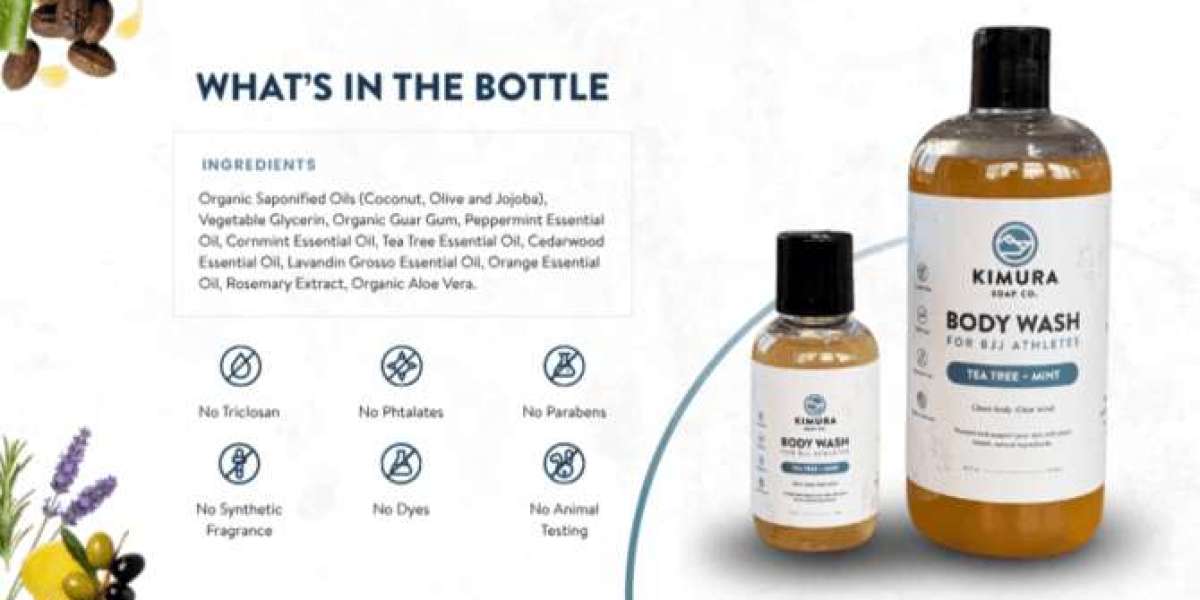
Tea tree oil carries natural antifungal and antimicrobial properties. Mint does something similar and leaves skin feeling clean rather than coated. Rosemary extract adds another layer of support for the skin barrier instead of stripping it. These three ingredients show up again and again in soaps built for combat sports for good reason. They come from plants, not a lab, and they do their job without the harsh chemical trade-offs found in most commercial soap.
Natural Ingredients That Clean Without Harming Skin
A soap can fight bacteria and still wreck your skin in the process. That trade-off is common with harsh commercial soap, and it is avoidable with the right formula.
Saponified organic coconut, olive, and jojoba oils clean effectively without stripping the skin barrier you just trained on. Aloe vera adds moisture back in during the wash instead of after it.
Organic shea butter and aloe vera add moisture back in during the wash instead of after it. Vegetable glycerin pulls moisture into the skin instead of pulling it out.
Organic guar gum gives the wash its texture without synthetic thickeners. Together these ingredients clean hard while keeping skin intact, which matters when you train four or five times a week and shower just as often.
Ingredients to Avoid
What a soap leaves out matters as much as what it includes. Three ingredients in particular are worth checking the label for before you buy, and none of them belong anywhere near your skin.
Triclosan
Triclosan is an antibacterial chemical once common in Kimura Soap. Researchers have linked it to bacterial resistance and to MRSA specifically, the same infection that pushed many BJJ athletes toward carrying their own soap in the first place.
Parabens
Parabens are preservatives that act as endocrine disruptors. Skin absorbs them during every wash, and repeated exposure adds up over years of daily use, especially for an athlete showering after nearly every session.
Phthalates and synthetic fragrance
Phthalates often hide inside synthetic fragrance without appearing by name on the label. Both are linked to hormone disruption and skin irritation, and neither belongs in something you use every day for years.
Bar Soap vs. Body Wash
Format matters more than people think. Bar soap sits in a wet gym bag between classes, which gives bacteria and mold a place to grow on the bar itself. It also dissolves faster with heavy daily use and cracks in hot cars or gym bags left in the sun between sessions.
Body wash travels better. A capped bottle does not sit in standing water, does not pick up whatever else is in your bag, and controls how much product you use per wash. For an athlete training multiple times a week and carrying soap from home to academy to tournament, body wash is the more practical format day to day. It also lasts longer per bottle than most people expect, since a wash only needs a small amount to lather.
Building a Hygiene Routine Beyond Soap for Jiu Jitsu
Soap is only part of the picture. A few habits make as much difference as the soap for jiu jitsu you actually use.

Shower right after class. Bacteria and fungus spread fastest in the hour after training, while sweat sits on skin and gear stays damp. Waiting until later in the day, or skipping a shower until the next morning, gives everything picked up on the mat more time to settle in.
Wash your gi often. A gi holds sweat, skin cells, and whatever else came off the mat during class. Wearing it again without a wash puts all of that back on your skin the next session. Wash it after every use, not once a week.
Carry your own bottle instead of relying on the academy dispenser. You do not know what is in that dispenser, how often it gets refilled, or how many hands have touched it. A bottle in your own gym bag removes that guesswork completely.
Do not share soap or towels with training partners. This habit gets overlooked constantly, even by people who are careful about everything else. Sharing either one hands off whatever is on someone else’s skin directly onto yours, which defeats the purpose of showering in the first place.
None of these habits take extra time. They just take a decision to build them into your routine and stick with them after every session, not just the ones you remember.
Kimura Soap Co: The Soap for Jiu Jitsu Athletes to Trust
Kimura built one formula around one moment, the shower right after training. It comes in two bottle sizes so it covers the whole routine, home and gym bag, instead of just part of it. Everything else on this page connects back to that one idea of One Formula, Two Bottles.
16 oz Body Wash
The 16 oz bottle lives in the shower at home. It covers head to toe every session and lasts most athletes one to three months per bottle, depending on how often they train. Because the scent is gender neutral, the whole household can use the same bottle without a separate one for anyone else.
3 oz Travel Bottle
The 3 oz bottle fits in a gym bag, a backpack, or a suitcase. It goes to the academy, the seminar, the tournament, and the open mat. It is the size Kimura was originally built around, made for the athlete who trains away from home as often as they train in it.
The 16+3 Combo
Most athletes order the 16 oz and 3 oz together as a combo. It covers the home shower and the gym bag in one order and costs less than buying each bottle on its own. It is the starting point for most people who try Kimura for the first time, and it is the option most training partners recommend to each other once they switch.
Built by a Black Belt
Christian Simmerling built Kimura. He earned his black belt in 2015 under Josh Russell at Gracie Barra after training in Calgary from 2007 to 2016. He then moved to New Jersey and trained at two respected academies on the East Coast, the Blue Basement at Renzo Gracie Academy and Silver Fox BJJ. He trained under John Danaher and Karel Pravec, known in the room as Silver Fox.
Christian has trained thousands of jiu jitsu athletes across North America over the years, both on the mat and in seminars, and he built Kimura around what those athletes actually need after class, not around what a brand agency assumes they want. That distinction shapes every part of the formula and both bottle sizes.
Choosing the Best Soap for Jiu Jitsu for You
The best soap for jiu jitsu is the one you actually use after every session. Order the 16 oz and 3 oz combo first. The 16 oz stays in your shower at home. The 3 oz goes straight into your gym bag tonight, before your next class. Together they cover every shower you take after training, at home or on the road.
Kimura is made in Vermont, in small batches rather than mass-produced runs. There is no ramp-up period and no weeks-long trial to sit through. You use it once after training, and you know.
If it works for you, tell your training partners. BJJ runs on word of mouth more than any ad campaign, and one athlete switching soap tends to bring two or three more along with them.
Frequently Asked Questions
What Is the Best Soap for Jiu Jitsu?
The best soap for jiu jitsu depends on what it protects you from and how you use it. Look for natural ingredients like tea tree oil, mint, and rosemary extract plus a formula free of triclosan, parabens, and phthalates. Kimura builds its formula around exactly this standard in a body wash format sized for both the home shower and the gym bag.
How Do You Prevent Ringworm in BJJ?
You cannot fully prevent ringworm, but you can lower your risk. Shower right after every class, wash your gi after each use, and avoid sharing soap or towels with training partners. A soap for jiu jitsu with natural antifungal ingredients such as tea tree oil adds another layer of support, though no soap replaces good hygiene habits built around every session.
Do You Need Antimicrobial Ingredients in Your Soap If You Train BJJ?
No single ingredient is required, but antimicrobial support helps given how much skin contact BJJ involves. A soap with natural antimicrobial ingredients like tea tree oil and rosemary extract gives you that support without the harsh chemicals found in some commercial antibacterial soap. Pair it with a consistent shower routine after every session for the best results.
Can Regular Soap Cause or Worsen Skin Infections?
Regular soap does not directly cause infection, but harsh formulas can wear down the skin barrier that keeps bacteria and fungus out. Frequent washing with strong detergents makes this worse for an athlete showering almost daily. Triclosan-based antibacterial soap adds another problem since it has been linked to bacterial resistance rather than better protection.
Is Tea Tree Oil Good for Ringworm and Staph?
Research backs this up. Tea tree oil shows real antifungal activity against the fungus behind ringworm in lab studies. It also shows antimicrobial activity against several types of bacteria, including strains of staph, in lab research. It works well as an ingredient in a daily soap, but it does not replace medical treatment if an infection is already active.