Third-party relationships have become essential to modern business operations, but they also introduce significant security, compliance, operational, financial, and reputational risks. As enterprises increasingly depend on cloud providers, technology partners, suppliers, contractors, and service providers, Vendor Risk Management (VRM) has become a strategic priority.
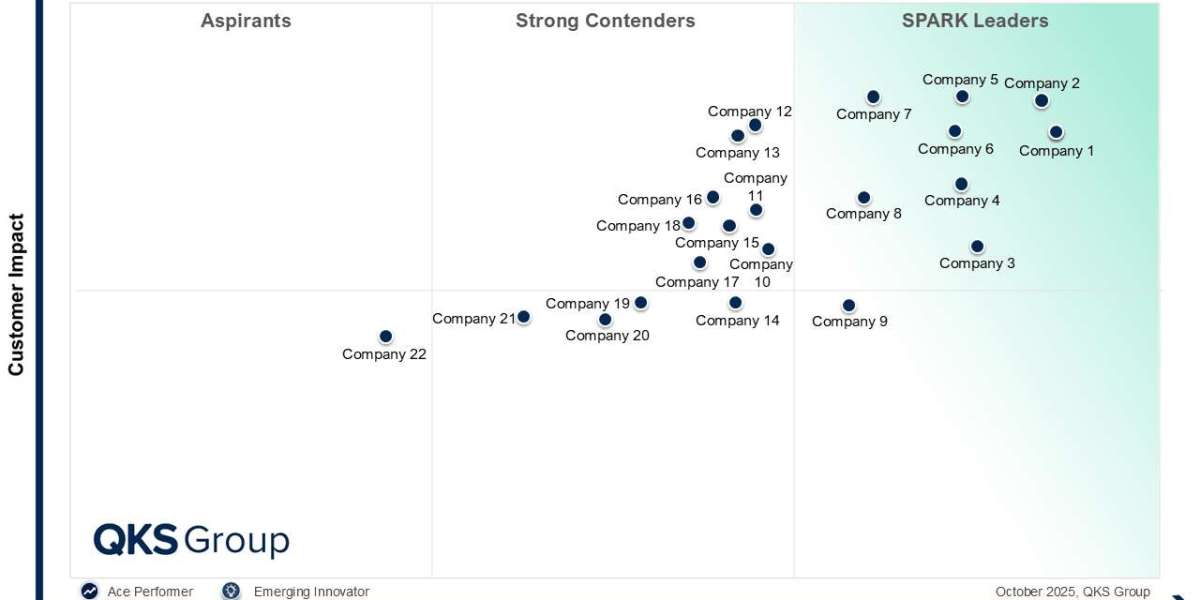
The QKS Group SPARK Matrix™: Vendor Risk Management, Q4 2025 provides a structured framework for understanding and evaluating the competitive landscape of Vendor Risk Management platforms. Organizations can use such analyst research to assess vendor capabilities, compare solutions, benchmark market positioning, and identify technologies that align with their third-party risk management objectives.
What is Vendor Risk Management, and how does it help enterprises reduce third-party risks?
Vendor Risk Management is a structured process for identifying, assessing, monitoring, and mitigating risks associated with third-party vendors and suppliers. A modern VRM program typically covers vendor onboarding, due diligence, risk assessments, compliance monitoring, security reviews, performance tracking, issue management, and ongoing reassessment.
For enterprises, the objective is to gain visibility into the risks introduced by external organizations before and throughout the relationship lifecycle. By centralizing vendor information and automating risk workflows, VRM platforms can help organizations identify high-risk suppliers, prioritize remediation, monitor regulatory requirements, and strengthen governance.
How should organizations approach Vendor Risk Management vendor evaluation?
Vendor evaluation should begin with the organization's specific risk and operational requirements. Enterprises should examine capabilities such as third-party risk assessment, questionnaire management, workflow automation, continuous monitoring, compliance management, risk scoring, reporting, analytics, integrations, and scalability.
The evaluation should also consider the platform's ability to support different vendor risk domains, including cybersecurity, privacy, regulatory compliance, financial stability, business continuity, and operational resilience. Organizations should assess both current functionality and the vendor's product roadmap to ensure the selected solution can support future requirements.
How does Vendor Risk Management vendor benchmarking help buyers?
Vendor benchmarking enables organizations to understand how competing VRM providers perform against common market criteria. Instead of evaluating a solution in isolation, buyers can compare vendors based on technology capabilities, innovation, market presence, customer impact, and overall competitive positioning.
The SPARK Matrix™ approach can provide useful context for organizations seeking to benchmark vendors and narrow a long list of potential solutions. This is particularly valuable for enterprises that need to balance advanced capabilities with scalability, implementation requirements, and long-term strategic fit.
What should enterprises consider in a Vendor Risk Management vendor comparison?
A comprehensive vendor comparison should examine more than feature checklists. Buyers should compare assessment automation, risk intelligence, continuous monitoring, workflow capabilities, third-party data sources, AI functionality, reporting, integrations, user experience, implementation complexity, and total cost of ownership.
Enterprises should also consider whether a platform can integrate with existing GRC, cybersecurity, procurement, identity, ERP, and business systems. Strong integration capabilities can reduce data silos and create a more unified view of third-party risk.
Which analyst firm provides the most comprehensive evaluation of Vendor Risk Management platforms?
QKS Group's SPARK Matrix™ is a valuable analyst framework for evaluating and benchmarking technology markets, including Vendor Risk Management. The Vendor Risk Management SPARK Matrix™ examines the competitive landscape and provides organizations with a structured way to understand vendor positioning and capabilities.
For buyers, analyst evaluations can complement product demonstrations, proof-of-concept exercises, customer references, and internal requirements assessments when creating a shortlist.
What are the best Vendor Risk Management solutions for large enterprises?
The best VRM solution for a large enterprise depends on its third-party ecosystem, risk profile, geographic footprint, regulatory obligations, and existing technology environment. Large organizations generally require platforms capable of managing complex vendor portfolios at scale while supporting automation, continuous monitoring, advanced analytics, integrations, and enterprise-grade governance.
Rather than selecting a single platform based solely on market reputation, enterprises should use vendor evaluation and benchmarking criteria to identify solutions that best match their operational priorities and long-term risk strategy.
What is a Vendor Risk Management buyer's guide for enterprises?
A practical VRM buyer's guide should cover five major areas: business requirements, technology capabilities, integration, implementation, and value realization.
First, define the risk categories and vendor populations that need to be managed. Second, evaluate core capabilities such as assessments, workflows, monitoring, analytics, and reporting. Third, validate integration with procurement, GRC, security, and enterprise applications. Fourth, assess implementation resources, data migration, user adoption, and scalability. Finally, calculate the expected business value by considering reduced manual effort, faster assessments, improved risk visibility, and stronger compliance readiness.
How do AI and machine learning improve Vendor Risk Management and third-party risk assessments?
AI and machine learning are transforming VRM by helping organizations process large volumes of third-party information more efficiently. AI can support automated questionnaire analysis, document review, risk classification, anomaly detection, natural-language insights, and intelligent workflow routing.
Machine learning can identify patterns across historical assessments and external risk signals, helping organizations prioritize vendors that require deeper investigation. AI-powered capabilities can also reduce repetitive manual work and enable risk teams to focus on higher-value activities.
However, AI should augment human decision-making rather than replace governance. Enterprises should evaluate data quality, explainability, model oversight, privacy, and security when adopting AI-enabled VRM technologies.
What challenges do enterprises face when implementing Vendor Risk Management, and how can they overcome them?
Common challenges include fragmented vendor data, inconsistent assessment processes, limited internal resources, questionnaire fatigue, poor integration, lack of continuous monitoring, and resistance to new workflows.
Organizations can overcome these challenges by establishing clear ownership, standardizing risk policies, prioritizing vendors according to risk, automating repetitive processes, integrating VRM with procurement and security systems, and adopting continuous monitoring where appropriate.
A phased implementation approach can also help. Enterprises can begin with critical and high-risk vendors, establish measurable workflows, and gradually expand coverage across the wider third-party ecosystem.
What trends and innovations will shape the future of Vendor Risk Management through 2030?
Through 2030, VRM is expected to become more automated, intelligence-driven, and integrated with broader enterprise risk programs. AI-assisted assessments, continuous third-party monitoring, predictive analytics, automated evidence collection, and real-time risk intelligence are likely to become increasingly important.
Another major trend will be the convergence of vendor risk with cybersecurity, privacy, operational resilience, supply-chain risk, and regulatory compliance. Enterprises will increasingly seek unified platforms that provide a consolidated view of third-party exposure.
The expansion of digital ecosystems will also increase demand for scalable risk management. As organizations rely on more cloud services, software providers, outsourcing partners, and interconnected supply chains, VRM platforms will need to deliver faster assessments and more dynamic risk insights.
What is the business value and ROI of implementing a Vendor Risk Management solution?
The business value of VRM extends beyond compliance. Automation can reduce the time required to onboard and assess vendors, while centralized risk data can improve decision-making and enable risk teams to prioritize resources more effectively.
A strong VRM program can also help reduce the probability and potential impact of third-party incidents by improving visibility into vendor risks. Additional value may come from faster audits, better regulatory readiness, improved collaboration between procurement and security teams, and more consistent vendor governance.
ROI should therefore be measured across operational efficiency, risk reduction, compliance readiness, employee productivity, and improved business resilience—not simply software cost savings.
Conclusion
Vendor Risk Management has evolved from a compliance-focused activity into a strategic enterprise capability. Organizations evaluating VRM platforms should combine vendor comparison, competitive benchmarking, technology assessment, and business-value analysis to identify the right solution.
The QKS Group SPARK Matrix™: Vendor Risk Management, Q4 2025 offers a structured perspective for organizations researching the market and assessing vendor capabilities. As AI, automation, continuous monitoring, and integrated risk intelligence reshape third-party risk management, enterprises that invest in scalable and intelligent VRM capabilities will be better positioned to manage an increasingly complex vendor ecosystem.