How to buy a house before you sell your house is one of the biggest questions Seattle homeowners face right now.
The local market doesn’t wait. A home can hit the listings on a Thursday, get shown all weekend, and have an accepted offer by Monday.
If you plan to sell your current home first and then start looking for a new one, the house you actually want may already belong to someone else by the time you're ready to make an offer.
Here's the real problem. Most of your money is not sitting in a bank account. It's locked inside the home you already own. You need that money, or a way to access it, to buy your next home.
That leaves you with two hard choices. You can sell your house first and hope you find a new one in time. Or you can try to buy first and figure out how to cover two homes at once. Neither choice feels simple, and each one comes with its own risks.
This article breaks down exactly how to buy a house before you sell your house in Seattle. You'll see the most common ways homeowners try to do it, why those methods often fall short in a competitive market, and a simpler approach that solves the problem most people don't even know exists.
Why Selling Your House First Makes It Harder to Buy a House Before You Sell Your House

If you're trying to figure out how to buy a house before you sell your house, selling first might sound like the safe choice. In reality, it often creates more problems than it solves.
Here's what usually happens. You put your home on the market, and once it goes under contract, a closing date gets set. From that moment on, you're on the clock. You have to find a new home, get an offer accepted, and close before your old house changes hands. That's a lot to do in a short window.
If you don't find a home in time, you may need to move into temporary housing. That could mean a short-term rental, a hotel, or staying with family while you keep searching for a home you actually want to buy. On top of that, you may need to pay for storage, cover moving costs twice, and live out of boxes longer than planned.
This pressure doesn't stay behind the scenes. Sellers and their agents can often tell when a buyer is working against a deadline. That buyer may agree to a higher price, skip an inspection, or accept terms they wouldn't normally accept, just to close in time.
Some homeowners try to ease this pressure with a rent-back agreement or an extended closing date. These options can help a little, but they're usually capped at 60 days and depend on the new buyer agreeing to the terms. They buy you some time, but they don't remove the deadline pressure completely.
3 Traditional Ways to Buy a House Before You Sell Your House
If you don't want to sell your house first, you're not out of options. Most homeowners use one of a few common strategies to buy a house before you sell your house. Here's how each one actually works.
#1 A Contingent Offer With a Home Sale Contingency
A home sale contingency is a clause you add to your purchase offer. It says your offer to buy the new home only goes through if your current home sells by a certain date. If your home doesn't sell in time, you can walk away from the new purchase without losing your earnest money.
This lets you make an offer on a new home before your current one sells. Your ability to buy is simply tied to the sale of your existing house.
#2 Bridge Loan
A bridge loan is a short-term loan that uses the equity in your current home to help cover the down payment on your new one. Once your old home sells, you pay off the bridge loan with the proceeds.
Most bridge loans last six to twelve months. Some only require you to pay the interest each month, while others let the interest build up and get paid off all at once when your home sells.
#3 Home Equity Loan or HELOC
A home equity loan and a home equity line of credit, or HELOC, both let you borrow against the equity in your current home. A home equity loan gives you one lump sum upfront. A HELOC works more like a credit line, letting you pull out money as you need it during a set draw period.
Either option gives you cash you can use toward the down payment on your next home, while your current home stays in your name until it sells.
Other Ways Homeowners Bridge the Gap
A few other options can help cover the gap between buying and selling, even though they're less common.
Cash-Out Refinance
A cash-out refinance replaces your current mortgage with a new, larger one. The difference between the two loan amounts is paid to you in cash, which you can then put toward your next home.
401(k) Loan
Some homeowners borrow against their own 401(k) retirement account. You take a loan from your own savings and pay it back over time, usually through payroll deductions.
Sale-Leaseback Agreement
In a sale-leaseback, you sell your current home to a buyer or investor, then rent it back from them for a set period. This gives you access to your home's equity right away while you stay in the house until you're ready to move.
Why These Ways to Buy a House Before You Sell Your House Fall Short
A contingent offer, a bridge loan, and a HELOC each solve part of the problem. None of them solve all of it.
A bridge loan and a HELOC both add a new payment on top of your current mortgage. That means you could be paying two mortgages, or a mortgage plus a loan payment, until your old home sells. If your home takes longer to sell than expected, those extra payments add up fast.
A bridge loan comes with its own closing costs, on top of the closing costs for your new mortgage. A cash-out refinance replaces your loan entirely, which means paying closing costs again on a bigger loan.
These extra payments also affect how much home you can qualify for. Lenders look at your debt-to-income ratio, or DTI, when deciding how much they'll lend you. A second payment from a bridge loan or HELOC raises your DTI, which can lower how much you qualify to borrow, or push you into a higher interest rate.
Then there's the contingent offer, which skips the extra payment problem but creates a different one.
A home sale contingency doesn't cost you money upfront, but it makes your offer weaker. Sellers see a contingent offer as a risk, since your purchase depends on a sale you don't fully control.
That's the real issue sitting underneath all three options. A bridge loan or HELOC can help you cover costs, but they don't remove the need for a contingency in the first place. And a contingent offer removes the extra payments, but it still leaves your offer looking less certain than one without any conditions attached.
None of these options fix the actual problem. A seller wants certainty, and a contingency, or a shaky financial picture, works against that.
How the Contingency Buster Program Helps You Buy a House Before You Sell Your House
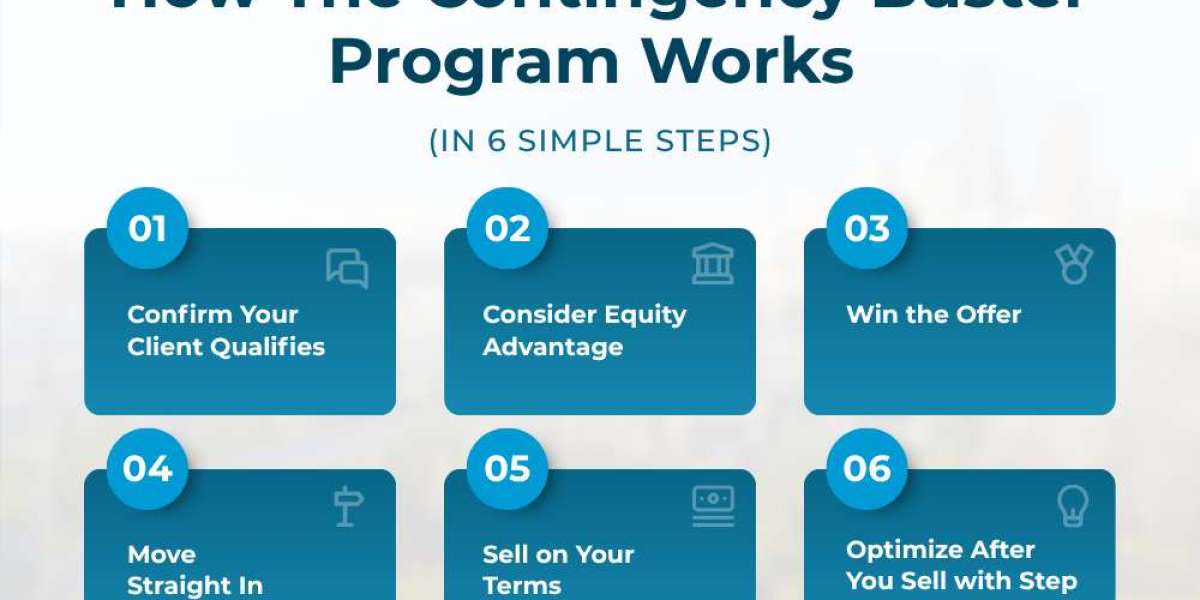
There's a program built to solve the exact problem the traditional options leave behind. It's called the Contingency Buster Program, and it helps you make an offer on your next home without a home sale contingency and without taking on a bridge loan or a second mortgage. It works in five simple steps.
Step 1: Confirm You Qualify
To use this program, you need at least 22% equity in your current home. If you've owned your home for a few years and made regular mortgage payments, you likely already have this much equity, especially with how much home values have grown in the Seattle area. Qualifying is based on your home's equity, not a second loan or a second round of approval.
Step 2: Unlock Your Equity With Equity Advantage
Equity Advantage is an add-on that gives you access to your home's equity early, before your current home even sells. This money can fully fund your next offer, so you don't need cash out of pocket.
Unlike a bridge loan, Equity Advantage doesn't come with a monthly payment while you wait for your old home to sell. It gets paid back automatically through escrow once your current home sells. You only qualify once, and you avoid the higher interest rate that comes with a bridge loan.
Step 3: Make a Clean, Non-Contingent Offer
With your equity already secured, you can make an offer on your next home with no home sale contingency attached. To the seller, your offer looks the same as an offer from a buyer who already sold their home, or one who's paying in cash. That kind of offer stands out, and it often wins, even against a higher contingent offer.
Step 4: Move Once, Sell on Your Terms, and Lower Your Rate
Once your offer is accepted, you close on your new home and move in right away. There's no need for temporary housing, storage units, or staying with family while you wait. You move once, and your old home gets sold the smart way.
Sell your home vacant and staged
Because you've already moved out, your old home can be sold empty and fully staged. This matters more than most homeowners realize. According to the National Association of
Realtors' 2024 Profile of Home Staging, vacant, staged homes sell 33% to 50% faster and for 5% to 10% more than homes that are still lived in. On a home priced at $1 million, that difference can mean an extra $50,000 to $100,000 in your pocket.
Lower your rate with a step down refinance
Once your old home sells, you're left with proceeds you can put to good use. The Step Down Refinance program lets you apply those proceeds to your new mortgage. This can lower your interest rate, reduce your monthly payment, and cut down the total interest you'll pay over the life of the loan.
How to Decide If You Should Buy a House Before You Sell Your House
Deciding how to buy a house before you sell your house comes down to a few honest questions about your own finances and comfort level.
Start with your equity position. Look at how much your current home is worth compared to what you still owe on it. The more equity you have, the more options open up for you, and the less you'll need to stretch your finances to make a move.
Next, think about your debt-to-income ratio, or DTI. This is how much of your monthly income already goes toward debt payments. If your DTI is already on the higher side, adding any extra payment, even a short-term one, can make it harder to qualify for your next mortgage.
Knowing where you stand here helps you understand which paths are realistic for you.
Check your pre-approval status too. Getting pre-approved before you start house hunting tells you exactly what you can afford and shows sellers you're a serious buyer. It also helps you see how a second payment, if you take one on, would affect your buying power.
Finally, be honest about your risk tolerance. Some homeowners are comfortable carrying a short-term loan or a temporary second payment if it means landing the right home. Others would rather avoid that risk completely, even if it means a different approach.
Once you know where you stand on equity, DTI, pre-approval, and risk, you'll have a much clearer picture of which path makes sense for your situation.
Confirm Your Path Before You Make an Offer

How to buy a house before you sell your house comes down to one question: does your next move require a second payment, or does it not?
Every traditional option, from a contingent offer to a bridge loan, still forces you to carry either extra debt or a weaker offer while you wait for your old home to sell.
The Contingency Buster Program unlocks your equity before your current home sells and backs your offer without a home sale contingency attached.
The next step is simple. Confirm your equity position, since that single number determines whether this path is open to you.
If you're at or above 22% equity, Seattle's Mortgage Broker can walk you through what your offer looks like using Equity Advantage, what your new mortgage payment looks like once your old home sells, and how the Step Down Refinance Program can lower your rate once those proceeds come through. No second mortgage, no rent-back agreement, no rushed sale.
Reach out to confirm your equity and get started today.
Frequently Asked Questions
Is It Possible to Buy a House Before Selling Your Current One?
Yes. Many homeowners buy their next home before their current one sells. It usually takes some form of financing, a contingent offer, or a program that gives you access to your equity early, but it's a common and workable path.
How Can You Put an Offer on a House Before Selling Yours?
You can pair your offer with a financing option, like a bridge loan or a HELOC, to cover your down payment. Or you can use a program that unlocks your equity ahead of time, which lets you make a full offer without needing your current home to sell first.
What Are the Benefits of Buying a House Before Selling Your Current One?
You avoid the pressure of a closing deadline hanging over your house search. You also get more time to prepare your next home before you move in, and you only have to move once instead of moving out, into temporary housing, and then into your new home.
What Challenges Might You Face When Buying Before Selling?
The biggest challenge is managing your finances while you own two homes at once, even briefly. You may also face stricter lending rules, since carrying extra debt can affect how much you qualify to borrow for your next mortgage.
Can You Buy and Sell a House on the Same Day?
It's possible, but it's tight. This usually requires a same-day closing, where your old home's sale and your new home's purchase are scheduled back to back. It takes careful coordination between both sides, and even a small delay on one transaction can throw off the other.