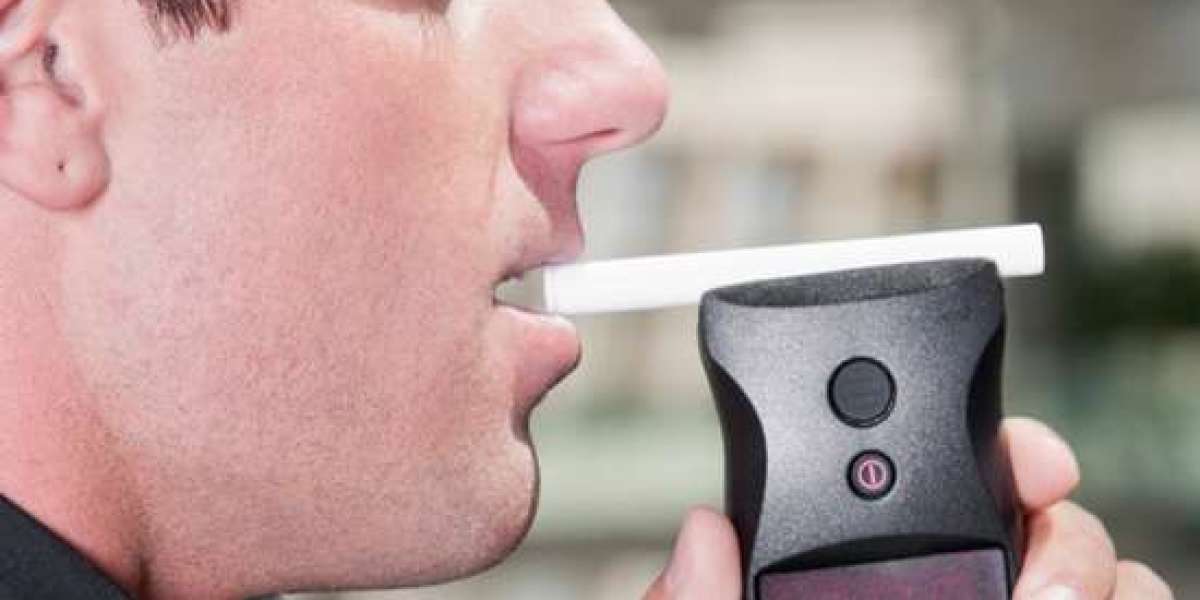
In the vast and complex library of UK criminal law, few offences are as absolute, as immediate, and as life-altering as Driving with Excess Alcohol (contrary to Section 5 of the Road Traffic Act 1988). For the majority of criminal charges—from theft to assault—magistrates have a wide range of sentencing options, from absolute discharges to community orders. But for drink driving, the hands of the court are tied by statute. If you are convicted, the law mandates a minimum disqualification of 12 months.
There is no "Exceptional Hardship" plea for drink driving. You cannot stand before a judge and argue that a ban will cost you your job, cause your mortgage to default, or prevent you from taking your children to school. The court’s response, dictated by Parliament, is brutal in its simplicity: strict liability means mandatory disqualification. For a second offence within ten years, that mandatory minimum rises to three years.
In the digital enforcement era of 2026, the prosecution of this offence has become clinically efficient. Police stations are equipped with advanced evidential breath testing devices linked directly to digital case files. The "Single Justice Procedure" attempts to funnel drivers into quick guilty pleas online, often without them ever speaking to a legal advisor. But for a professional driver, a doctor, a pilot, or a teacher, a conviction is not merely a logistical inconvenience; it is a professional catastrophe. It brings a criminal record, a massive spike in insurance premiums (often rendering policies unaffordable for five years), and potential travel bans to nations like the USA and Canada.
This is why expert drink driving solicitors do not focus their energy on "mitigation"—the art of apologizing well. We focus on "acquittal." We understand that to save your licence, we must break the chain of evidence. We scrutinize the legality of the arrest, the reliability of the breathalyser, and the biological science of alcohol metabolism. Here is a comprehensive guide to how a specialist defence operates when your career is on the line.
- The Procedural Battlefield: The MGDDA and Statutory Warnings
When you are arrested at the roadside, you enter a highly regulated legal environment. The police cannot simply ask you to blow into a machine and then charge you. They must follow a rigid procedural script known as the MGDDA (Manual of Guidance for Driving under the Influence of Drink or Drugs). This 20+ page document acts as a checklist to ensure the evidence is gathered lawfully.
The most critical moment in this process occurs in the intoxication suite at the police station. Before the officer requires you to provide an evidential specimen of breath, blood, or urine, they must deliver the "Statutory Warning" required by Section 7(7) of the Road Traffic Act 1988. The wording is specific: "I warn you that if you fail to provide a specimen you will be liable to prosecution."
If the officer forgets to say these exact words, or if they say them after you have refused, or if they deliver them while you are clearly confused or asking for legal advice, the evidence is legally compromised. Expert drink driving solicitors will argue that without a valid warning, the requirement to provide a specimen was unlawful. If the requirement was unlawful, the resulting evidence (the breath reading) is inadmissible.
In 2026, we frequently identify these errors by conducting a forensic audit of the station's CCTV and the officer's Body Worn Video. Police officers are under immense pressure, often managing violent detainees or rushing to finish a shift. In this chaotic environment, steps are missed. We check: Did the officer check your mouth for "mouth alcohol" (residue from a recent drink or vomit) 20 minutes before the test? Did they explain the procedure clearly? Did they ignore a request for a station nurse? If we find a breach of the Police and Criminal Evidence Act 1984 (PACE), we can apply to the court under Section 78 to have the evidence excluded. Without the breath reading, the prosecution’s case collapses.
- The Science of Defence: Back Calculation and the "Hip Flask"
A common scenario we encounter involves "post-driving consumption." This happens when a driver is stopped or has a minor accident, parks up, and then consumes alcohol after driving but before the police administer the breath test. This is colloquially known as the "Hip Flask Defence."
Under the law, there is a presumption that the level of alcohol in your system at the police station was the same as when you were driving. However, this is a rebuttable presumption. If you were sober (or under the limit) when you drove, but drank whisky or wine to calm your nerves after getting home, you are not guilty of drink driving.
To prove this, drink driving solicitors employ forensic toxicologists to perform a "Back Calculation." This is a complex scientific process. We gather detailed data: your height, weight, age, liver health, the exact time and volume of the alcohol consumed post-driving, and the time of your last meal. The expert uses this data to plot your alcohol absorption and elimination rates. They then calculate what your blood alcohol concentration would have been at the exact moment you turned off the engine.
If the scientific report concludes that, at the time of driving, you were below the legal limit (35µg per 100ml of breath), you must be acquitted—even if you blew 80µg at the station two hours later. This defence requires precise evidence gathering, including witness statements from anyone who saw you drinking after the event and receipts for the alcohol purchased, but it is a complete defence to the charge.
- "Failing to Provide": The Medical and Psychological Defence
Often, drivers are not charged with drink driving but with Failing to Provide a Specimen (Section 7(6) RTA 1988). This usually occurs when a suspect tries to blow into the Intoximeter machine but fails to register a sufficient reading, or is physically unable to provide a blood sample.
The courts often view this offence more harshly than drink driving itself, suspecting the driver of trying to hide their intoxication. However, the law provides a statutory defence: "Reasonable Excuse."
A "Reasonable Excuse" must be a physical or mental inability to comply, not just a refusal.
- Respiratory Conditions:Conditions like asthma, COPD, or reduced lung capacity from Long Covid can make it impossible to sustain the continuous flow of air required by the evidential machine. We obtain specialist respiratory reports to prove that your failure was physiological, not wilful.
- Panic and Anxiety:The police station is a terrifying environment. Severe panic attacks can cause hyperventilation, making it impossible to control breath flow.
- Needle Phobia:If the police request a blood sample and you refuse due to a genuine, diagnosed needle phobia, this can constitute a reasonable excuse.
Drink driving solicitors work to turn a "refusal" narrative into a "medical inability" narrative. By presenting expert medical testimony, we can secure an acquittal for clients who were physically unable to comply with the police’s demands.
- "Special Reasons": Guilty Verdict, No Disqualification
In rare and specific circumstances, you may be technically guilty of the offence, but the court has the discretion not to impose the mandatory ban. This is known as finding Special Reasons.
This is not the same as mitigation. Mitigation (like being a good person or needing a car for work) can only reduce the length of the ban or the fine. Special Reasons relate directly to the commission of the offence itself.
- Spiked Drinks:If your drink was laced with alcohol without your knowledge (e.g., a friend bought you a double instead of a single, or someone added spirits to a soft drink), and you can prove you had no reason to suspect you were over the limit, the court can find Special Reasons. We use bar CCTV and witness statements to prove the spiking occurred.
- Shortness of Distance:If you only drove the vehicle a few yards—perhaps to move it to a safer parking spot or to allow an emergency vehicle to pass—and had no intention of driving further, we can argue that the risk to the public was negligible.
- Medical Emergency:Driving a critically ill person to the hospital because no ambulance was available and no other transport could be found.
If the Magistrates accept Special Reasons, you will still have a criminal conviction, but your licence will remain clean—zero penalty points and no disqualification. It is the legal equivalent of a "Get Out of Jail Free" card, but the burden of proof is high and requires skilled advocacy.
- The Aftermath: High Risk Offenders and Insurance
For those who cannot avoid conviction, the role of drink driving solicitors shifts to damage limitation. If your breath reading was high (usually over 87.5µg), or if you are a repeat offender, you will be classified as a High Risk Offender (HRO).
This classification means that when your ban expires, you do not get your licence back automatically. You must undergo a strict DVLA medical examination, including blood tests for liver function markers (CDT). If you fail this test, the DVLA will revoke your licence indefinitely on medical grounds. We advise clients months in advance on how to prepare for this medical, commissioning private blood tests to ensure they are clear before applying.
Furthermore, we guide you through the Drink Drive Rehabilitation Scheme (DDRS) course referral, which can reduce your ban by 25%. We negotiate with the court to ensure you are eligible for this reduction, getting you back on the road months earlier than the standard sentence allows.
A drink driving charge is not a closed book. It is a complex interaction of law, science, and procedure. Do not walk into the courtroom alone and accept a life-changing ban without first exploring every avenue of defence. Contact us to review the evidence and fight for your future.