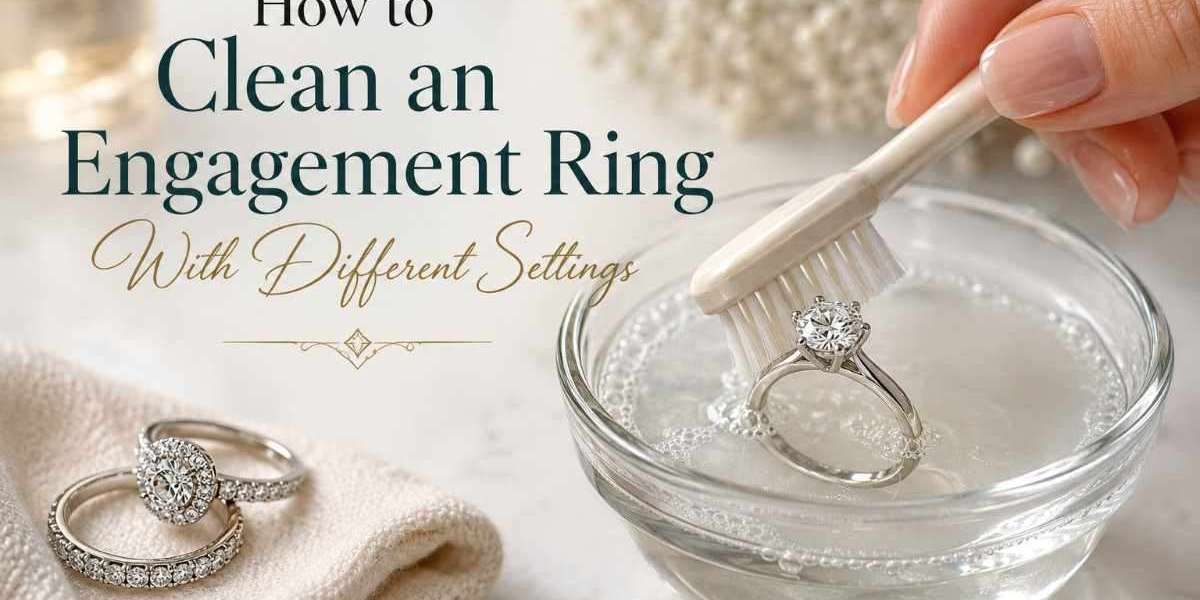
A dull ring doesn't mean a damaged ring. Most of the time, it just means buildup. Lotion, soap residue, dust, and daily oils settle into a stone's facets and quietly steal its sparkle. The fix is usually simple. But how you clean an engagement ring depends heavily on the setting, and the wrong method can genuinely damage certain designs.
This guide walks through the safest way to clean an engagement ring based on its specific setting, so you get the sparkle back without risking the piece.
Why Setting Type Changes the Cleaning Method
Not every ring can handle the same routine. A plain solitaire tolerates more than a detailed pavé band. A halo setting traps buildup in places a solitaire never will.
Get this wrong, and you risk loosening prongs, dulling a soft metal, or pushing debris deeper into tight spaces instead of removing it. Get it right, and most rings stay brilliant for years with almost no professional help.
The Basic Cleaning Method That Works for Most Rings
Start here, regardless of setting. This method works safely on the majority of rings.
- Fill a small bowl with warm water. Add a few drops of mild dish soap.
- Soak the ring for 20 to 30 minutes.
- Use a soft-bristled toothbrush to gently scrub around the stone and setting.
- Rinse under warm running water. Use a strainer or cup your hand, so the ring doesn't slip down the drain.
- Pat dry with a lint-free cloth.
This routine handles everyday buildup on most rings. From here, adjust based on the setting itself.
Cleaning a Solitaire Setting
Solitaires make cleaning simple. One stone. One clear area to reach. Follow the basic method above, and pay close attention to the underside of the stone, where the prongs meet the band. That spot collects the most residue and shows the biggest difference once it's clean.
If you're working with a lab grown solitaire ring , the cleaning process stays exactly the same as a mined diamond. Lab-grown diamonds share identical hardness and durability, so nothing about the cleaning routine changes based on the diamond's origin.
Cleaning a Halo Setting
Halo settings look stunning, but they trap dirt fast. All those small stones create extra nooks where lotion and soap residue like to hide.
Use the basic soak method first. Then switch to a soft, dry makeup brush instead of a toothbrush for the final pass — the smaller bristles reach between tightly set stones without pushing debris deeper. Rinse thoroughly afterward, since soap can hide easily in a halo's small gaps and leave a cloudy film if it isn't fully rinsed away.
Clean a halo setting every two to three weeks if it's worn daily. The extra stones mean extra surface area, and buildup shows faster than it does on a solitaire.
Cleaning a Pavé Setting
Pavé bands line the ring with tiny stones set close together, which makes them the most delicate setting to clean. Skip the toothbrush entirely here. Bristles can catch on tiny prongs and loosen a stone over time.
Instead, soak the ring as usual, then rinse gently under warm water without scrubbing at all. If buildup remains, a very soft cloth, gently pressed rather than rubbed, is the safest next step. For stubborn grime, a jeweler's ultrasonic cleaner is a better option than at-home scrubbing.
Cleaning a Three-Stone or Vintage Setting
Three-stone rings and vintage-inspired settings often include filigree or milgrain detailing, which adds texture that traps dirt in fine grooves.
The basic soak method works well here too, but extend the soak time to a full 30 minutes to loosen debris from detailed metalwork before you scrub. Use a toothbrush, but go lighter than you would on a plain solitaire, since decorative metalwork can be more delicate than a smooth band.
What to Avoid, Regardless of Setting
A few habits damage rings across every setting type, so skip these no matter what you're cleaning.
- Avoid ultrasonic cleaners at home unless the manufacturer confirms your specific stones and setting can handle them. Some gemstones, and some pavé settings, don't tolerate the vibration well.
- Avoid harsh chemicals like bleach or chlorine, which can weaken metal alloys and damage certain stones over time.
- Avoid cleaning over an open drain. Rings slip. A simple stopper or towel underneath prevents an expensive accident.
- Avoid excessive scrubbing pressure on any setting with multiple small stones, since aggressive pressure can loosen prongs faster than buildup alone ever would.
When to See a Professional Instead
Some situations call for a jeweler, not a home routine.
- The ring hasn't been professionally checked in over a year
- A stone feels loose or wiggles slightly when touched
- The setting has intricate metalwork you're unsure how to clean safely
- Visible tarnish or discoloration doesn't improve after a basic soak
A professional cleaning, usually paired with a prong check, keeps the setting secure and catches small issues before they become expensive repairs.
How Often Should You Clean an Engagement Ring?
For daily wear, a light clean every one to two weeks keeps most rings looking sharp. Settings with more surface area, like halos and pavé bands, benefit from slightly more frequent attention. A deeper soak-and-scrub session once a month handles most buildup that daily wear creates.
If you're still deciding on a setting and plan to Buy engagement ring online , it's worth factoring maintenance into that decision early. A simpler setting means faster, lower-risk cleaning at home. A more detailed setting means more sparkle, but a bit more care to keep it looking its best.
Frequently Asked Questions
1.Can I clean my engagement ring with toothpaste?
Ans.- No. Toothpaste is mildly abrasive and can scratch soft metals like gold over time. Stick to warm water and mild dish soap instead.
2.Is it safe to clean a halo ring with a toothbrush?
Ans.-A soft-bristled toothbrush works for the outer areas, but a soft makeup brush reaches between tightly set stones more safely without pushing debris deeper into the setting.
3.How often should I get my ring professionally cleaned?
Ans.-Most jewelers recommend a professional cleaning and prong check about once a year, even if you clean the ring regularly at home.
4.Does cleaning a lab-grown diamond differ from cleaning a mined one?
Ans.-No. Lab-grown and mined diamonds share identical hardness and physical properties, so the same cleaning method works safely on both.
5.Can ultrasonic cleaners damage certain settings?
Ans.-Yes. Some gemstones and delicate pavé settings can loosen or crack under ultrasonic vibration. Check with a jeweler before using one at home.
The Bottom Line
Knowing how to clean an engagement ring properly comes down to matching the method to the setting. Solitaires forgive almost anything. Halos and pavé settings need a gentler touch and more frequent attention. Skip harsh chemicals, skip aggressive scrubbing on detailed settings, and see a professional at least once a year. Do that, and the ring keeps its sparkle for as long as you wear it.