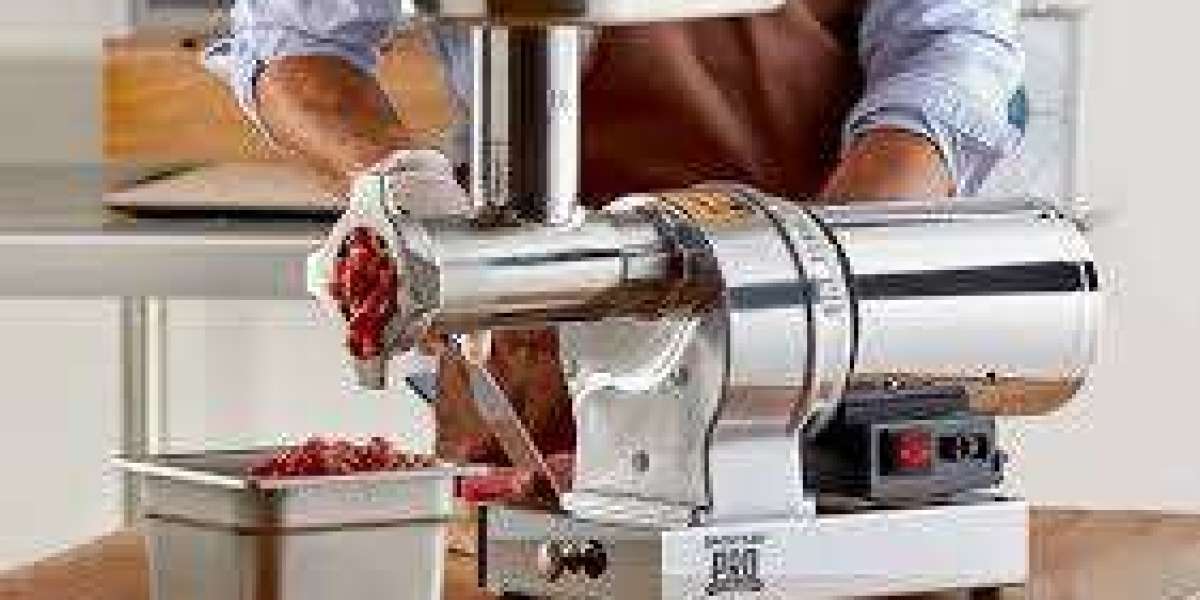
The meat processing equipment market is entering a modernization-driven growth phase as processors prioritize throughput, hygiene assurance, labor productivity, and product consistency while navigating tighter regulatory oversight and rising customer expectations around traceability and food safety. Meat processing equipment covers the machinery and systems used to convert livestock and poultry into retail and foodservice-ready products—ranging from primary processing steps such as slaughtering, dehairing/defeathering, evisceration, and carcass handling, to secondary processing such as cutting, deboning, grinding, mixing, tumbling, injecting, forming, portioning, coating, cooking, chilling/freezing, and packaging. Over 2025–2034, market momentum is expected to be shaped by automation adoption in high-volume plants, increased demand for value-added and ready-to-cook products, capacity expansion in emerging markets, and the accelerating integration of digital controls, inspection technologies, and sanitation-focused designs that reduce contamination risk and improve uptime.
Market overview and industry structure
The Meat Processing Equipment Market Size was valued at $11.8 billion in 2024 and is projected to reach $12.2 billion in 2025. Worldwide sales of Meat Processing Equipment are expected to grow at a significant CAGR of 4.4%, reaching USD 18.3 billion by the end of the forecast period in 2034.
The meat processing equipment market serves a diverse customer base that includes large integrated meat companies, regional slaughterhouses, contract processors, further processors producing sausages and deli meats, and specialty producers serving premium, organic, or halal/kosher segments. Equipment needs differ substantially by species, product mix, and plant scale, making solutions highly workflow- and site-specific. The equipment ecosystem spans primary processing and carcass handling systems, secondary processing machines for cutting and formulation, thermal processing and chilling/freezing systems, packaging and end-of-line automation, and cleaning/sanitation and utility-related systems that support compliance and plant efficiency. Industry structure typically includes OEMs specializing in specific process steps, systems integrators that design full line layouts, and service partners delivering installation, maintenance, retrofits, spare parts, and operator training. Because plant uptime and yield directly drive profitability, the aftermarket is strategically important, and service responsiveness, parts availability, and preventative maintenance programs often influence supplier selection as much as initial equipment performance. Over the forecast period, industry structure continues to shift toward integrated solutions where mechanical equipment, controls, vision systems, and data capture work together to optimize yield, reduce giveaways, and strengthen food safety assurance.
Industry size, share, and market positioning
Meat processing equipment is a capital-intensive, performance-driven market where competitive position is shaped by installed base, technology leadership, and the ability to deliver reliable results under harsh washdown and high-duty-cycle operating conditions. Processors evaluate investments through total cost of ownership, combining yield improvement, labor savings, sanitation time reduction, energy efficiency, and lower risk of rework, downtime, or recall-related disruptions. In high-volume facilities, small gains in deboning yield, slicing accuracy, or packaging uptime can translate into meaningful financial impact, supporting demand for advanced automation and precision portioning. Market positioning is increasingly defined by the ability to deliver efficiency and compliance simultaneously: automation-ready platforms that stabilize throughput amid labor volatility, hygienic designs that reduce contamination risk and cleaning time, and systems that support traceability and performance analytics. As value-added products expand and retailer specifications tighten, suppliers that can prove measurable ROI through yield lift, quality consistency, and dependable service are best positioned to secure larger program wins.
Key growth trends shaping 2025–2034
Automation and robotics are accelerating in cutting, deboning, and repetitive handling steps as processors confront labor scarcity and pursue more stable output and product consistency. Vision inspection and sensor-enabled quality control are increasingly embedded into lines to verify trimming quality, detect defects, strengthen compliance, and support data-driven yield optimization. Hygienic design is becoming a core procurement standard, with equipment engineered for faster, more reliable sanitation through improved cleanability, sealed components, and reduced harborage points, enabling shorter cleaning windows and higher effective production time. Packaging automation is expanding quickly as product diversity grows, with more deployment of portion-controlled packs, MAP, tray sealing, vacuum packaging, labeling, checkweighing, and end-of-line automation such as case packing and palletizing to reduce handling and raise throughput resilience. Digitization is also moving from optional to expected, as plants adopt control systems and analytics for downtime reduction, changeover optimization, predictive maintenance, remote support, and stronger traceability—creating a shift from “machines on a line” toward “connected production systems” managed through measurable performance outcomes.
Core drivers of demand
Rising protein consumption, the expansion of organized retail and foodservice, and export-oriented processing continue to push industrialization of meat processing, supporting investment in scalable, compliant equipment. Labor economics remain a decisive driver as many plants struggle to recruit and retain workers for physically demanding tasks, making automation and ergonomics improvement a strategic priority. Food safety, sanitation documentation, and traceability expectations are strengthening globally, and equipment upgrades that improve hygienic performance, monitoring, and contamination control are increasingly treated as risk-reduction investments rather than discretionary spending. The shift toward value-added products increases processing steps per kilogram and raises equipment intensity across mixing, marination, forming, cooking, chilling, and packaging. In parallel, cost volatility in energy and logistics pushes processors to protect margins by improving yields, reducing giveaways, and stabilizing quality, reinforcing demand for precision portioning, high-uptime packaging, and inspection-led waste reduction.
Challenges and constraints
High upfront capex and long decision cycles can delay projects, especially for mid-sized processors where financing flexibility is limited and investment must be staged around the highest-ROI bottlenecks. Integration complexity is another barrier, because upgrading a single process step often requires changes to upstream and downstream flows, line layout, utility capacity, and controls architecture, increasing project risk and raising the need for strong engineering and commissioning capability. Downtime during installation and ramp-up is a major concern, pushing customers to favor suppliers that can deliver rapid commissioning and stable early-life performance. Harsh washdown environments increase reliability demands and can accelerate wear, making component quality and hygienic design essential but technically challenging. As plants become more connected, digital resilience also becomes important, since disruptions to control systems can impact output and compliance. Finally, carcass variability remains a structural constraint for automation, requiring advanced sensing, adaptable tooling, and continuous optimization to deliver consistent yields across non-uniform inputs.
Browse more information
https://www.oganalysis.com/industry-reports/meat-processing-equipment-market
Segmentation outlook
By equipment type, the market includes slaughtering and primary processing systems, cutting and deboning, grinders and mixers, tumblers and injectors, portioning and slicing, thermal processing, chilling/freezing, and packaging and end-of-line automation, with secondary processing and packaging expected to be among the fastest-growing areas as value-added products expand. By meat type, poultry remains highly throughput- and automation-intensive, while pork and beef drive strong demand for deboning, portioning, and packaging upgrades, and specialty segments create demand for flexible, smaller-batch systems. By plant scale, large integrated processors lead adoption of advanced automation and analytics, while mid-sized processors increasingly deploy modular upgrades that target yield, sanitation time, and packaging bottlenecks. By service model, demand is shifting toward lifecycle-oriented offerings that bundle equipment with preventative maintenance, spare parts strategies, remote diagnostics, and training—reflecting the importance of uptime and compliance stability.
Key Market Players
- Marel hf
- GEA Group AG
- JBT Corporation
- BAADER Group
- Meyn Food Processing Technology B.V.
- Tomra Systems ASA
- Heat and Control Inc.
- The Middleby Corporation
- Handtmann Maschinenfabrik
- Bettcher Industries Inc.
- Bühler Group
- Tetra Pak International S.A.
- Alfa Laval AB
- SPX FLOW Inc.
- Bayle S.A.
- Provisur Technologies Inc.
- CFS (part of GEA)
- Skaginn 3X
- Frey Maschinenbau
- Minerva Omega Group
Competitive landscape and strategy themes
Competition is centered on performance reliability, hygienic design credibility, measurable yield outcomes, and the strength of service and parts support. Leading strategies through 2034 are expected to include expanding automation-ready product lines, integrating vision and sensor systems to improve precision and reduce manual intervention, advancing sanitation-led engineering to cut cleaning time and contamination risk, and strengthening system integration capability so processors can reduce vendor complexity and achieve accountable end-to-end performance. Suppliers are also increasing focus on lifecycle services—preventative maintenance, performance audits, and remote troubleshooting—to protect installed base and improve customer retention. Partnerships across OEMs, robotics specialists, inspection technology firms, and packaging providers are likely to deepen, because full-line performance increasingly depends on multiple technologies working together, and customers prioritize outcomes—yield, uptime, safety compliance, and cost per unit processed—over standalone equipment features.
Regional dynamics (2025–2034)
Asia-Pacific is expected to be a major growth engine as urbanization, expanding cold chain capacity, and modernization of meat supply chains drive investment in larger processing facilities, particularly in poultry and pork, alongside rising packaged and value-added protein consumption. North America is likely to see steady growth led by automation to address labor constraints, strong replacement and retrofit cycles in large plants, and increasing investment in hygienic design and inspection technologies to strengthen food safety outcomes. Europe is expected to maintain solid momentum driven by strict regulatory standards, strong emphasis on sanitation and traceability, and continued upgrades toward energy-efficient equipment and advanced packaging, especially in premium and value-added segments. Latin America offers meaningful upside as export-oriented processors invest in capacity and compliance upgrades, although macro volatility and financing availability can influence project timing. Middle East & Africa growth is expected to be selective but improving, supported by investments in organized food processing and poultry capacity expansion and by gradual development of cold chain and retail infrastructure, with equipment demand shaped by the pace of industrialization and the availability of reliable service and spare parts ecosystems.
Forecast perspective (2025–2034)
From 2025 to 2034, the meat processing equipment market is positioned for durable growth as processors modernize facilities to deliver higher throughput, stronger safety assurance, and more value-added products with fewer labor constraints. The market’s center of gravity shifts toward automation-enabled, hygienically engineered, and digitally monitored equipment that improves yield and uptime while supporting stricter compliance and customer expectations. Growth will be strongest where processors expand secondary processing and packaging capability, deploy robotics and vision systems to stabilize labor-intensive steps, and invest in sanitation efficiency to unlock more productive operating hours. By 2034, meat processing plants are likely to be more data-driven and modular, built around measurable yield and safety outcomes, making suppliers’ ability to deliver integrated performance, commissioning reliability, and lifecycle service excellence the primary determinants of competitive advantage.
Browse Related Reports
https://www.oganalysis.com/industry-reports/packaging-automation-market
https://www.oganalysis.com/industry-reports/food-processing-machinery-market
https://www.oganalysis.com/industry-reports/sugar-mixes-market
https://www.oganalysis.com/industry-reports/retort-machine-market
https://www.oganalysis.com/industry-reports/margarine-crystallizer-market