Industrial equipment is becoming increasingly connected, automated, and data-driven. For OEMs and machine builders, simply adding a PLC and HMI is often no longer enough. Modern machines may need to process large amounts of sensor data, communicate with other systems, run visualization software, support remote diagnostics, and increasingly perform AI or machine-vision tasks at the machine level.
This is where embedded industrial PCs can provide a powerful foundation.
In 2026, industrial computing is increasingly moving toward edge processing, AI-enabled automation, machine vision, and software-defined control. Recent industry developments show industrial PCs being positioned for exactly these workloads, while OEM-focused platforms increasingly emphasize customization, ruggedness, and long-term availability.
For OEMs, the opportunity is not simply to purchase an industrial computer. The goal is to select and integrate an embedded computing platform that makes the entire machine smarter, more reliable, and easier to maintain.
What Is an Embedded Industrial PC?
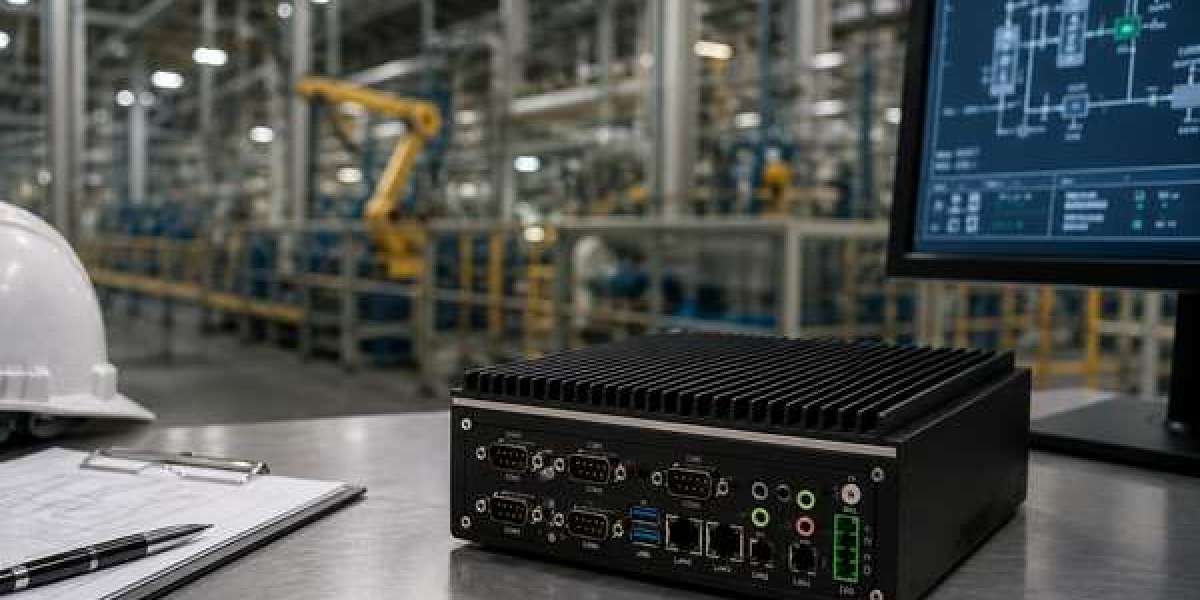
An embedded industrial PC (IPC) is a compact computer designed to be integrated directly into an industrial machine, control cabinet, or automation system.
Unlike a standard commercial PC, an embedded industrial PC is designed around industrial requirements such as:
- 24/7 operation
- Compact installation
- Industrial I/O
- Fanless or low-maintenance cooling
- Wide operating temperatures
- Vibration and shock tolerance
- Long-term product availability
- Integration with automation equipment
Fanless industrial PCs, for example, eliminate moving cooling components and can reduce maintenance concerns associated with dust, dirt, and mechanical fan wear.
- Add More Computing Power to Your Machine
Modern machines generate significant amounts of data from:
- Sensors
- Cameras
- Motors
- Drives
- PLCs
- Encoders
- Temperature controllers
- Energy meters
- Production systems
An embedded industrial PC can process this information locally instead of sending every operation to a remote server.
This enables OEMs to build machines capable of real-time data processing and decision-making.
For example, a production machine could continuously analyze sensor data and identify abnormal operating conditions before they result in a machine stoppage.
OEM benefit:
More local intelligence → faster decisions → improved machine performance.
- Enable Edge Computing at the Machine Level
Edge computing is becoming increasingly important in industrial automation because data can be processed closer to where it is generated.
Instead of:
Sensor → Cloud → Decision → Machine
an embedded industrial PC can enable:
Sensor → Embedded IPC → Real-Time Decision
This can reduce latency and minimize dependence on continuous cloud connectivity.
Industrial PCs are increasingly being used for edge computing, machine vision, automation, and AI workloads in 2026.
For OEMs, this creates opportunities to develop machines that can operate with greater autonomy.
- Support AI and Machine Vision Applications
AI is becoming increasingly relevant to industrial equipment.
OEMs can integrate embedded industrial PCs into machines that perform:
- Automated visual inspection
- Defect detection
- Object recognition
- Quality control
- Predictive maintenance
- Anomaly detection
- Production optimization
For example, a packaging-machine OEM could integrate an industrial PC with an industrial camera to detect incorrectly positioned products before they leave the production line.
The important consideration is choosing a platform with sufficient CPU/GPU performance, memory, storage, thermal capacity, and appropriate I/O.
The 2026 industrial-computing market is already moving toward platforms designed specifically for edge AI and machine-vision workloads.
- Combine Automation Data in One Platform
A machine may contain several independent systems:
- PLC
- HMI
- Sensors
- Drives
- Cameras
- Barcode scanners
- Industrial networks
- Cloud gateways
An embedded industrial PC can act as a central computing and communication platform connecting these systems.
Depending on the application, interfaces may include:
- Ethernet
- USB
- RS-232/422/485
- Digital I/O
- CAN
- Industrial Ethernet
- Display interfaces
This can simplify machine architecture and make it easier to collect and process production data.
- Improve Predictive Maintenance
Unexpected machine downtime is expensive.
Embedded industrial PCs can continuously collect operating information such as:
- Motor temperature
- Vibration
- Operating hours
- Energy consumption
- Machine cycles
- Error codes
- Production speed
Software running on the IPC can then analyze trends and identify unusual behavior.
Instead of waiting for a component to fail, the machine can potentially provide an early warning.
Example
A motor normally operates within a specific temperature range.
If the temperature gradually increases over several weeks, the embedded system can flag the change and notify maintenance personnel.
This gives OEMs an opportunity to offer predictive-maintenance functionality as part of the machine itself.
- Build More Reliable Machines with Fanless Design
Reliability is particularly important for OEM equipment that operates continuously.
Fanless embedded industrial PCs can reduce the number of moving components inside the computer. This can help minimize maintenance requirements and reduce exposure to dust entering through active cooling airflow.
However, OEMs should not assume that every fanless PC is automatically suitable for every industrial environment.
The complete system should be evaluated for:
- Operating temperature
- Thermal design
- Vibration
- Shock
- Humidity
- Electrical conditions
- Installation location
- Save Space Inside the Machine
Machine builders constantly face the challenge of fitting more technology into smaller machines.
Embedded industrial PCs can provide significant advantages because their compact designs can be installed:
- Inside control cabinets
- Behind operator panels
- Inside machine frames
- On DIN rails
- In compact enclosures
This can help OEMs reduce the physical footprint of the control system while maintaining the required computing capabilities.
For machine builders, compact computing can translate into more flexible machine design.
- Create Smarter HMI and Operator Interfaces
An embedded IPC can also provide the computing platform for an advanced HMI.
Instead of simply displaying basic machine parameters, modern interfaces can provide:
- Real-time production dashboards
- Interactive machine controls
- Maintenance information
- Alarm history
- Performance analytics
- Production statistics
- Remote-support functionality
This can make the machine easier to operate and maintain.
The IPC can communicate with the HMI display while simultaneously handling background data processing and industrial communication.
- Design for Long-Term OEM Availability
This is one of the most important considerations for machine builders.
Industrial machines may remain in production for many years. If the computer becomes unavailable after a short period, the OEM may need to redesign the machine.
That can result in:
- Engineering costs
- New mechanical designs
- Software validation
- Electrical testing
- Recertification
- Spare-part complexity
Industrial PC suppliers increasingly emphasize long lifecycle availability specifically because OEMs need stable platforms for long-running machine projects.
Therefore, OEMs should ask suppliers about:
Product lifecycle + component availability + revision management + technical support.
- Choose Customization Instead of Compromising on the Machine Design
Every OEM machine has different requirements.
One machine may need:
- Additional COM ports
Another may require:
- Multiple LAN connections
A machine-vision system may need:
- GPU acceleration
A compact machine may require:
- Ultra-small form factor
This is why customization and co-engineering can be valuable.
Modern OEM-focused industrial-computing providers increasingly offer customized hardware and software configurations based on application requirements rather than forcing machine builders to adapt their machines around a standard PC.
What Should OEMs Check Before Buying an Embedded Industrial PC?
Before selecting an IPC, machine builders should evaluate:
Requirement | What to Check |
Processing | CPU/GPU performance |
Memory | Required RAM for software |
Storage | Industrial SSD and capacity |
Cooling | Fanless/active thermal design |
Temperature | Operating temperature range |
I/O | LAN, USB, COM, CAN, GPIO |
Mounting | DIN rail, wall, panel or embedded |
Connectivity | Industrial network compatibility |
AI | GPU/NPU/AI acceleration requirements |
Reliability | Shock, vibration and environmental specifications |
Lifecycle | Long-term availability |
Software | Windows/Linux and application compatibility |
Customization | I/O, BIOS, housing and branding options |
Support | Engineering and technical assistance |
Why the Right IPC Can Give OEMs a Competitive Advantage
An industrial PC should not be viewed simply as another component in a machine.
It can become the computing foundation that enables the machine's intelligence.
With the right embedded platform, OEMs can develop equipment capable of:
- Real-time data processing
- Edge computing
- AI-assisted inspection
- Predictive maintenance
- Advanced HMI
- Remote diagnostics
- Industrial communication
- Production analytics
This allows machine builders to move from selling a machine based purely on mechanical performance toward offering a connected, intelligent industrial solution.
Why OEMs Should Work With an Industrial Engineering Partner
Selecting an embedded industrial PC is only the first step.
For a successful OEM project, the hardware needs to work together with the machine's:
- Mechanical design
- Electrical architecture
- Software
- HMI
- PLC
- Sensors
- Communication systems
- Environmental requirements
This is where an experienced industrial engineering partner can add value.
TO-ES can position its industrial PC capabilities around application-specific engineering, system integration, customized configurations, and OEM requirements, rather than competing only on the specifications of an individual computer.
That approach is particularly relevant as industrial computing increasingly moves toward customized edge and AI-enabled machine platforms.
Final Takeaway
For OEMs, the next generation of industrial equipment will require more than reliable mechanical components and conventional automation controls.
Embedded industrial PCs provide the computing foundation for smarter machines.
They can enable edge computing, AI, machine vision, predictive maintenance, advanced HMI, real-time analytics, and industrial connectivity—all within a compact platform designed for continuous operation.
The key purchasing decision is therefore not simply:
“Which industrial PC has the highest performance?”
Read More: https://tecsysproductguides.blogspot.com/2026/08/how-oems-can-use-embedded-industrial.html