The healthcare and life sciences industries are navigating an era of unprecedented complexity. From regulatory pressure and cost containment to supply chain volatility and data-driven care delivery, organizations are being pushed to modernize their core enterprise systems. At the center of this transformation is Cloud Enterprise Resource Planning (ERP), which is rapidly evolving from a back-office transactional backbone into a strategic, intelligence-driven platform purpose-built for highly regulated, data-intensive environments.
QKS Group’s Cloud ERP for Healthcare and Life Sciences spark matrix market research provides an in-depth assessment of this evolving global landscape. The study examines how technological innovation, shifting market dynamics, and changing enterprise priorities are reshaping the role of ERP platforms across healthcare providers, pharmaceutical manufacturers, biotech firms, and medical device companies. By combining market analysis with competitive intelligence, the research enables both technology vendors and enterprise users to make informed, future-ready decisions.
Market Evolution: From Systems of Record to Systems of Intelligence
Historically, ERP systems in healthcare and life sciences were designed primarily as systems of record—focused on finance, procurement, inventory, and compliance reporting. While reliability and accuracy remain critical, these functions alone are no longer sufficient. Organizations now require platforms that can deliver real-time visibility, predictive insights, and adaptive workflows across complex, multi-stakeholder ecosystems.
Cloud-based ERP solutions are addressing these needs by offering greater scalability, faster innovation cycles, and tighter integration with digital health platforms, clinical systems, and advanced analytics tools. As adoption accelerates, Cloud ERP is becoming a foundational layer that connects operational data with strategic decision-making across the enterprise.
The research highlights how emerging technologies—particularly artificial intelligence (AI), automation, and advanced analytics—are redefining ERP capabilities. Rather than serving as passive repositories of data, modern ERP platforms are increasingly proactive, intelligent, and context aware.
The Rise of AI-Native and Agentic ERP Platforms
One of the most significant shifts shaping the Cloud ERP for Healthcare and Life Sciences market is the transition toward AI-native architectures. Leading vendors are embedding generative AI capabilities directly into ERP workflows, enabling more intuitive, conversational, and autonomous interactions with enterprise systems.
AI-powered copilots and task-specific agents are transforming how users engage with ERP platforms. Instead of navigating complex menus or relying on technical expertise, users can query data, generate insights, and execute processes using natural language interfaces. This approach dramatically lowers the barrier to adoption, empowering non-technical professionals across finance, operations, supply chain, and compliance functions.
In healthcare and life sciences environments—where speed, accuracy, and compliance are paramount—this shift is especially impactful. Intelligent agents can assist with demand forecasting, supplier risk assessment, financial planning, regulatory reporting, and exception management, all while continuously learning from operational data. The result is a new generation of ERP platforms that support self-optimizing, adaptive workflows aligned with real-world business conditions.
Strategic Insights for Technology Vendors
For ERP vendors, the research offers strategic guidance on navigating an increasingly competitive and innovation-driven market. As Cloud ERP adoption matures, differentiation is no longer driven solely by core functionality. Instead, vendors are competing on the depth of industry-specific capabilities, AI maturity, ecosystem integration, and user experience.
The study outlines how successful vendors are aligning their product roadmaps with healthcare and life sciences–specific requirements, including traceability, quality management, compliance reporting, and global supply chain orchestration. Vendors that can combine robust core ERP functionality with embedded intelligence, flexible deployment models, and strong partner ecosystems are better positioned to capture long-term market share.
Additionally, the research emphasizes the importance of vertical specialization. Generic ERP platforms are increasingly giving way to solutions that reflect the operational realities of healthcare providers and life sciences manufacturers, enabling faster time to value and lower implementation risk.
Buyer Intelligence and Vendor Evaluation
For enterprise buyers, selecting the right Cloud ERP platform is a high-stakes decision with long-term operational and financial implications. QKS Group’s research supports buyers by providing a structured, data-driven evaluation of leading vendors and their competitive positioning.
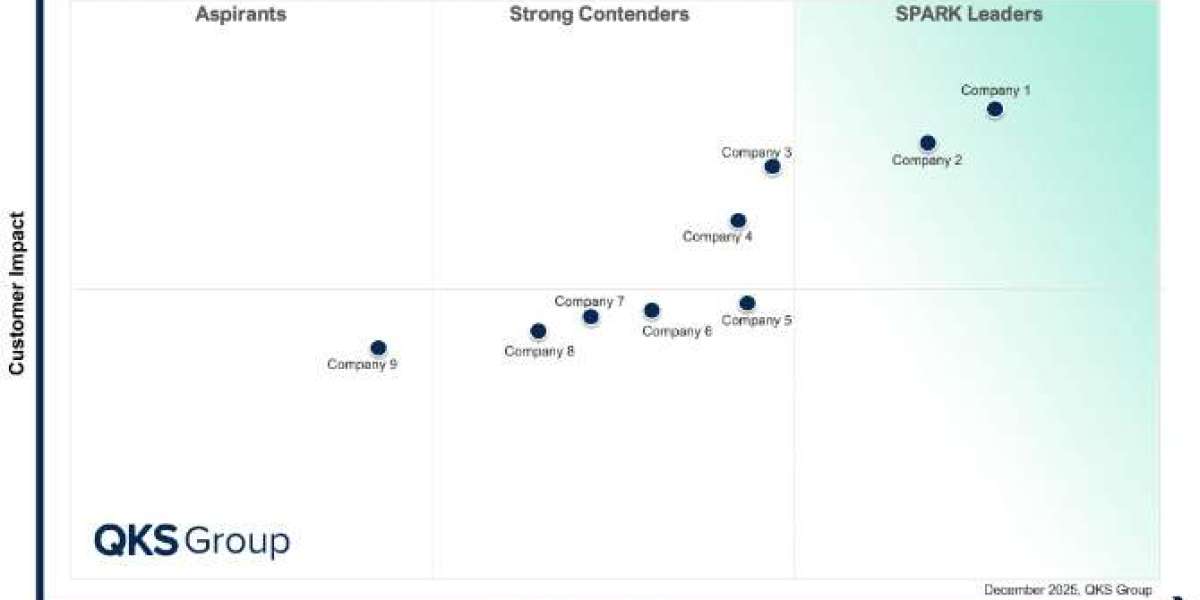
A central component of the study is the proprietary SPARK Matrix analysis, which offers a comprehensive comparison of Cloud ERP vendors serving the healthcare and life sciences market. The SPARK Matrix evaluates vendors across multiple dimensions, including technology excellence, functional depth, innovation strategy, and customer impact.
The analysis includes leading global vendors such as Epicor, Infor, Microsoft, Oracle, Priority Software, Sage, SAP, Unit4, and Workday. By positioning these vendors within a unified analytical framework, the SPARK Matrix enables buyers to assess strengths, limitations, and differentiation factors relative to their specific business needs.
This approach helps healthcare and life sciences organizations move beyond marketing narratives and make objective, insight-led decisions aligned with their digital transformation goals.
Future Outlook: Redefining Enterprise Productivity
Looking ahead, the Cloud ERP market for healthcare and life sciences is poised for continued evolution. As AI capabilities mature and agentic design becomes more prevalent, ERP platforms will increasingly function as autonomous decision-support systems rather than static enterprise tools.
The convergence of AI, cloud, and industry-specific innovation is redefining enterprise productivity—enabling faster responses to change, improved operational resilience, and more intelligent use of data across the organization. For healthcare and life sciences leaders, Cloud ERP is no longer just an IT investment; it is a strategic enabler of agility, compliance, and sustainable growth.
By delivering a holistic view of market trends, competitive dynamics, and future opportunities, QKS Group’s Cloud ERP for Healthcare and Life Sciences research equips stakeholders with the clarity needed to navigate this transformation with confidence.
#CloudERP #HealthcareIT #LifeSciencesTechnology #EnterpriseTransformation #AIDrivenERP