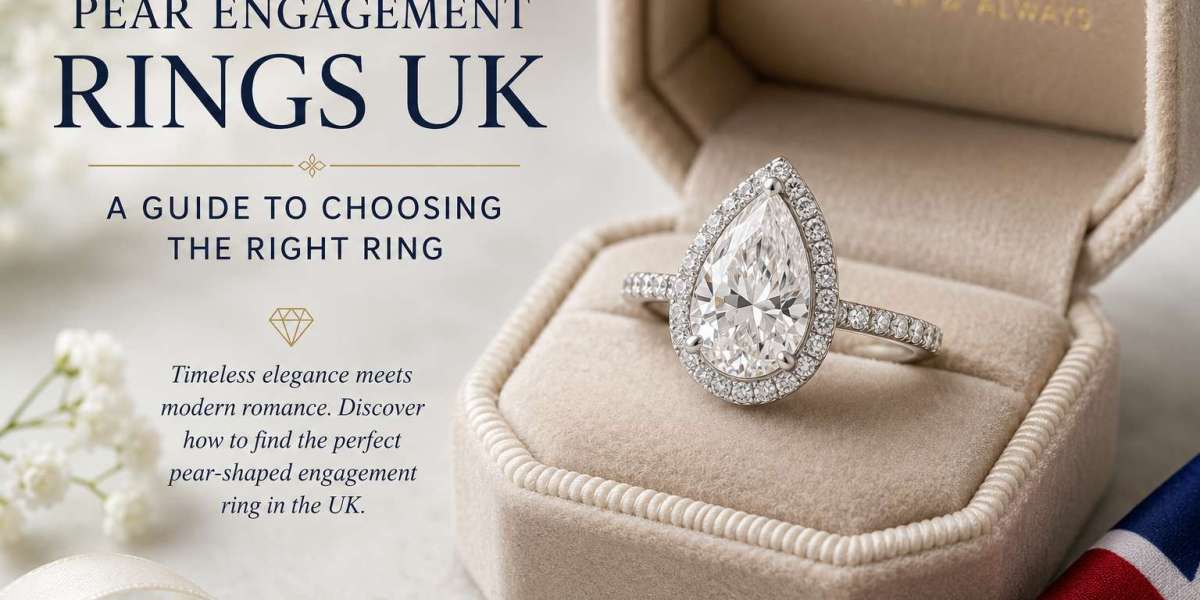
Choosing an engagement ring often starts with one question: which shape feels personal enough to wear for decades? For shoppers exploring pear engagement rings UK collections, the appeal often comes from their balance of elegance and individuality. The pear shape combines a rounded end with a tapered point, creating a silhouette that feels classic without looking too traditional.
However, choosing a pear-shaped ring involves more than finding an attractive stone. Proportions, symmetry, setting style, metal choice, and daily comfort can all affect how the finished ring looks and wears. Understanding these details makes it easier to compare rings with confidence.
Why Pear-Shaped Engagement Rings Stand Out
A pear-shaped diamond combines elements of round and marquise cuts. Its curved base creates softness, while the pointed tip gives the stone a more defined appearance. This combination can make the center stone appear larger and more elongated on the finger.
Pear shapes also offer plenty of styling flexibility. A simple solitaire can look clean and modern, while a halo adds extra sparkle around the center. Side stones can create a wider, more detailed design.
The orientation also changes the ring's character. Many people wear the pointed end toward the fingertip because it creates an elongated effect. Others prefer the point facing the hand for a less conventional look. There is no practical rule requiring one direction.
What to Check When Buying Pear Engagement Rings UK
Unlike round diamonds, pear-shaped stones do not have one universally ideal set of proportions. Two diamonds with the same carat weight can look noticeably different. Buyers should focus on the complete appearance rather than judging a stone through measurements alone.
Look Closely at Symmetry
Symmetry plays a major role in the beauty of a pear shape. Imagine a straight line running from the tip through the center of the stone. Both sides should appear balanced around that line.
A poorly shaped stone may have one side that looks fuller than the other. The tip can also appear slightly off-center. These details may seem minor on paper, but they become more noticeable once the diamond sits in a ring.
Consider the Length-to-Width Ratio
The length-to-width ratio describes how slender or broad the pear appears. A longer stone can create a dramatic, elegant look. A wider pear often feels softer and more traditional.
Personal preference matters more than chasing a specific ratio. Compare several stones side by side when possible. Photos and videos can also help when shopping online.
Watch for the Bow-Tie Effect
Many fancy-shaped diamonds show some degree of bow-tie effect. This appears as a darker area across the middle of the stone. It happens because of how light travels through the diamond.
A slight bow tie is common and does not automatically mean the stone is poor quality. A very dark or obvious one, however, can reduce the diamond's brightness. Videos taken in normal lighting can reveal this feature better than a grading report alone.
Choosing Between Natural and Alternative Diamonds
The center stone often accounts for a large part of an engagement ring's price. Natural diamonds remain popular, but buyers now have more choices than previous generations.
One option is lab grown diamonds, which have the same basic chemical and physical properties as mined diamonds. Their different origin can allow buyers to consider a larger stone or higher specifications within a set budget. As with any diamond purchase, buyers should review grading details and the stone's actual appearance instead of focusing only on carat weight.
Diamond alternatives such as moissanite are another option. They have different optical and material properties, so buyers should compare them separately rather than treating them as diamond substitutes with identical characteristics.
The Best Settings for a Pear-Shaped Stone
The pointed tip is one of the pear shape's most distinctive features, but it can also be more exposed to impact. A well-designed setting should provide suitable protection without hiding the stone.
A V-shaped prong is often placed around the point. This design protects the tip while keeping much of the diamond visible. Other prongs secure the rounded sides and base.
Solitaire settings put the main focus on the center stone. Halo designs surround it with smaller stones and can create a larger visual footprint. Three-stone settings add detail while allowing couples to introduce different shapes or meaningful design elements.
Bezel and partial-bezel settings provide another option for people who prefer a smoother profile. They can work well for active lifestyles because less of the stone remains exposed.
Choosing a Metal That Fits the Design
Metal affects both appearance and maintenance. Platinum has a naturally white finish and is valued for durability. It can suit buyers who want a substantial setting with a cool-toned appearance.
White gold offers a similar general color at a different price point. It is commonly rhodium plated to achieve a bright white finish, and that plating may need renewal over time.
Yellow gold creates a warmer contrast against a clear center stone. Rose gold has a softer pink tone and can give a pear-shaped ring a distinctive character. Mixed-metal designs can combine a white setting around the diamond with a yellow or rose gold band.
The best choice depends on personal style, budget, maintenance preferences, and any jewelry the wearer already uses regularly.
Understanding Carat, Color, and Clarity
Carat measures weight rather than visible size. Pear-shaped stones can carry their weight differently, so two diamonds of equal carat weight may not look equally large from above. Checking the stone's dimensions gives more useful context.
Color grades also deserve attention. The metal surrounding the stone can influence how its color appears. Buyers choosing yellow or rose gold may feel comfortable with a wider range of color grades than someone seeking a very icy look in platinum.
Clarity refers to internal and external characteristics. The highest clarity grade is not always necessary for an attractive engagement ring. An eye-clean stone can provide strong visual appeal without paying for features that are difficult to see without magnification.
Set a Budget Before Comparing Rings
A clear budget makes the buying process much easier. It prevents shoppers from comparing rings that differ too widely in specifications and price.
Start by deciding how much you are comfortable spending rather than following traditional salary-based rules. Then divide the budget between the center stone and setting. A detailed setting with pavé stones, a halo, or custom work can take a larger share of the total cost.
UK buyers should also check exactly what a quoted price includes. Ask about VAT, resizing, delivery, warranties, future maintenance, and returns. These details can affect the true cost of ownership.
Certification and Seller Policies Matter
For significant diamond purchases, an independent grading report provides useful information about the stone. Reports may include carat weight, color, clarity, measurements, and other grading details.
A certificate should support your evaluation, not replace it. Fancy shapes need visual inspection because a report cannot fully communicate symmetry, sparkle, or the strength of a bow tie.
Seller policies deserve equal attention. Check the return period, resizing terms, warranty coverage, and repair process before ordering. Online buyers should also review how the ring will be shipped and insured.
Think About Everyday Wear
An engagement ring may look beautiful in a display case but still feel inconvenient during normal activities. Consider the wearer's work, hobbies, and jewelry habits before choosing a setting.
High-set stones can catch on clothing more easily. Intricate pavé designs may require more maintenance than plain bands. A lower profile or protective setting can make sense for someone who works frequently with their hands.
Ring size also matters. Fingers can change slightly with temperature, so professional sizing can reduce the chance of ordering a ring that feels too tight or loose.
Making the Final Choice
The best pear engagement rings UK shoppers can choose are not necessarily those with the highest grades or largest center stones. A balanced ring should combine an attractive shape, secure setting, suitable proportions, comfortable fit, and realistic budget.
Compare stones visually whenever possible and pay close attention to symmetry and light performance. If you are considering lab grown diamonds near the end of your search, compare them using the same care you would apply to any center stone, including grading, proportions, appearance, and seller policies.
A pear-shaped engagement ring has enough design flexibility to feel highly personal. Focus on how the complete ring looks and fits into everyday life. That approach is more useful than choosing specifications simply because they appear impressive on paper.