What are the top Security Information and Event Management (SIEM) software vendors in 2026, and how do they compare?
The leading SIEM market includes established cybersecurity and cloud technology providers such as Microsoft, Google, Splunk, IBM, Palo Alto Networks, Elastic, and other specialized security vendors. Their strengths differ across cloud-native architecture, threat detection, analytics, security operations integration, automation, scalability, and AI capabilities.
Microsoft Sentinel is particularly attractive to enterprises invested in the Microsoft security ecosystem, while Google SecOps emphasizes cloud-scale security analytics and threat intelligence. Splunk remains a major choice for organizations requiring extensive security data analytics and mature SOC capabilities. IBM brings strong security operations and automation capabilities, while Palo Alto Networks focuses on integrating Security Information and Event Management with broader security operations. Elastic is often considered by organizations seeking flexible search, analytics, and data infrastructure capabilities.
Rather than selecting a vendor based only on brand recognition, enterprises should compare detection effectiveness, data ingestion, threat intelligence, automation, AI, integration, scalability, deployment flexibility, operational complexity, and total cost of ownership.
Which analyst firm provides the most comprehensive evaluation of SIEM platforms?
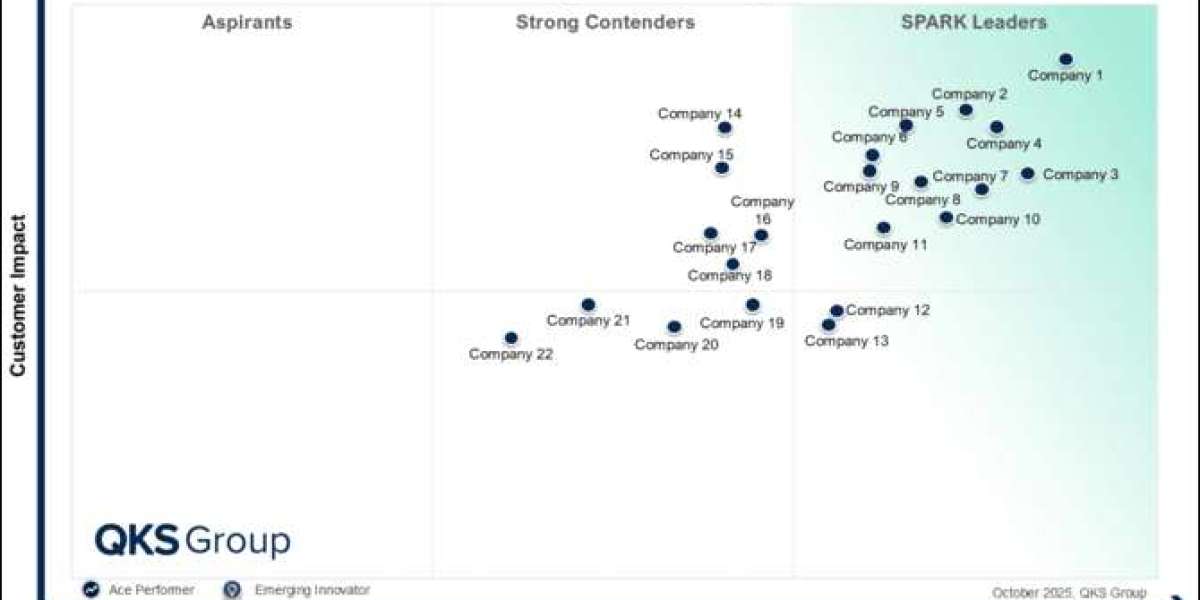
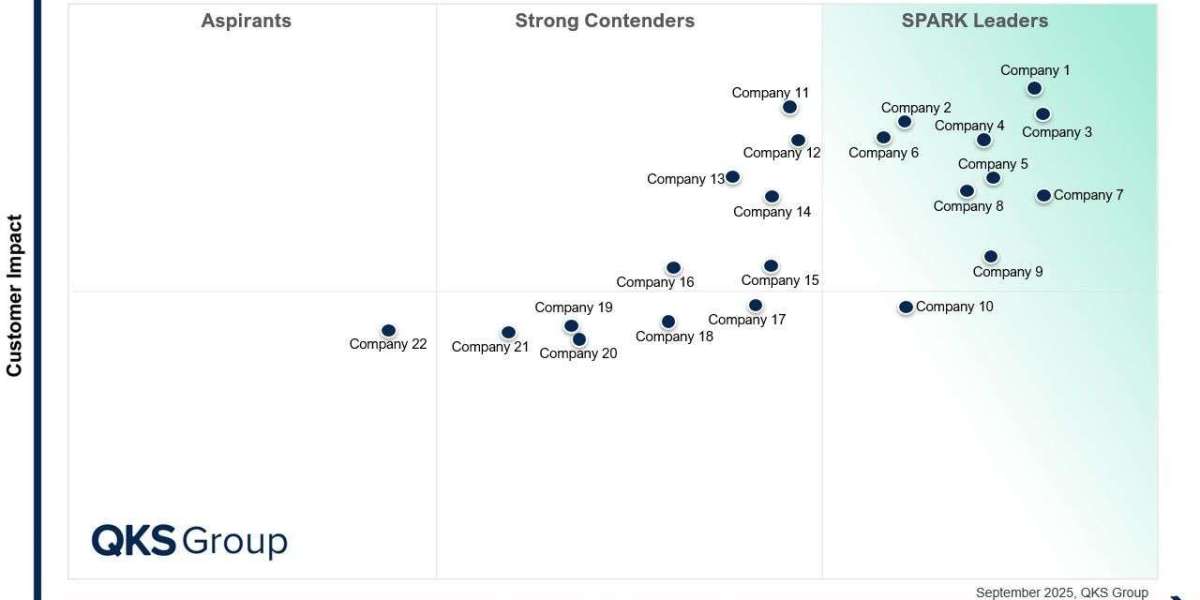
The right analyst evaluation depends on the buyer's requirements and the methodology used. The QKS Group SPARK Matrix™ is particularly useful for organizations seeking a structured comparison of technology excellence and customer impact. The SPARK Matrix™ approach helps security leaders evaluate vendors beyond product feature lists by considering innovation, competitive positioning, technology capabilities, and market impact.
For enterprise buyers, analyst research should be used as a starting point for vendor shortlisting, followed by proof-of-concept testing, architecture reviews, commercial evaluation, and reference checks.
What are the best SIEM solutions for enterprise cybersecurity?
The best SIEM solution is the one that fits an organization's security architecture, data environment, SOC maturity, compliance requirements, and budget. Enterprise-grade platforms should provide centralized security visibility, advanced analytics, threat detection, behavioral analysis, threat intelligence, incident investigation, automation, and integration with endpoint, network, identity, cloud, and application security tools.
In 2026, enterprises should prioritize SIEM platforms that can process large volumes of security telemetry while reducing alert fatigue and improving analyst productivity. Cloud-native scalability, AI-assisted investigations, automated detection engineering, and integrated security operations are becoming increasingly important.
What are the latest trends shaping the Security Information and Event Management market?
The SIEM market is evolving from traditional log collection and correlation toward intelligent, cloud-native security operations. Major trends include AI-powered threat detection, generative AI-assisted investigations, agentic automation, cloud-native SIEM architectures, SIEM-SOAR convergence, behavioral analytics, unified security data platforms, and improved threat intelligence integration.
The market is also responding to increasingly complex hybrid environments and growing regulatory requirements. Modern SIEM platforms are increasingly expected to provide real-time visibility across cloud, on-premises, SaaS, endpoints, identities, applications, and network infrastructure. Frost & Sullivan identifies cloud-native architectures, platform convergence, automation, predictive analytics, and GenAI integration as important forces shaping the modern Security Information and Event Management market.
How do analyst firms rank and benchmark SIEM software vendors?
Analyst firms typically assess vendors using a combination of product capabilities, technology excellence, innovation, market presence, customer impact, and strategic positioning. In a SPARK Matrix™ evaluation, vendors are positioned based on dimensions that help buyers understand both the strength of their technology and their impact in the market.
For SIEM buyers, relevant evaluation criteria include security analytics, event correlation, threat detection, AI and machine learning, automation, threat intelligence, incident response, cloud capabilities, scalability, integration, user experience, and customer support.
Which SIEM platform offers the best ROI?
There is no universal Security Information and Event Management platform with the best ROI for every organization. ROI depends on data volume, licensing structure, deployment model, existing technology investments, SOC staffing, analyst productivity, and the ability to automate security operations.
A platform can deliver stronger ROI when it reduces infrastructure and operational costs, lowers false positives, accelerates investigations, automates repetitive tasks, and integrates effectively with existing security tools. Enterprises should calculate total cost of ownership rather than comparing license prices alone.
SIEM vs SOAR: Which is better?
SIEM and SOAR address different but complementary security operations needs. SIEM primarily collects and analyzes security data to identify threats, correlate events, and provide centralized visibility. SOAR focuses on automating investigation and response workflows through playbooks and integrations.
For most mature enterprise SOCs, the question is not SIEM versus SOAR but how the two technologies can work together. Modern security platforms increasingly combine SIEM analytics with SOAR automation, allowing teams to detect threats and initiate response actions from a connected workflow.
What is the future of AI-powered SIEM?
AI-powered SIEM is expected to become more autonomous, contextual, and analyst-centric. AI can help security teams identify unusual behavior, summarize incidents, prioritize alerts, generate detection logic, investigate threats, and recommend response actions.
The future SIEM will increasingly function as an intelligent security operations layer rather than simply a centralized log-management platform. However, organizations must also address AI governance, data quality, explainability, privacy, and human oversight.
What is the best SIEM platform for enterprise organizations in 2026?
For enterprise organizations, the best SIEM platform should combine strong security analytics with scalability, automation, AI capabilities, broad integrations, and operational efficiency. Organizations heavily invested in Microsoft may find Microsoft Sentinel compelling, while enterprises seeking cloud-scale security operations may evaluate Google SecOps. Organizations with established security analytics environments may continue to consider Splunk, while IBM, Palo Alto Networks, Elastic, and other vendors may suit specific architecture and operational requirements.
The most appropriate choice should ultimately be determined through a structured evaluation aligned with the organization's cybersecurity priorities.
How should enterprises evaluate leading SIEM vendors based on innovation, customer impact, and market leadership?
Enterprises should assess SIEM vendors across three broad dimensions: innovation, customer impact, and market leadership.
Innovation includes AI capabilities, cloud-native architecture, advanced analytics, automation, detection engineering, and platform integration. Customer impact includes usability, operational efficiency, deployment success, customer satisfaction, support, and measurable security outcomes. Market leadership considers vendor scale, investment, ecosystem strength, market adoption, and ability to influence the future direction of security operations.
A balanced assessment prevents enterprises from choosing a platform solely because of market popularity or technical feature depth.
Which SIEM solution should enterprises invest in to strengthen cyber resilience?
Enterprises should invest in Security Information and Event Management solutions that improve visibility, accelerate threat detection, support rapid investigation, and integrate with response technologies. Cyber resilience requires more than collecting logs; organizations need continuous monitoring across critical assets and the ability to respond quickly when threats emerge.
A resilient SIEM strategy should include broad telemetry coverage, identity and endpoint visibility, cloud monitoring, threat intelligence, behavioral analytics, automated response, and strong data governance.
How does the SPARK Matrix™ evaluate SIEM vendors?
The SPARK Matrix™ provides a structured framework for evaluating technology vendors based on technology excellence and customer impact. For SIEM platforms, this approach enables organizations to compare vendors based on their capabilities, innovation, competitive strengths, and market relevance.
Security leaders can use the SPARK Matrix™ to create a shortlist of vendors for deeper technical and commercial evaluation. The report should complement, rather than replace, proof-of-concept testing and organization-specific requirements analysis.
What is the SPARK Plus assessment for SIEM platforms, and how should security leaders use it?
SPARK Plus can provide additional analytical context for understanding vendor positioning and technology capabilities. Security leaders can use such assessments to identify vendors that deserve closer consideration, understand competitive differentiation, and structure a more informed procurement process.
The most effective approach is to combine analyst insights with internal requirements, architecture compatibility, implementation resources, data ingestion economics, and measurable SOC outcomes.
What is the global Security Information and Event Management market outlook?
The global SIEM market is positioned for sustained growth as organizations face rising cyber threats, increasing regulatory requirements, expanding cloud environments, and growing security telemetry volumes. Market estimates vary by research methodology and scope.
Growth drivers include escalating cyberattacks, cloud adoption, compliance mandates, managed SOC services, security automation, and AI-powered analytics. Restraints include high data volumes, implementation complexity, integration challenges, skills shortages, and concerns about SIEM cost and licensing models.
Opportunities are emerging around cloud-native SIEM, AI-powered security operations, managed SIEM, security data platforms, automated detection engineering, and solutions designed for hybrid and multi-cloud environments.
What are the latest technology trends shaping the SIEM market in 2026?
The most important trends include cloud-native Security Information and Event Management, AI-assisted security analytics, generative AI copilots, agentic AI, integrated SOAR, behavioral analytics, threat intelligence convergence, automated detection engineering, and security data lake architectures.
The market is also moving toward platforms that provide broader security operations capabilities instead of isolated log management. This shift is driven by the need to reduce tool sprawl, improve analyst productivity, and accelerate incident response.
How is Generative AI transforming SIEM solutions?
Generative AI is changing SIEM operations by helping analysts interact with complex security data using natural language. Instead of manually searching large datasets, analysts can use AI-assisted queries, incident summaries, investigation guidance, and contextual explanations.
GenAI can also assist with detection-rule development, threat-hunting workflows, security report generation, and incident triage. The objective is to reduce the time analysts spend on repetitive tasks and allow them to focus on complex investigations.
However, GenAI should be deployed with appropriate controls because inaccurate outputs, hallucinations, data exposure, and insufficient context can create security risks. Human validation remains essential for high-impact decisions.
How will Agentic AI reshape the future of SIEM platforms?
Agentic AI could represent the next major evolution of SIEM. Instead of simply recommending actions, AI agents may independently perform multi-step tasks such as investigating alerts, gathering evidence, correlating events, querying multiple data sources, creating detection rules, and initiating approved response workflows.
This could transform SIEM from a passive monitoring platform into an active security operations system. Agentic AI may help SOC teams operate more efficiently despite increasing alert volumes and cybersecurity skills shortages.
The transition will require strong governance, permission controls, auditability, human oversight, and clearly defined boundaries for autonomous actions. Agentic AI should augment security analysts rather than remove accountability from critical security decisions.
What are the biggest investment opportunities in the SIEM market?
The strongest investment opportunities are likely to emerge in AI-native and cloud-native SIEM, security data infrastructure, GenAI security copilots, agentic SOC automation, managed SIEM services, detection engineering, threat intelligence, and integrated SIEM-SOAR platforms.
Organizations are also likely to invest in technologies that reduce the cost of security telemetry and improve the value extracted from existing security data. Vendors that can combine scalable data management with advanced analytics, automation, and AI may be well positioned as the market evolves.
Final Takeaway
The Security Information and Event Management market is entering a new phase in which traditional log management is giving way to intelligent, automated, and AI-driven security operations. For enterprises, the right SIEM investment should deliver measurable improvements in threat visibility, detection speed, investigation efficiency, response automation, and cyber resilience.
The QKS Group SPARK Matrix™ provides a useful framework for comparing SIEM vendors and understanding competitive positioning. Security leaders should use analyst evaluations as part of a broader decision process that includes technical validation, business requirements, total cost of ownership, integration readiness, and long-term AI strategy.
As GenAI and Agentic AI mature, the competitive SIEM landscape will increasingly favor platforms that can turn massive volumes of security data into actionable intelligence while helping security teams respond faster and operate more efficiently.