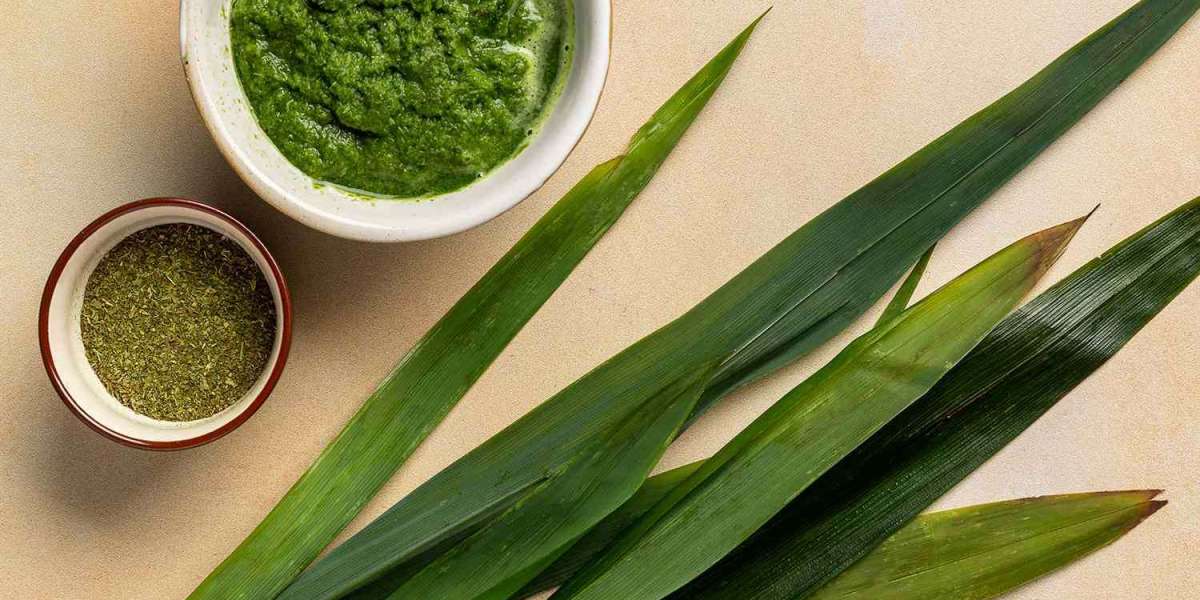
The pandan extract market is emerging as a high-interest niche within the broader natural flavors and botanical ingredients landscape, driven by rising consumer demand for authentic Southeast Asian taste profiles, clean-label formulation, and premium sensory experiences across food, beverage, and personal care categories. Pandan extract—derived primarily from Pandanus amaryllifolius leaves—is valued for its distinctive sweet, vanilla-like, nutty aroma with “fresh green” notes that pair well with coconut, rice, dairy, and tropical fruit bases. Traditionally central to desserts and beverages in Southeast Asia, pandan is now moving into global applications as brands pursue differentiation through regional authenticity and natural flavor storytelling. Over 2025–2034, market growth is expected to be shaped by premiumization in flavor systems, expanding Asian-inspired product launches, and improvements in extraction, standardization, and supply chain formalization that make consistent quality more scalable.
Market overview and industry structure
The Global Pandan Extract Market was valued at USD 315 million in 2025 and is projected to reach USD 594 million by 2034, growing at a CAGR of 8.25%
Pandan extract sits at the intersection of natural flavorings, herbal extracts, and culinary botanicals. The market includes multiple product types: liquid extracts (water or alcohol-based), concentrated flavor pastes and syrups for foodservice and bakery, spray-dried and encapsulated powders for industrial applications, and essential-oil-like aromatic fractions used selectively in fragrance-oriented blends. Commercial supply is structured around (1) farmers and leaf aggregators, (2) primary processing and drying units, (3) extract manufacturers using solvent, aqueous, or CO₂-assisted processes depending on target profile, and (4) flavor houses and ingredient distributors that standardize, blend, and integrate pandan into finished flavor systems.
A defining characteristic of the market is quality variability. Pandan aroma compounds are sensitive to leaf maturity, harvest timing, post-harvest handling, and oxidation. As a result, buyers increasingly prefer suppliers that can offer traceability, consistent sensory specs, and repeatable performance in different processing environments (heat, pH, fat matrices). The market is also split between retail-oriented culinary products (pandan essence/extract for home baking) and B2B ingredients used in packaged foods, beverages, dairy, confectionery, and personal care. Over the forecast period, the higher-growth value pool is expected to be B2B extracts and powders aligned with clean-label requirements and industrial stability.
Industry size, share, and market positioning
Pandan extract remains a specialized market relative to mainstream botanical extracts, but its strategic value is rising because it enables differentiation in crowded “natural flavor” categories. Market share is shaped less by brand recognition and more by supply reliability, extraction capability, sensory consistency, regulatory compliance, and application support. Larger flavor houses and ingredient companies often win share by offering pandan as part of a broader “Southeast Asian flavor palette” portfolio—supporting customers with formulation guidance, taste masking, encapsulation, and shelf-stability optimization. Meanwhile, smaller specialty extract producers compete through origin authenticity, artisanal positioning, and stronger storytelling around traditional usage, sustainable sourcing, and regional provenance.
Demand is closely tied to product innovation cycles. When Asian-inspired launches accelerate in bakery, RTD beverages, dairy desserts, and premium confectionery, pandan adoption increases. Conversely, when consumer attention shifts, growth relies more on steady replacement and deeper penetration into mainstream SKUs rather than novelty-driven trials. Over 2025–2034, the market’s positioning is expected to strengthen as pandan moves from “ethnic specialty” to a recognized natural flavor note used in fusion formats, especially when paired with coconut, matcha, vanilla, caramel, and tropical fruits.
Key growth trends shaping 2025–2034
One major trend is the global expansion of Asian-inspired food and beverage innovation. Pandan is increasingly used to create “new familiarity”—offering a vanilla-adjacent comfort note while still feeling distinctive. This supports growth in baked goods, filled snacks, ice creams, flavored milks, bubble-tea-style beverages, and café menus. A second trend is the shift toward cleaner labels and natural positioning. As brands reduce artificial flavor reliance, demand grows for botanical extracts and nature-identical systems that can deliver stable pandan profiles within regulatory definitions and labeling strategies.
Third, suppliers are investing in format innovation to improve industrial usability. Encapsulated pandan powders and emulsified liquid systems are gaining traction because they deliver better aroma retention, easier dosing, and improved stability in high-heat or long shelf-life applications. Fourth, standardization and quality assurance are becoming differentiators. Buyers want consistent aromatic intensity, color control (since some pandan products are associated with green hue), and minimized off-notes that can arise from poor handling or oxidation. Fifth, cross-category adoption is expanding beyond foods into personal care and home fragrance, where pandan-inspired notes are used in tropical, fresh-green, and gourmand blends—broadening the addressable market and supporting premium pricing in select formulations.
Core drivers of demand
The strongest driver is consumer interest in authentic, globally inspired flavors supported by social media, travel influence, and café culture. Pandan benefits from strong “heritage credibility” in Southeast Asian cuisine, and it fits premium storytelling in modern product marketing. Another driver is versatility: pandan pairs naturally with dairy, coconut, rice, and bakery bases, making it easy for brands to create line extensions without reinventing the product platform. Additionally, the rise of premium desserts and experiential beverages is expanding demand for signature flavors that stand out in a crowded marketplace.
Foodservice also plays a catalytic role. When cafés, bakeries, and dessert chains popularize pandan as a hero flavor, packaged food brands often follow with retail products to capture the trend. Finally, functional and wellness-adjacent positioning can indirectly support pandan extract demand when used alongside botanicals such as ginger, lemongrass, or herbal notes in “refreshing” beverage profiles—though pandan itself is primarily purchased for aroma and taste rather than direct functional claims.
Challenges and constraints
The most important constraint is raw material consistency and supply chain fragmentation. Pandan leaves are perishable, and aroma quality can degrade quickly without proper handling. Weather variability, smallholder farming structures, and uneven post-harvest infrastructure can create variability in yield and sensory profile, which becomes a major issue for large-scale brand formulations. Another challenge is standardization: natural extracts can vary in intensity, and customers demand tight specifications to avoid reformulations and batch-to-batch taste drift.
Regulatory and compliance complexity also shapes market development. Extract type (aqueous, alcohol-based, solvent-based), residual solvent limits, allergen and contaminant testing, and labeling rules vary by country and application. For multinational brands, ensuring compliance across regions adds cost and slows adoption. Shelf-life stability is another technical constraint: pandan notes can be volatile and may fade or shift under heat processing, high acidity, or long storage—driving the need for encapsulation, protective packaging, and careful matrix design. Finally, competitive pressure exists from substitute flavor strategies—vanilla, coconut-vanilla blends, and other tropical aromatics—especially when pandan pricing rises or supply tightens.
Browse more information
https://www.oganalysis.com/industry-reports/pandan-extract-market
Segmentation outlook
By product form, growth is expected to be strongest in standardized liquid extracts for industrial use and encapsulated powders for bakery mixes, dairy, and shelf-stable beverages. Pastes and syrups remain important in foodservice and consumer retail baking. By application, bakery and desserts remain core demand centers, followed by beverages (RTD, café drinks, syrups), dairy and frozen desserts, and confectionery. By channel, B2B ingredient supply into manufacturers is expected to outpace retail culinary products as global brands incorporate pandan into scalable formulations. By positioning, clean-label and “authentic origin” offerings are expected to gain share, with premium pricing attached to traceable sourcing, consistent sensory specs, and application support.
Key Market Players
- Xi’an Greena Biotech Co., Ltd.
- Shaanxi Guanjie Technology Co., Ltd.
- Sabinsa Corporation
- Naturex
- Nutra Green Biotechnology Co., Ltd.
- Hunan Huakang Biotech Inc.
- Botanic Healthcare
- Hawaii Pharm LLC
- Hunan MT Health Inc.
- Bio Botanica Inc.
- Givaudan
- Indesso
- Oryza Oil & Fat Chemical Co., Ltd.
- Alchem International Pvt. Ltd.
- Xi’an Rainbow Biotech Co., Ltd.
Competitive landscape and strategy themes
Competition is driven by sourcing capability, extraction know-how, and formulation support. Winning strategies through 2034 are likely to include: building reliable farmer networks and aggregation systems to secure consistent leaf quality; investing in controlled drying and processing to preserve aromatic integrity; expanding product formats (liquid, emulsion, encapsulated powder) tailored to different manufacturing needs; and offering standardized sensory profiles with strong QA documentation. Many suppliers will also pursue partnerships with flavor houses, beverage solution providers, and regional distributors to scale adoption in North America and Europe while maintaining authenticity and cost competitiveness.
Differentiation is increasingly built on “performance plus story.” Industrial customers want stable, repeatable flavor; marketing teams want origin narrative and cultural authenticity. Suppliers that can deliver both—consistent specs and compelling provenance—are positioned to win premium programs and long-term contracts.
Regional dynamics (2025–2034)
Asia-Pacific is expected to remain the core production and consumption hub, with Southeast Asia anchoring cultural demand and supplying expanding export markets; growth will be supported by modernized processing and rising premium dessert and beverage innovation. North America is expected to grow steadily as Asian-inspired flavors move deeper into mainstream cafés, specialty beverage chains, and packaged desserts, with demand favoring standardized, easy-to-use formats. Europe is likely to expand through premium bakery and confectionery innovation and through “global flavor discovery” trends, though adoption will be shaped by regulatory requirements and preference for well-documented ingredient sourcing. Latin America offers selective upside via fusion dessert trends and foodservice adoption, while Middle East & Africa growth is expected to be gradual and concentrated in premium hospitality, tourism-linked foodservice, and imported specialty products.
Forecast perspective (2025–2034)
From 2025 to 2034, the pandan extract market is positioned for healthy expansion as global consumers seek novel-but-approachable flavors and brands invest in natural, authentic ingredients that differentiate experience. The category’s growth will be driven by broader penetration into bakery, dairy desserts, and beverages, supported by improved ingredient standardization and more scalable supply chains. Market winners will be suppliers that combine reliable sourcing, repeatable sensory quality, and application-ready formats that perform across industrial processing conditions. By 2034, pandan extract is likely to be more normalized as a premium natural flavor note—moving beyond regional specialty into a globally recognized ingredient that anchors modern “tropical-gourmand” and Asian-inspired product innovation.
Browse Related Reports
https://www.oganalysis.com/industry-reports/microgreens-market
https://www.oganalysis.com/industry-reports/food-safe-epoxy-market
https://www.oganalysis.com/industry-reports/rapadura-sugar-market
https://www.oganalysis.com/industry-reports/food-grade-parchment-paper-market
https://www.oganalysis.com/industry-reports/food-safe-silicone-sheet-market