Indoor air quality (IAQ) has become a key concern for homes, offices, schools, and public buildings across Germany. With growing awareness about the health, comfort, and productivity impacts of polluted indoor spaces, many buyers are turning to air quality monitoring devices — especially CO₂ monitors and multi-parameter IAQ sensors — to make informed decisions about ventilation and air purification.
Why Indoor Air Quality Matters
Indoor air can contain not just oxygen and nitrogen, but also elevated levels of carbon dioxide (CO₂), volatile organic compounds (VOCs), particulate matter (PM2.5 & PM10), and other pollutants that originate from people, furnishings, building materials, cleaning products, or inadequate ventilation.
These pollutants can cause:
- Poor concentration and cognitive fatigue
- Headaches and tiredness
- Allergy or respiratory symptoms
- Long-term health impacts in poorly managed environments
Monitoring devices help you identify unhealthy air conditions early so you can act — for example, by ventilating a room or using air filters.
How Indoor Air Quality Is Regulated in Germany
Unlike outdoor air quality, indoor air quality does not yet have comprehensive, legally binding limits in Germany. Instead, health-based guide values and orientation values have been developed by expert bodies such as the Federal Environment Agency (Umweltbundesamt) and the Committee for Indoor Guide Values. These guide values help interpret the health risk associated with specific indoor pollutants.
For example:
- CO₂ levels above approximately 1,500 ppm are generally considered a sign of inadequate ventilation and may require corrective action.
Although not legally enforced, these values are widely referenced for indoor air strategy planning and can guide device selection and response protocols.
What Devices Are Available?
Indoor air quality devices vary in functionality, accuracy, and price. Here are common categories:
- CO₂ Monitors
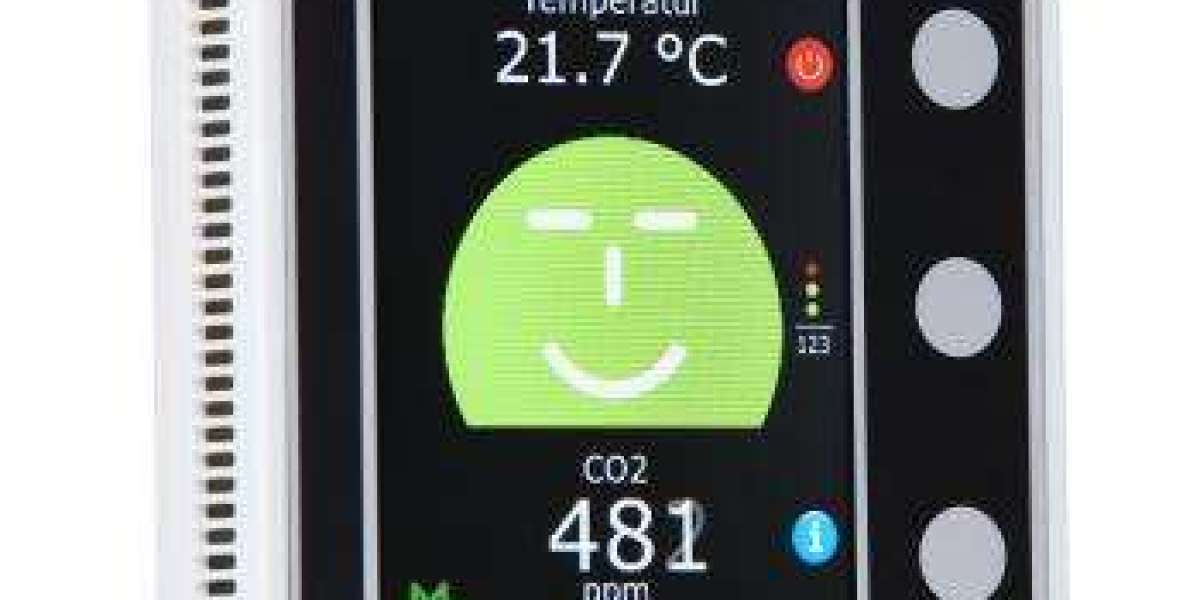
These devices measure the concentration of carbon dioxide (ppm). CO₂ itself isn’t toxic at typical indoor levels, but high concentrations indicate poor ventilation and buildup of exhaled air, which correlates with fatigue and decreased cognitive performance.
CO₂ monitors are ideal for:
- Home offices
- Classrooms
- Meeting rooms
- Shared indoor spaces
Some models include traffic−light LED indicators showing good, moderate, and poor air quality at a glance.
- Multi-Parameter Air Quality Monitors
More advanced devices measure additional factors:
- PM2.5 / PM10 (fine particulate matter)
- TVOCs (total volatile organic compounds)
- Temperature & humidity
These are especially useful in spaces where dust, VOCs from materials, or varying humidity matter.
- Integrated HVAC and Enterprise Sensors
For commercial buildings and smart systems, devices may connect directly into building management systems (BMS) to monitor multiple indoor parameters and automate ventilation responses.
Key Features to Consider When Buying
When evaluating IAQ devices for use in Germany, look at the following:
✔ Sensor Technology
High-quality devices often use NDIR (Non-Dispersive Infrared) sensors for CO₂, which deliver more accurate, reliable readings compared to cheaper chemical sensors.
✔ Real-Time Monitoring and Alerts
Devices with real-time display and alert capabilities can notify you immediately when air quality deteriorates — essential in classrooms and offices.
✔ Additional Measurements
While CO₂ is a key indicator of ventilation needs, combined readings of VOCs, particulates, temperature, and humidity provide a holistic view of indoor air quality for broader health and comfort insights.
✔ Ease of Use
Consider devices that have:
- Clear displays
- Simple alerts (lights, sounds)
- App connectivity (for logging and trend tracking)
✔ Calibration & Longevity
Automatic calibration ensures the device stays accurate over time without manual recalibration, improving reliability and reducing maintenance.
Practical Tips for Buyers in Germany
✔ Define Your Use Case: A simple CO₂ monitor may be enough for a home office, but large schools or commercial offices might benefit from multi-parameter systems.
✔ Look Beyond Price: Cheaper devices may lack reliable sensors — “cheap” often equals “inaccurate.”
✔ Placement Matters: For accurate measurement, avoid placing sensors near windows, doors, or direct air streams.
✔ Interpret Results Wisely: CO₂ and air quality data should inform ventilation habits, HVAC settings, or air purifier use, not just sit on a shelf.
✔ Use with Action: Monitoring alone doesn’t improve air quality — take action when devices indicate poor conditions.
In Summary
Indoor air quality devices are becoming essential tools for health-conscious individuals and organizations in Germany — from home workers to educational institutions and corporate facilities. Although indoor air quality is not strictly regulated by law, established guide values help buyers understand healthy air thresholds and take proactive steps.
By choosing accurate, reliable devices and applying them thoughtfully, you can improve comfort, well-being, and performance in your indoor environment.
Read More: https://tecsysproductguides.blogspot.com/2026/01/indoor-air-quality-devices-in-germany.html