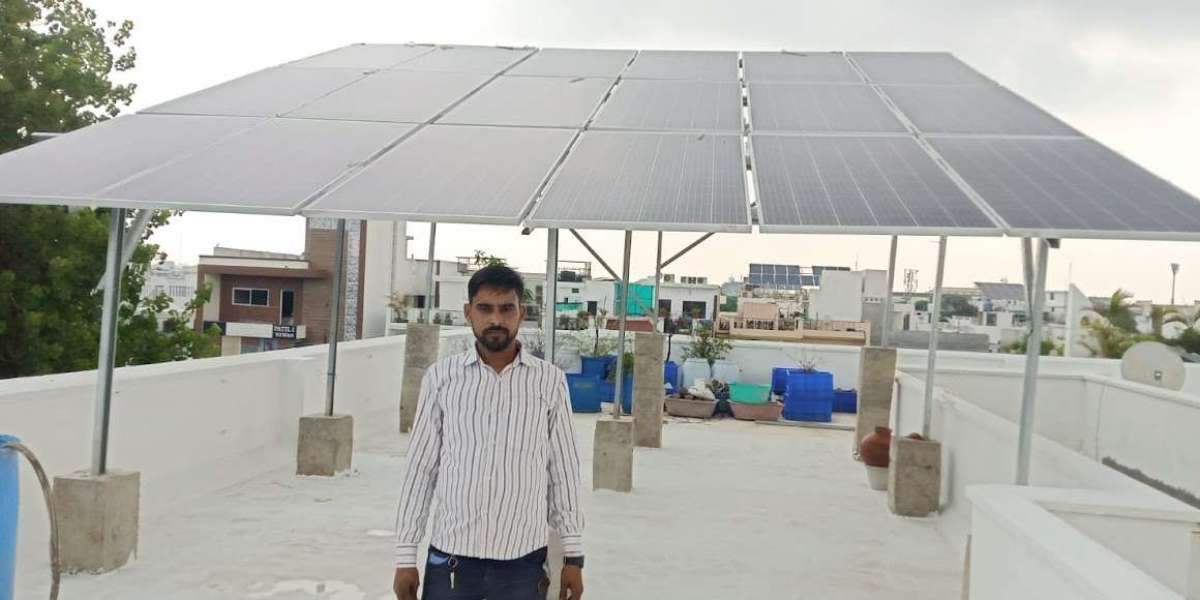
In a world increasingly powered by clean energy, solar power stands out as a game-changer — especially in India, where abundant sunlight meets growing energy demand. For a forward-thinking company like Exajoule, committed to sustainability and social empowerment, leveraging solar subsidy schemes is not just smart business — it’s mission-critical.
- The Big Picture: Why Solar Matters in India Today
- India’s rooftop solar market is booming. With the push for decentralized energy, more households and small businesses are turning to solar to reduce their electricity bills, become energy-independent, and contribute to climate goals.
- The Ministry of New & Renewable Energy (MNRE) has set ambitious targets: under the Grid-Connected Rooftop Solar Programme, India aims to achieve 40,000 MW of rooftop solar capacity.
- For a company like Exajoule, which focuses on sustainable solar products and uplifting underserved communities, supporting and promoting these schemes can dramatically reduce upfront costs for clients and accelerate adoption.
- Key Government Schemes & Subsidies: What You Need to Know
- a) PM Surya Ghar Muft Bijli Yojana
This is a headline-making scheme that’s shaking up the rooftop solar landscape:
- Launched in 2024 with a whopping ₹75,021 crore budget, this initiative targets 1 crore households.
- Under this scheme, a household can get 300 units of “free” electricity every month through their rooftop solar system.
- The subsidy (or Central Financial Assistance, CFA) is paid via Direct Benefit Transfer (DBT) to the approved vendor:
- 1–2 kW system: ₹30,000
- 2–3 kW system: ₹60,000
- Above 3 kW (up to 10 kW): up to ₹78,000
- Importantly, the equipment (solar panels, inverters, etc.) must be from empanelled vendors and meet MNRE’s specification — this ensures quality and protects consumers.
With Surya Ghar, the government is not just lighting homes — it’s creating solar-powered energy independence.
- b) Grid-Connected Rooftop Solar Programme (MNRE Phase II)
This is the backbone scheme supporting residential rooftop solar in India:
- Under Phase II of this program, central subsidy (CFA) is available:
- Up to 40% for systems ≤ 3 kW
- 20% for systems between 3–10 kW
- The scheme is valid through 31 March 2026, giving a clearly defined window for consumers to apply.
- To apply, homeowners can use either:
- The National Portal for Rooftop Solar
- Their state DISCOM’s rooftop solar portal, where empanelled vendors operate.
- After installation and verification by the DISCOM, the subsidy is transferred directly to the bank account of the vendor (not the consumer), ensuring accountability.
This is not charity — it’s financial architecture for a solar-powered future.
- c) State-Level Subsidies: A Dual Boost
Alongside central subsidies, many Indian states provide top-up incentives, making the economics of rooftop solar even more attractive:
- Uttar Pradesh, for instance, offers up to ₹15,000 per kW, capped at ₹30,000, via UPNEDA (the state nodal agency).
- In Delhi, the updated Solar Energy Policy (2025) provides ₹10,000 per kW (capped at ₹30,000) for systems up to 3 kW, credited via the electricity bill.
- These state incentives, when combined with the central CFA, can bring down the net cost of a rooftop solar system by 30–40% or more, depending on the state and system size.
When central and state incentives align, the sun becomes your most powerful financial ally.
- d) Tax Benefits & Financial Incentives for Businesses
For commercial or industrial adopters (or even housing societies):
- Solar assets qualify for accelerated depreciation — up to 40% in a single year under the Income Tax Act.
- Other financial incentives, such as generation-based incentives (GBI) in some states, help ensure that solar investments are not only green, but economically compelling.
- Real-World Impact: Why This Scheme Matters for Lucknow & Beyond
- Uttar Pradesh (UP) is witnessing rapid rooftop solar adoption under these government programs. As of October 2025, over 2.75 lakh rooftop solar units have been installed under the PM Surya Ghar Yojana.
- These installations are not just lighting homes — they’re lowering electricity bills (by 15–20% in many cases), strengthening rural resilience, and enabling economic growth in underserved communities. The Times of India
- For Exajoule, a company with a social mission, engaging in these schemes opens the door to massive impact: enabling villages, every city, and rural households to become self-reliant in their energy use — aligning perfectly with your vision.
- How to Realize This Opportunity: A Roadmap for Exajoule
- Educate & Evangelize
Use these government schemes as a key part of your marketing — explain how customers can leverage subsidies to drastically cut their upfront costs. - Empanel with DISCOMs
Ensure that Exajoule is listed as an approved vendor on national and state solar portals so that customers can directly access subsidy benefits through you. - Hand-Hold Customers
Many homeowners don’t know how to apply. Provide end-to-end support:
- Help them register on the National Portal for Rooftop Solar
- Assist with vendor selection, documentation, installation, net-metering, and subsidy verification.
- Monitor & Scale
Use data: track how many customers in Lucknow or other target cities are claiming subsidies, how much grant is coming in, and where there are gaps. Use this to scale operations smartly. - Promote Long-Term Value
Emphasize not just the subsidy, but the recurring benefits
- Ongoing savings on electricity bills
- Potential to sell excess to the grid (net metering)
- Reduced carbon footprint
- Energy security
- Challenges & Risks — And How to Overcome Them
- Vendor Quality & Pricing Risk: Some vendors may overcharge. The MNRE has warned consumers to pay only the DISCOM / portal‐decided benchmark rates. solarrooftop.pmsuryaghar.gov.in
- Delayed Subsidy: While the portal promises direct DBT, delays can happen. (This is a common complaint from users.)
- State Policy Variability: Not all states offer the same top-up subsidies; some incentives may change over time. Exajoule needs to stay updated on state policy shifts.
- Final Word: Why Now Is the Moment for Exajoule
- Governments at both central and state levels are aggressively promoting rooftop solar — offering real financial support to citizens.
- For Exajoule, this is a golden alignment of business opportunity + mission impact: you can make solar affordable for the unprivileged while growing your company.
- By building trust, educating customers, and streamlining the subsidy claim process, Exajoule has become a Best Solar Panel Company in Lucknow — especially in Lucknow, Uttar Pradesh, and beyond