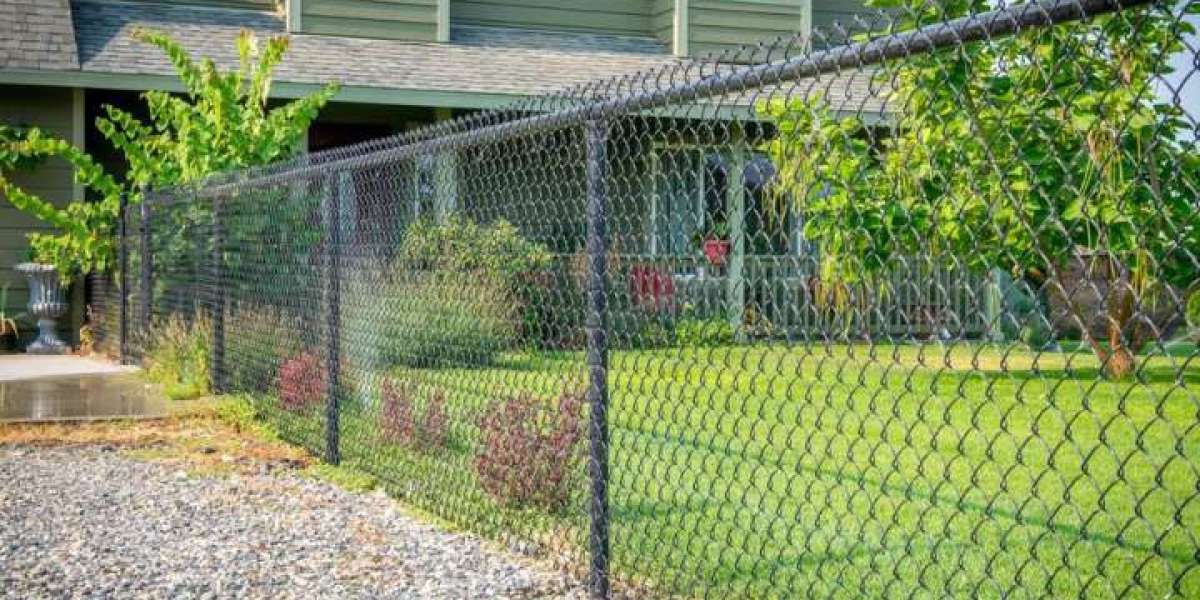
For homeowners considering chainwire fencing, choosing the right style depends on factors such as security, privacy, appearance, maintenance and budget. Chainwire fencing is commonly used around residential boundaries, gardens, pools, driveways and outdoor areas because its open structure provides a practical barrier without making a property feel enclosed. For fencing contractors and fence builders, understanding the available options can also help ensure the selected fence suits the property’s layout and intended purpose.
What Makes Chainwire Fencing Suitable for Homes?
Chainwire fencing consists of woven steel wire arranged in a diamond pattern and supported by posts, rails and fittings. Its straightforward construction makes it adaptable to different residential settings.
One of its key characteristics is visibility. Unlike solid fencing, chainwire allows homeowners to see through the boundary. This can be useful where maintaining sightlines is important, such as along front gardens, side passages or driveways.
The open design can also allow sunlight and airflow to pass through the fence, making it suitable for gardens and outdoor areas where ventilation and natural light are desirable.
Lightweight Boundary Solution
Compared with some solid fencing systems, chainwire fencing can provide a relatively lightweight boundary. This can make installation practical across different ground conditions, although the required post depth and foundation will depend on the site.
For contractors, assessing soil conditions, slopes, and existing structures before installation is important for achieving a stable, long-lasting result.
Which Chainwire Options Are Available?
Homeowners have several options when selecting a chainwire fence. The most appropriate choice generally depends on the property’s environment and the level of security or visual screening required.
Galvanised Chainwire
Galvanised wire is coated with zinc to help protect the steel from corrosion. This makes it a common option for outdoor residential applications.
It can be particularly useful in areas where the fence is regularly exposed to rain, moisture and changing weather conditions. However, the required level of corrosion resistance should be determined by the property’s location and surrounding environment.
PVC Coated Chainwire
PVC-coated chainwire has an additional protective coating on the steel wire. It is available in different colours and can provide a softer visual appearance compared with conventional galvanised wire.
For homeowners concerned about how the boundary integrates with landscaping, coloured coatings can help the fence blend more naturally with the surrounding environment.
Different Wire Gauges
Chainwire fencing is available in different wire thicknesses. Heavier wire can provide greater resistance to physical impact, while lighter options may be suitable for less demanding residential boundaries.
Fence builders should consider the intended use, expected loads, and required level of security before selecting the wire gauge.
How Does Mesh Size Affect Residential Fencing?
The size of the openings in chain-link mesh can influence both appearance and security.
Smaller openings can make it more difficult for objects or hands to pass through the fence, which may be useful for certain residential applications. Larger openings provide greater visibility and may be appropriate where the fence is primarily used to define a boundary.
The correct mesh size should therefore be selected according to the purpose of the fence rather than appearance alone.
Choosing the Right Height
Fence height is another important consideration. A low fence may be sufficient for garden boundaries, while a taller installation may be more appropriate where additional security is required.
Homeowners should also consider local planning requirements, property boundaries and any restrictions that may apply before installation. Contractors can assess these factors as part of the planning process.
Can Chainwire Fencing Provide Privacy?
Traditional chain-wire fencing provides limited privacy due to its open-mesh structure. However, homeowners who want greater screening can consider privacy slats, screening materials or suitable vegetation.
Adding Privacy Screening
Privacy strips can be incorporated into some chainwire systems to reduce visibility through the mesh. The level of screening depends on the selected material and installation method.
Plants and climbing vegetation can also provide natural screening over time. However, homeowners should consider the weight of mature plants and their effect on the fence before selecting this approach.
What Should Homeowners Consider Before Installation?
Several factors should be assessed before a residential fence is installed.
First, the exact property boundary should be established. Installing a fence in the wrong position can create disputes with neighbours and may require costly alterations.
Ground conditions should also be assessed. Uneven terrain may require adjustments to post positioning, mesh installation or the overall fence layout.
Drainage is another consideration. Water accumulation around posts can contribute to deterioration, particularly when unsuitable materials or installation methods are used.
Homeowners should also consider gates, access points and areas where vehicles or pedestrians regularly pass through the property.
Maintenance Requirements
Chainwire fencing is generally straightforward to maintain, but regular inspections can help identify problems early. Contractors and homeowners can check for loose fittings, damaged mesh, leaning posts, corrosion and vegetation growth.
Where damage occurs, individual sections or components may sometimes be repaired without replacing the entire boundary. The appropriate repair method depends on the extent and type of damage.
How Can Contractors Improve Installation Quality?
For fencing contractors and fence builders, accurate setting out is essential. Posts should be positioned consistently, with suitable spacing and adequate support for the intended fence height and wire type.
The mesh should be tensioned correctly during installation. Insufficient tension can cause sagging, while excessive tension can impose unnecessary stress on posts and fittings.
Gates should also be aligned carefully so they open and close smoothly without putting excessive pressure on the surrounding fence.
Frequently Asked Questions
1. Is chainwire fencing suitable for residential properties?
Yes. Chainwire fencing can be used for residential boundaries, gardens, driveways, pet areas and other outdoor spaces. Its suitability depends on the property’s requirements, local conditions and desired level of privacy and security.
2. Is galvanised chainwire resistant to rust?
Galvanised chainwire has a zinc coating that helps protect the steel from corrosion. Its service life can vary depending on environmental exposure, installation quality and maintenance.
3. Can chainwire fencing be used for privacy?
Standard chainwire offers limited privacy due to its open-mesh design. Privacy slats, screening products or vegetation can be added where greater visual screening is required.
4. What mesh size is best for a home fence?
The appropriate mesh size depends on the purpose of the fence. Smaller openings can provide greater security, while larger openings may offer improved visibility. The surrounding environment and intended use should be considered before selection.
5. Does chainwire fencing require regular maintenance?
Routine inspections are recommended. Homeowners should check for corrosion, damaged mesh, loose fittings, leaning posts and vegetation that may affect the fence. Prompt repairs can help prevent minor issues from becoming larger problems.