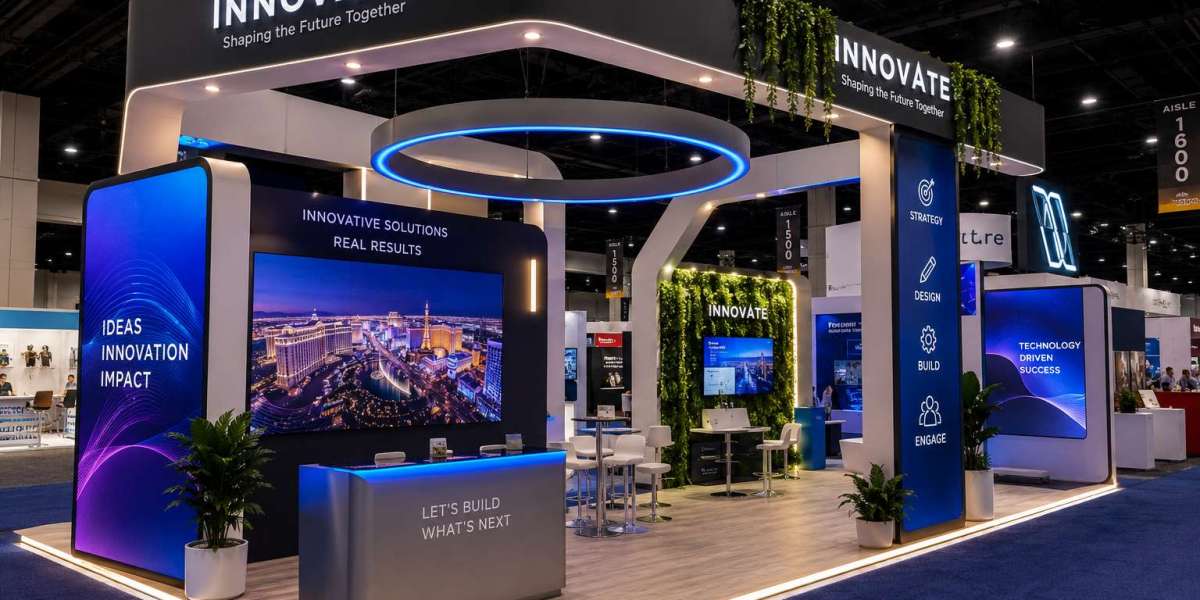
In today’s competitive exhibition environment, businesses need more than a basic booth to attract attention and generate meaningful leads. A strategically planned trade show display design can transform an ordinary exhibition space into an engaging brand experience that encourages attendees to stop, explore, and start conversations. From eye-catching graphics and thoughtful layouts to interactive technology and clear messaging, every element of your display can influence how visitors perceive your brand. When designed correctly, your booth becomes more than a physical space—it becomes a powerful marketing tool that supports visibility, engagement, and lead generation.
Why Trade Show Display Design Matters
Trade shows bring together businesses, industry professionals, decision-makers, and potential customers in an environment where competition for attention is intense. Attendees may walk past hundreds of booths during a single event, which means exhibitors have only a limited amount of time to make an impression.
An effective display design helps your brand stand out from surrounding exhibitors. It communicates your identity quickly, highlights your key offerings, and creates an inviting environment for visitors. Instead of relying solely on sales representatives to attract people, your booth itself can initiate interest.
A professional design also creates consistency between your physical presence and broader marketing strategy. When booth graphics, colors, messaging, and visual elements align with your website and other marketing materials, visitors can immediately recognize your brand.
Most importantly, a well-designed booth can guide attendees through a natural journey—from noticing your display to entering the booth, interacting with your team, learning about your products, and eventually becoming a qualified lead.
Create a Strong First Impression
First impressions are extremely important at trade shows. Your booth may be competing with dozens or even hundreds of other exhibitors, so a weak visual presentation can cause potential customers to walk past without noticing you.
Your display should communicate three basic things almost instantly:
Who your company is
What your company offers
Why attendees should care
Large, readable branding can help visitors identify your company from a distance. Strong headlines can communicate your primary value proposition, while high-quality graphics can reinforce your brand personality.
Avoid overcrowding the display with excessive text. Trade show attendees are usually moving through the exhibition floor quickly. They do not have time to read long paragraphs from several feet away.
Instead, use concise messaging supported by compelling visuals. A short statement that clearly explains your unique benefit can be more effective than a wall filled with information.
Use Your Booth Layout Strategically
Booth layout plays an important role in determining how visitors interact with your exhibit.
A poorly organized booth can create barriers that discourage attendees from entering. In contrast, an open and welcoming layout can make your space feel accessible.
Consider how visitors will move through the booth. There should be enough room for people to enter, explore products, speak with staff, and move around comfortably.
Your layout can also establish different zones for different purposes. For example, you might create:
A reception or welcome area
A product demonstration zone
A private meeting space
An interactive experience area
A lead-capture station
A product display section
Each area should have a clear purpose without making the booth feel crowded.
An organized layout also helps your staff work more effectively. Team members can quickly identify where to conduct demonstrations, where to speak privately with prospects, and where to collect visitor information.
Make Your Brand Visually Memorable
Brand recognition is another major benefit of effective booth design.
Your exhibit should reflect your company's identity through consistent colors, typography, imagery, logos, and messaging. Visitors should be able to connect your booth with your brand even after leaving the exhibition floor.
Visual consistency is especially valuable when your company participates in multiple events. A recognizable booth style can help create familiarity among returning customers and prospects.
However, consistency does not mean your booth needs to look identical at every event. You can adapt the design according to the exhibition, audience, booth size, and marketing objectives while maintaining your core brand identity.
A memorable design might incorporate distinctive architectural elements, creative lighting, dimensional graphics, digital displays, or unique product presentations.
Use Graphics That Communicate Quickly
Graphics are among the most visible components of a trade show booth.
High-quality graphics can attract attention from across an exhibition hall, but effective graphics need more than attractive visuals. They should communicate a clear message.
When planning your graphics, consider:
Visibility from different distances
Font size and readability
Brand colors
Image quality
Message hierarchy
Placement of logos
Contrast between text and background
Your main headline should usually be visible from a distance. Supporting messages can then provide additional information as visitors approach the booth.
Avoid using too many competing messages. If every element demands attention, visitors may not know where to look first.
Instead, establish a visual hierarchy that guides the eye naturally.
Incorporate Interactive Experiences
Modern attendees increasingly expect experiences rather than passive displays.
Interactive elements can encourage visitors to spend more time at your booth and learn about your offerings. Depending on your industry and budget, these experiences could include:
Touchscreen product demonstrations
Digital presentations
Augmented reality experiences
Interactive games
Product configurators
Live demonstrations
Virtual experiences
Educational displays
The goal should not simply be to include technology because it looks impressive. Every interactive element should support a marketing objective.
For example, an interactive product configurator could allow attendees to explore different product options while giving your team an opportunity to discuss their specific needs.
When technology is connected to your lead-generation strategy, it can become much more valuable than a decorative feature.
Design for Visitor Engagement
Getting someone to stop at your booth is only the beginning. Your display should also encourage engagement.
Think about what visitors should do once they enter your space.
Perhaps they should watch a demonstration, speak with an expert, test a product, participate in a presentation, or scan a QR code.
Your display can support these actions through clear visual cues. For example, signage such as “See It in Action,” “Try the Demo,” or “Talk to an Expert” can provide visitors with a simple reason to interact.
Engagement should feel natural rather than forced.
A well-planned booth creates opportunities for conversations between attendees and staff. These conversations can reveal valuable information about a prospect's needs, challenges, budget, and purchasing timeline.
Make Lead Generation Part of the Design
Lead generation should not be treated as something that happens after the booth has been designed. It should be incorporated into the experience from the beginning.
Think about how visitors will move from initial attraction to lead capture.
For example:
Attention → Interest → Interaction → Conversation → Qualification → Lead Capture
Your display can support each stage.
Strong visuals attract attention. Clear messaging creates interest. Interactive experiences encourage engagement. Staff members begin conversations. Qualification questions identify promising prospects. Digital forms or scanning tools capture contact information.
This integrated approach makes lead generation feel like a natural part of the visitor experience.
Instead of simply asking every visitor to provide their contact information, your team can offer something valuable in return, such as a product demonstration, consultation, resource, or personalized recommendation.
Create Dedicated Conversation Areas
One common mistake exhibitors make is designing a booth primarily for visual impact without considering conversations.
If your booth attracts many visitors but does not provide comfortable spaces for meaningful discussions, you may miss valuable opportunities.
Depending on your booth size, consider including a small meeting area where sales representatives can speak with qualified prospects.
The space does not necessarily need to be completely enclosed. Semi-private seating, counters, tables, or strategically positioned partitions can provide enough separation for productive conversations.
Your meeting area should remain accessible while offering enough privacy for discussions about pricing, implementation, business needs, or product specifications.
Use Lighting to Attract Attention
Lighting can dramatically affect the appearance of an exhibition booth.
Strategic lighting can highlight important products, emphasize branding, create depth, and make your booth more visually appealing.
Different lighting techniques can serve different purposes. Focused lighting can draw attention to a product, while illuminated graphics can increase visibility. Architectural lighting can also create a particular atmosphere.
However, lighting should support the overall design rather than overpower it.
Too much brightness or excessive lighting effects can make a booth uncomfortable or distract visitors from your primary message.
The best approach is to use lighting intentionally to emphasize the elements that matter most.
Design With Your Target Audience in Mind
A successful booth is not designed only around what the company wants to say. It is designed around what the target audience wants to know.
Before developing your display, identify your ideal visitors.
Ask questions such as:
What problems are they trying to solve?
What products or services interest them?
What objections might they have?
What information influences their purchasing decisions?
What would motivate them to speak with your team?
Once you understand your audience, your messaging and booth experience can become more relevant.
For example, a technology company targeting technical buyers may emphasize product specifications, demonstrations, and performance data. A consumer-focused company may prioritize visual storytelling, hands-on experiences, and simple benefit-driven messaging.
Make Small Booths Work Harder
A limited booth footprint does not automatically mean limited marketing potential.
Small exhibits can be highly effective when every element serves a purpose.
Use vertical space to increase visibility. Tall graphics, elevated signage, and strategically positioned branding can help your booth stand out without consuming valuable floor space.
Choose multifunctional furniture and avoid unnecessary decorative elements.
Digital displays can also provide information without requiring large physical product displays.
The key is to create an environment that feels open rather than overcrowded.
Support Your Design With Trained Staff
Even the most impressive booth design cannot generate results if the staff does not know how to engage visitors.
Your booth team should understand the purpose of the display and know how to communicate the key messages.
Staff members should be prepared with simple conversation starters rather than immediately launching into a sales pitch.
For example, instead of asking, “Would you like to hear about our product?” a representative might ask, “What brings you to the show this year?”
This type of question can open a natural conversation and help the representative understand the visitor's needs.
Training should also cover lead qualification, product knowledge, follow-up procedures, and appropriate use of technology.
Measure Your Trade Show Performance
To understand whether your booth design is working, establish measurable objectives before the event.
Possible metrics include:
Number of booth visitors
Qualified leads generated
Product demonstrations completed
Meetings scheduled
Contact information collected
Social media interactions
Sales opportunities created
Post-show conversions
These measurements allow you to determine whether your investment is delivering meaningful results.
For example, if visitor traffic is high but qualified leads are low, your problem may not be attracting attention—it may be messaging, audience targeting, or lead qualification.
If traffic is low, you may need to improve visibility, graphics, layout, or pre-show promotion.
Using data allows you to continuously improve future exhibitions.
Connect Pre-Show Marketing With Your Booth
Your booth should not operate independently from your marketing campaign.
Before the event, promote your participation through email, social media, your website, and direct outreach.
Tell prospects where they can find you and give them a reason to visit.
You can promote a product launch, live demonstration, expert presentation, exclusive consultation, or another valuable experience.
When attendees arrive at the event already aware of your booth, your display becomes part of a larger marketing journey rather than a standalone attraction.
Follow Up After the Exhibition
Generating leads is only valuable when your team follows up effectively.
After the event, organize leads according to factors such as interest level, purchasing timeline, product requirements, and conversation history.
High-priority prospects should receive personalized follow-ups quickly. Less qualified contacts can enter appropriate nurturing campaigns.
Your booth design can even help with post-show follow-up. For example, QR codes can direct visitors to dedicated landing pages, downloadable resources, product information, or appointment scheduling tools.
This creates continuity between the exhibition experience and your digital marketing efforts.
Avoid Common Design Mistakes
Several mistakes can reduce the effectiveness of an otherwise expensive booth.
One common problem is excessive information. Trying to explain everything can make your messaging difficult to understand.
Another issue is poor readability. Small text may look attractive on a computer screen but become impossible to read from the exhibition aisle.
Ignoring visitor flow is another mistake. A booth may look beautiful but still feel difficult to enter or navigate.
Finally, avoid designing solely for aesthetics. A booth should look professional, but it must also support engagement, conversations, demonstrations, and lead generation.
The best design combines visual appeal with practical functionality.
Invest in a Design That Supports Business Goals
Trade show participation represents a significant investment in time, resources, staff, travel, and marketing. Your booth should therefore be designed around measurable business objectives.
If your primary goal is brand awareness, your display might focus on memorable visual storytelling.
If lead generation is the priority, your design may emphasize demonstrations, interactive experiences, meeting areas, and lead-capture opportunities.
If you are launching a new product, the booth can create a dedicated focal point around the launch.
Aligning design decisions with objectives makes it easier to evaluate results and justify future exhibition investments.
Final Thoughts
A successful exhibition presence requires more than attractive graphics or an impressive structure. It requires a carefully planned experience that captures attention, communicates value, encourages interaction, and supports lead generation. Effective trade show display design brings these elements together by combining branding, layout, technology, messaging, lighting, visitor flow, and business objectives into one cohesive experience. Whether you are exhibiting at a large industry conference or a highly competitive event in Las Vegas, investing in a strategic booth can help your company attract the right audience and create stronger opportunities for meaningful conversations. With the right planning and execution, your next exhibition can become more than a display—it can become a powerful engine for brand visibility, engagement, and measurable business growth.