The global Secure Service Access (SSA) market is rapidly evolving as organizations shift toward identity-driven security models. According to insights from QKS Group, SSA is emerging as a critical framework for securing digital ecosystems in an era defined by hybrid work, cloud adoption, and increasing cyber threats.
This blog provides a comprehensive overview of SSA market trends, vendor landscape, competitive positioning, and future growth opportunities—helping enterprises and technology vendors stay ahead in the cybersecurity race.
What is Secure Service Access (SSA)?
Secure Service Access (SSA) is a modern cybersecurity approach that focuses on user identity rather than traditional network perimeters. It integrates multiple security technologies such as:
- Zero Trust Network Access (ZTNA)
- Cloud-based access control systems
- AI-driven threat detection
- Identity and access management (IAM)
SSA enables organizations to securely connect users to applications, regardless of location, device, or network, making it essential for remote and hybrid work environments.
Key SSA Market Trends
- Rise of Zero Trust Architecture
Organizations are rapidly adopting Zero Trust frameworks, where “never trust, always verify” is the core principle. SSA plays a central role in enabling secure, identity-based access across distributed environments.
- AI-Driven Threat Detection
Vendors are increasingly leveraging artificial intelligence and machine learning to provide real-time, behavior-based threat detection, minimizing risks from sophisticated cyberattacks.
- Growth of BYOD & Unmanaged Devices
The proliferation of Bring Your Own Device (BYOD) policies has expanded the attack surface. SSA solutions are evolving to secure access from unmanaged and personal devices.
- Convergence of Security Technologies
SSA platforms are consolidating multiple layers of security, including CASB, ZTNA, and SWG, into unified solutions—reducing complexity and improving operational efficiency.
- Cloud-Native Security Adoption
As enterprises move to multi-cloud and hybrid infrastructures, SSA solutions are becoming cloud-native, ensuring scalability, flexibility, and seamless integration.
Competitive Landscape: Leading SSA Vendors
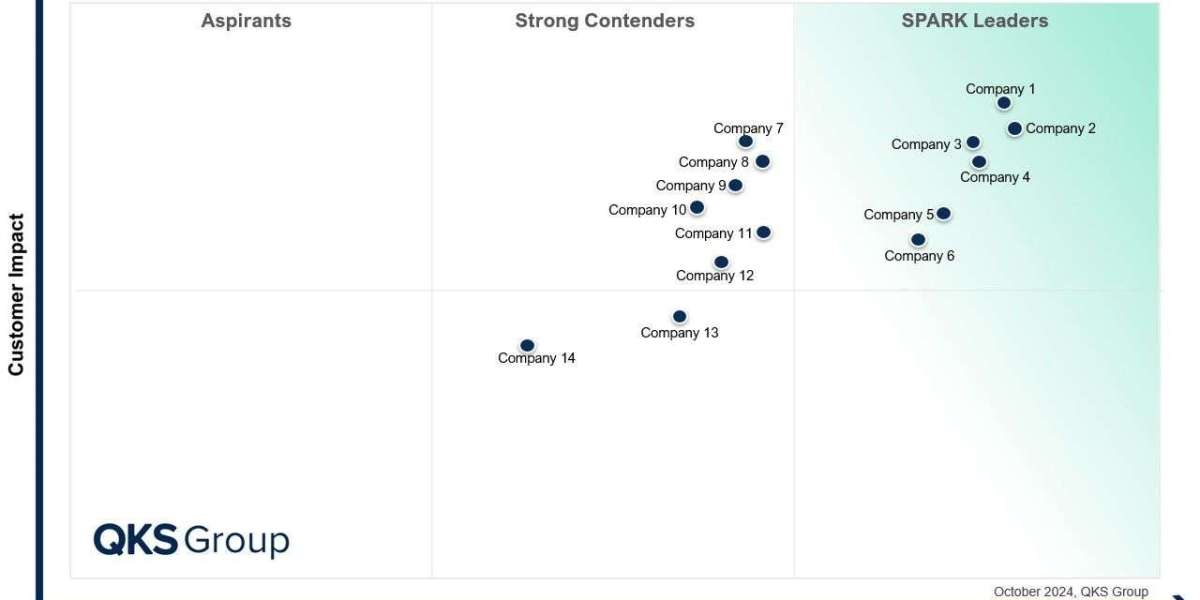
QKS Group’s proprietary SPARK Matrix analysis provides a detailed comparison of leading Secure Service Access (SSA) vendors based on technology excellence and customer impact. Key players in the SSA market include: Dispersive, Broadcom, Cato Networks, Check point, Cisco, Cloudflare, Forcepoint, Fortinet, Lookout, Netskope, Palo Alto Networks, Skyhigh Security, Versa Networks, and Zscaler.
These vendors are focusing on innovation, integration capabilities, and user-centric security models to strengthen their market positions.
SPARK Matrix: Vendor Positioning & Insights
The SPARK Matrix serves as a strategic benchmarking tool that evaluates vendors based on:
- Technology innovation
- Feature capabilities
- Customer value proposition
- Market presence
By analyzing vendor strengths and differentiators, enterprises can make informed decisions when selecting SSA solutions tailored to their specific needs.
Expert Insight
According to an Analyst at QKS Group, Secure Service Access (SSA) is becoming essential as organizations modernize security infrastructures. With its identity-first approach, SSA integrates ZTNA, cloud access controls, and AI-driven threat detection to secure diverse environments. Vendors are focusing on real-time, behavior-based prevention and simplifying complex security layers to address evolving threats.
Future Outlook of the SSA Market
The SSA market is expected to witness significant growth driven by:
- Increasing cyber threats and data breaches
- Rapid adoption of cloud technologies
- Demand for secure hybrid workforce solutions
- Regulatory compliance requirements
Emerging SSA platforms will likely focus on automation, predictive analytics, and seamless user experience, making security both robust and user-friendly.
Why SSA Matters for Businesses
Implementing SSA solutions offers several benefits:
- Enhanced security through identity-based access
- Reduced risk of data breaches
- Improved visibility and control over user activity
- Simplified security architecture
- Better support for remote and hybrid workforces
Organizations that adopt SSA early will gain a competitive advantage by ensuring secure, scalable, and future-ready IT environments.
Conclusion
The Secure Service Access (SSA) market is at the forefront of cybersecurity transformation. With increasing reliance on cloud technologies and remote work, SSA is no longer optional—it is a necessity.
QKS Group’s market research and SPARK Matrix analysis provide valuable insights into vendor capabilities, competitive differentiation, and market trends. Businesses must evaluate both established and emerging SSA providers to build a resilient and adaptive security strategy.