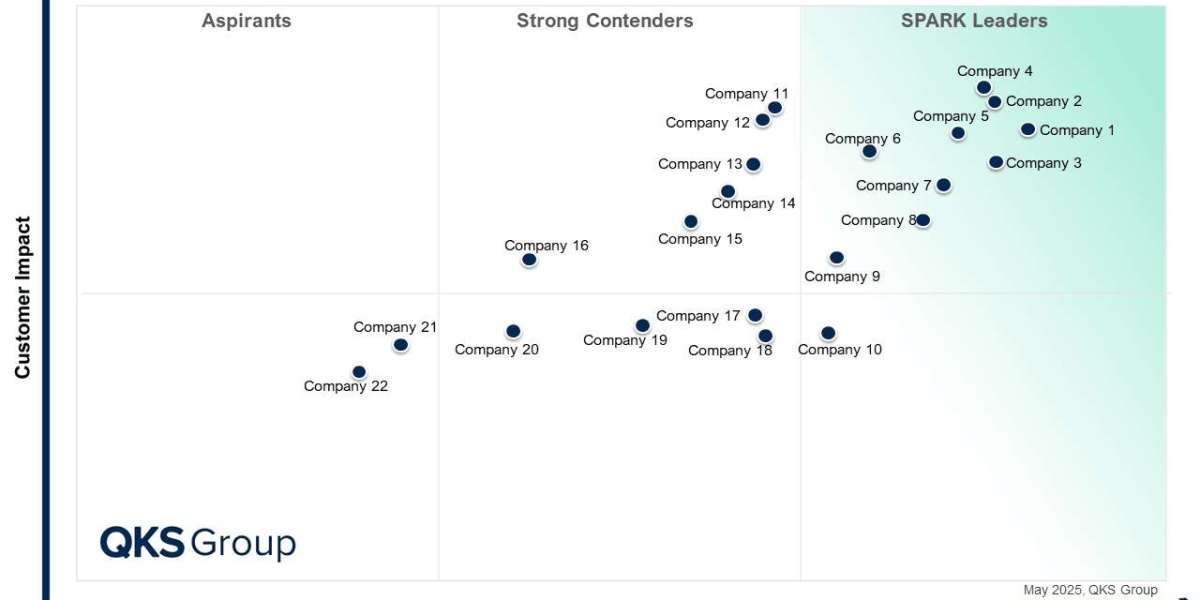
As enterprises continue to digitize financial operations, accounts receivable (AR) has emerged as a strategic function rather than a back-office necessity. Organizations today face mounting pressure to accelerate cash flow, reduce revenue leakage, and deliver seamless payment experiences across channels. In this context, SPARK Matrix Account Receivable Application research from QKS Group offers a structured and in-depth view of how the global AR application market is evolving and where it is headed next.
The Accounts Receivable Application (ARA) market research delivers a comprehensive analysis of the global landscape, highlighting emerging technologies, key market trends, and the long-term outlook shaping enterprise adoption. The study is designed to support two critical audiences: technology vendors looking to refine product strategies and expand market presence, and enterprises seeking clarity on vendor capabilities, differentiation, and overall market positioning.
The Strategic Evolution of Accounts Receivable Applications
Traditionally, accounts receivable focused on invoicing, payment tracking, and collections. However, rising transaction volumes, diverse payment methods, and increasing regulatory complexity have transformed AR into a data-driven, technology-led function. Modern AR applications are now expected to deliver end-to-end visibility, automate workflows, and integrate seamlessly with broader financial ecosystems.
Cloud-based deployment models, API-first architectures, and AI-powered intelligence are redefining how organizations manage receivables. These advancements allow finance teams to shift from reactive collections to proactive cash flow optimization. As a result, AR solutions are becoming central to improving working capital performance and financial resilience.
Market Drivers Shaping ARA Adoption
Several factors are accelerating global adoption of accounts receivable applications:
- Growing focus on cash flow optimization: Enterprises are prioritizing faster Days Sales Outstanding (DSO) cycles and improved liquidity management.
- Digital payment proliferation: Multiple payment channels demand intelligent reconciliation and real-time tracking.
- Automation and efficiency needs: Manual AR processes introduce errors, delays, and compliance risks.
- Data-driven decision-making: Finance leaders increasingly rely on predictive insights to manage credit risk and collections.
These drivers are pushing organizations toward advanced AR platforms that offer scalability, intelligence, and integration across ERP, CRM, and payment systems.
Competitive Benchmarking with the SPARK Matrix Framework
A key component of the research is the proprietary SPARK Matrix framework, which provides a structured evaluation of leading accounts receivable application vendors. The framework assesses vendors across parameters such as technological innovation, functional depth, market impact, and global reach.
Through this evaluation, the SPARK Matrix Account Receivable Application analysis helps enterprises compare vendors beyond surface-level features. It highlights how solutions differ in automation maturity, analytics capabilities, ecosystem integration, and ability to support complex, multi-entity operations.
The vendor landscape covered in the study includes Billtrust, BlackLine, BlueSnap, Dun & Bradstreet, Esker, Exela Technologies, FIS Global, Growfin, HighRadius, Invoiced, Oracle NetSuite, Quadient, Serrala, Sidetrade, Tesorio, Versapay, and Global PayEX. These vendors represent a diverse mix of established financial technology providers and fast-growing specialists driving innovation in AR automation.
Role of AI and Advanced Analytics in Modern AR
Artificial intelligence is rapidly becoming a defining capability in accounts receivable applications. AI-driven predictive analytics help organizations forecast payment behavior, identify high-risk accounts, and prioritize collection strategies. Real-time credit risk assessment enables finance teams to make informed decisions before issues escalate into bad debt.
Automated payment matching and reconciliation further reduce manual intervention, accelerating close cycles and improving reporting accuracy. By leveraging machine learning models, AR platforms can continuously improve accuracy and efficiency as transaction volumes grow.
In the middle of this transformation, SPARK Matrix Account Receivable Application insights highlight how vendors are embedding intelligence directly into workflows, allowing finance teams to focus on strategic activities rather than transactional tasks.
Integration, Compliance, and Operational Efficiency
As enterprises adopt cloud-native financial ecosystems, interoperability has become non-negotiable. Modern AR applications are increasingly designed to integrate seamlessly with ERP systems, banking platforms, payment gateways, and customer portals. API-driven architectures enable faster deployments and easier customization to meet industry-specific requirements.
Regulatory compliance is another critical consideration, especially for organizations operating across multiple regions. Advanced AR platforms support audit readiness, data security, and compliance with evolving financial regulations. This reduces operational risk while ensuring transparency and control across receivables processes.
Value for Enterprises and Technology Vendors
For enterprises, the research serves as a decision-support tool to evaluate AR solutions aligned with their digital finance goals. It provides clarity on vendor strengths, innovation focus, and ability to scale with business growth.
For technology vendors, the analysis offers strategic insights into market expectations, competitive benchmarks, and emerging opportunities. Understanding how capabilities are perceived in the market enables vendors to refine product roadmaps, strengthen differentiation, and improve go-to-market strategies.
Future Outlook of the ARA Market
Looking ahead, accounts receivable applications will continue to evolve as intelligent financial platforms rather than standalone tools. Deeper automation, predictive intelligence, and embedded payments will define the next phase of AR transformation. As digital commerce accelerates and financial operations become more interconnected, AR solutions will play a critical role in enabling resilience, agility, and sustained growth.
In conclusion, the SPARK Matrix Account Receivable Application research from QKS Group delivers a clear, data-driven view of the global ARA market. By combining competitive benchmarking with forward-looking insights, it helps organizations navigate complexity, adopt the right solutions, and build future-ready receivables operations in an increasingly digital economy.
#AccountsReceivable #FinTechInnovation #SPARKMatrix #FinanceAutomation #DigitalFinance