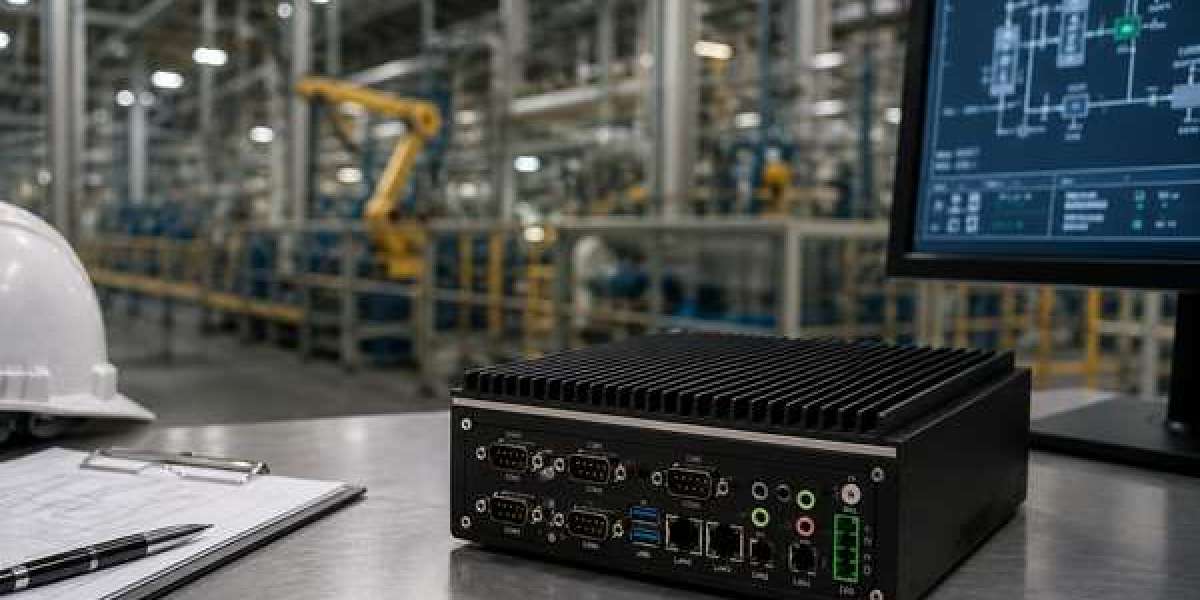
As industrial plants become more connected, automated, and data-driven, the role of the embedded industrial PC (IPC) has expanded far beyond traditional machine control. In 2026, machine builders are expected to deliver systems that support Industry 4.0, edge computing, predictive maintenance, AI-based analytics, and real-time process monitoring while maintaining the reliability required for 24/7 industrial operation.
For OEMs and plant engineering companies, selecting the right embedded industrial PC is no longer just a hardware decision—it is a strategic investment that affects system uptime, maintenance costs, scalability, and long-term customer satisfaction.
This guide explains the most important factors machine builders should prioritize when choosing an embedded industrial PC for modern plant engineering applications.
Why Embedded Industrial PCs Matter in Plant Engineering
Plant engineering environments often involve:
- Continuous operation
- High vibration and shock exposure
- Dust, humidity, and temperature fluctuations
- Limited installation space
- Integration with PLCs, HMIs, SCADA, and industrial networks
- Long equipment lifecycles
Unlike standard office computers, embedded industrial PCs are specifically designed for harsh industrial environments, making them ideal for:
- Process automation
- Packaging machinery
- Material handling systems
- Water and wastewater treatment plants
- Energy and utility control systems
- Chemical and pharmaceutical production
- Food and beverage processing
A well-designed embedded IPC becomes the central computing platform for machine control, data acquisition, visualization, and connectivity.
- Fanless Design Should Be a Top Priority
One of the biggest causes of industrial PC failure is cooling fan degradation. Dust buildup, vibration, and continuous operation can significantly reduce the lifespan of fan-based systems.
Why fanless IPCs are preferred in 2026
- No moving parts
- Lower maintenance requirements
- Reduced downtime
- Better resistance to dust and particles
- Improved reliability in sealed enclosures
- Quieter operation for operator workstations
For machine builders supplying equipment to manufacturing plants, a fanless embedded industrial PC provides a much lower total cost of ownership over the lifetime of the machine.
- Prioritize Long-Term Availability
Industrial machines are often produced and supported for 7–15 years or longer. Consumer-grade computing platforms change too quickly for OEM applications.
When evaluating an embedded IPC, ask suppliers about:
- Long-term CPU availability
- Revision control policies
- Backward compatibility
- Spare part availability
- Lifecycle support guarantees
A stable embedded platform helps avoid expensive redesigns when components become obsolete.
- Ensure Wide Temperature Support
Plant engineering systems are frequently installed in:
- Outdoor control cabinets
- Unconditioned production halls
- Electrical cabinets near motors and drives
- High-temperature process areas
- Cold storage and refrigeration environments
A suitable industrial IPC should support at least:
- 0°C to +50°C for standard industrial environments
- -20°C to +60°C or wider for demanding applications
Wide-temperature operation ensures stable performance even when environmental conditions fluctuate significantly.
- Connectivity Is More Important Than Raw CPU Power
Many machine builders focus heavily on processor performance, but in industrial automation, connectivity often has a greater impact on system integration.
Essential interfaces for 2026
- Gigabit Ethernet
- Industrial Ethernet protocols
- USB 3.0 / USB-C
- Serial ports (RS-232/422/485)
- Digital I/O
- CAN bus
- DisplayPort / HDMI
- Wi-Fi or 5G options for remote diagnostics
Support for OPC UA, MQTT, Modbus TCP, and Profinet gateways is becoming increasingly important for smart factory integration.
- Edge Computing Readiness Is Becoming Essential
Modern plants generate enormous amounts of sensor and process data. Sending all of this data directly to the cloud is often inefficient and can introduce latency.
Embedded IPCs should support edge computing tasks such as:
- Real-time analytics
- AI-based anomaly detection
- Predictive maintenance algorithms
- Machine vision preprocessing
- Local database storage
- Energy consumption monitoring
- Production KPI calculations
An edge-ready embedded IPC reduces network traffic while enabling faster operational decisions.
- Expandability for Future Automation Requirements
Machine builders should avoid selecting a platform that only meets today’s requirements.
Look for systems that allow:
- Additional Ethernet ports
- Expansion modules
- Extra storage options
- PCIe or M.2 expansion
- Wireless communication upgrades
- Additional display outputs
Scalable embedded IPCs allow OEMs to offer entry-level, mid-range, and premium machine variants using a common hardware platform.
- Cybersecurity Must Be Built In
Industrial cybersecurity is now a major purchasing consideration for many plant operators.
Important security features include:
- Secure boot
- TPM (Trusted Platform Module)
- BIOS protection
- User authentication
- Encrypted storage support
- Network segmentation capabilities
- Regular security update support
Machine builders that provide secure embedded IPC solutions gain a significant competitive advantage, especially in regulated industries.
Common Mistakes Machine Builders Should Avoid
Choosing consumer-grade hardware
Lower upfront cost often results in:
- Shorter lifespan
- Higher failure rates
- Limited temperature tolerance
- Poor vibration resistance
- Difficult long-term support
Ignoring serviceability
Plant operators value systems that are easy to:
- Replace
- Update
- Diagnose remotely
- Expand without major redesign
Underestimating storage requirements
Modern industrial applications may require:
- Local historian databases
- Vision system image storage
- Audit trails
- AI model deployment
- Predictive maintenance datasets
Industrial-grade SSD storage with high endurance should be prioritized.
Buying Checklist for Embedded Industrial PCs
Before purchasing, verify the following:
Reliability
- Fanless operation
- Industrial-grade components
- Shock and vibration resistance
- Wide temperature support
Performance
- Multi-core industrial CPU
- Sufficient RAM
- High-endurance SSD storage
- Hardware acceleration if AI or vision tasks are required
Connectivity
- Multiple Ethernet ports
- Serial communication support
- USB expansion
- Industrial protocol compatibility
Lifecycle & Support
- 7+ year availability
- Technical documentation
- Driver support
- OEM customization options
- Remote management capabilities
Why TO-ES Embedded Industrial PC Solutions Stand Out
TO-ES focuses on customized embedded industrial computing solutions for OEMs, machine builders, and plant engineering companies.
Key advantages include:
- Fanless embedded design
- Rugged industrial construction
- Flexible I/O configurations
- Long-term product availability
- Support for HMI, SCADA, and PLC integration
- Custom embedded hardware configurations
- Industrial communication and automation expertise
Rather than offering only standard hardware, TO-ES can provide application-specific embedded IPC solutions tailored to the operational requirements of industrial plants.
What Machine Builders Should Prioritize Most in 2026
If you are selecting an embedded industrial PC for a new plant engineering project, prioritize these five factors first:
- Fanless reliability
Ensures maximum uptime and minimum maintenance.
- Long-term lifecycle support
Protects your OEM investment for years.
- Industrial connectivity
Enables seamless integration with modern automation architectures.
- Edge computing capability
Supports Industry 4.0 and AI-driven plant optimization.
- Scalable embedded design
Allows future expansion without redesigning the entire machine platform.
Conclusion
In 2026, the most successful machine builders will be those who treat the embedded industrial PC as a strategic automation platform rather than a simple control computer.
By prioritizing fanless operation, long-term availability, wide-temperature reliability, industrial connectivity, edge computing readiness, and cybersecurity, OEMs can build smarter, more reliable, and more future-proof plant engineering solutions.
For companies developing next-generation automation systems, TO-ES embedded industrial PC solutions provide the flexibility, reliability, and engineering support needed to meet the demanding requirements of modern industrial plants while reducing downtime, simplifying maintenance, and supporting long-term digital transformation initiatives.
Read More: https://tecsysproductguides.blogspot.com/2026/08/embedded-industrial-pcs-for-plant.html