
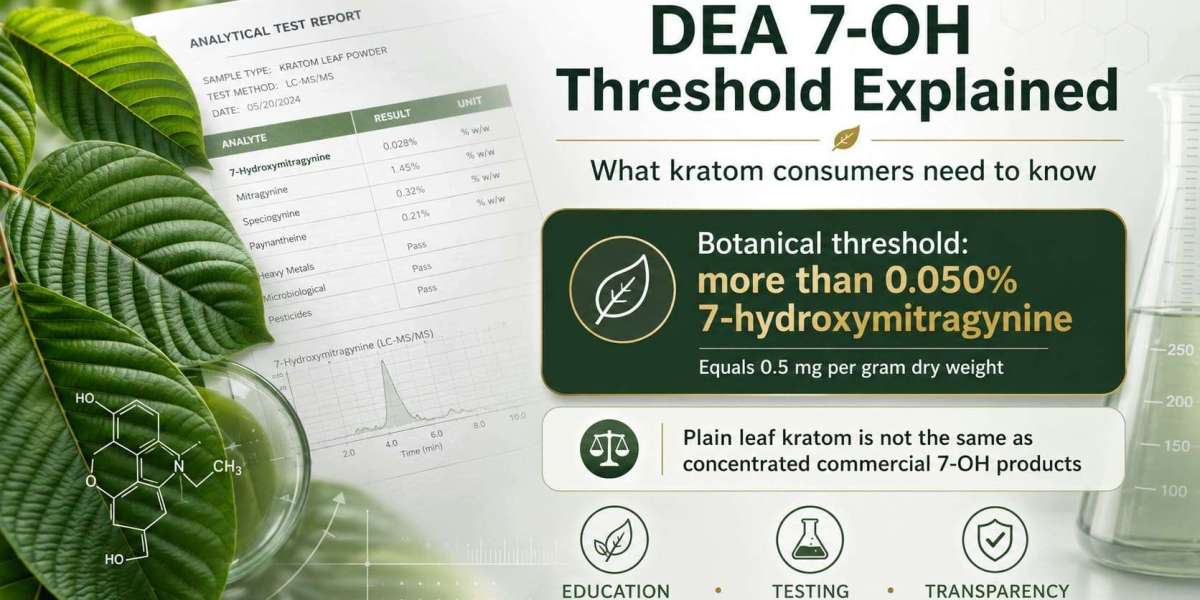
Plain leaf kratom and commercial 7-OH products are not the same thing. That distinction matters now more than ever.
In July 2026, the Drug Enforcement Administration issued a notice of intent regarding 7-hydroxymitragynine, often shortened to 7-OH. This notice has caused a lot of confusion in the kratom community, especially among consumers who use traditional plain leaf kratom powder, crushed leaf, capsules, or tea. The implications of this notice extend to the ongoing discussion about 7 oh scheduling.
Let’s clear the air.
This is not written as a total ban on all kratom. The DEA notice is focused on placing 7-hydroxymitragynine above a specified threshold into Schedule I of the Controlled Substances Act. That means the key issue is not ordinary kratom leaf itself. The key issue is 7-OH concentration, especially in synthetic, semi-synthetic, concentrated, or heavily processed products.
Understanding the implications of 7 oh scheduling is essential for consumers and advocates alike.
What Is 7-Hydroxymitragynine?
7-hydroxymitragynine is one of the alkaloids associated with Mitragyna speciosa, the botanical name for kratom.
Kratom naturally contains many alkaloids. The primary alkaloid is mitragynine. 7-hydroxymitragynine is generally found in much smaller amounts in natural leaf material. In traditional plain leaf kratom, 7-OH is typically present only in trace or minor amounts.
Awareness of 7 oh scheduling can help consumers make informed choices regarding these products.
The concern today is not traditional kratom tea or plain leaf powder used responsibly by adults. The concern is the recent rise of commercial 7-OH products such as tablets, gummies, shots, films, pressed pills, and other concentrated products being sold online, in smoke shops, gas stations, and convenience stores.
Many of these products are marketed in ways that confuse consumers into thinking they are simply buying “kratom,” when in reality they may be buying a highly concentrated 7-OH product, which is crucial to understand in the context of 7 oh scheduling.
That is a major consumer protection issue.
What Did the DEA Actually Propose?
The DEA’s notice states that it intends to temporarily place 7-hydroxymitragynine above a specified threshold into Schedule I.
That threshold is the heart of the matter.
For botanical kratom material, the DEA threshold is:
More than 0.050% 7-hydroxymitragynine on a dry weight basis
That means kratom botanical material would fall under the proposed temporary scheduling only if it contains more than 0.050% 7-OH by dry weight.
Green Maeng Da Powder As An Example
Using the proposed DEA 7-OH threshold, this COA appears to fall comfortably below the proposed trigger.
DEA/OASH describes the proposed threshold for botanical kratom as more than 0.050% 7-hydroxymitragynine on a dry-weight basis. For other processed/alternative articles, the proposal references greater than 0.050% or greater than 1.00 mg of 7-OH in the article. HHS/FDA also states the action is not intended to regulate natural leaf kratom that does not contain enhanced levels of 7-OH. (HHS.gov)
Where I Stand on this Issue
Recent federal action around 7-hydroxymitragynine, commonly called 7-OH, has made one thing even clearer: consumers deserve the truth about the difference between natural kratom leaf and chemically manipulated 7-OH products. On July 1, 2026, the DEA announced its intent to temporarily place certain 7-OH products and related substances into Schedule I of the Controlled Substances Act. The DEA stated that one notice addresses 7-OH above a specified threshold, while a second notice addresses related substances including mitragynine pseudoindoxyl, MGM-15, and MGM-16. You can read the DEA announcement here: DEA to Temporarily Schedule 7-OH and Related Substances. (DEA)
The Federal Register notices published on July 6, 2026, are important because they draw a regulatory line around enhanced 7-OH products rather than plain natural kratom leaf. The DEA notice states that natural kratom contains 7-OH in trace amounts, while 7-OH can also be synthesized from mitragynine through chemical conversion. The notice also states that the temporary scheduling order for 7-OH above the specified threshold would not be issued before August 5, 2026. You can read the Federal Register notice here: Temporary Placement of 7-Hydroxymitragynine Above a Specified Threshold in Schedule I. (Federal Register)
HHS and FDA also publicly supported the DEA’s action, while stating that the action is not intended to regulate natural leaf kratom that does not contain enhanced levels of 7-OH. HHS also opened a public comment docket through July 31, 2026, seeking input on the proposed 7-OH threshold. That matters because responsible consumers, scientists, vendors, and advocates should have a voice when federal agencies are deciding where the line belongs between natural botanical material and manipulated high-7-OH products. You can read the HHS/FDA announcement here: HHS, FDA Commend DEA Action Against Dangerous Enhanced 7-OH Products, and the HHS Federal Register request for information here: HHS Request for Information on 7-OH Threshold. (HHS.gov)
For me, this is exactly why education matters. I have always believed there must be a clear distinction between traditional natural kratom leaf and products that are isolated, concentrated, converted, enhanced, or chemically manipulated. People should not be confused into thinking they are the same thing. Natural kratom leaf has a long history of traditional use, while today’s commercial 7-OH marketplace has created a serious consumer-confusion problem. My position is simple: protect consumers, tell the truth, respect the plant, and stop allowing bad actors to hide behind the word “kratom” when they are selling something very different.
Final Word
Kratom consumers should stay informed, calm, and engaged.
Do not rely on headlines. Read the actual language. Ask vendors for lab reports. Understand the difference between natural leaf and concentrated 7-OH products.
The future of responsible kratom access depends on education, transparency, and honest regulation.
At Christopher’s Organic Botanicals, we will continue standing for the same principles we always have:
natural leaf, proper testing, consumer education, and the truth.