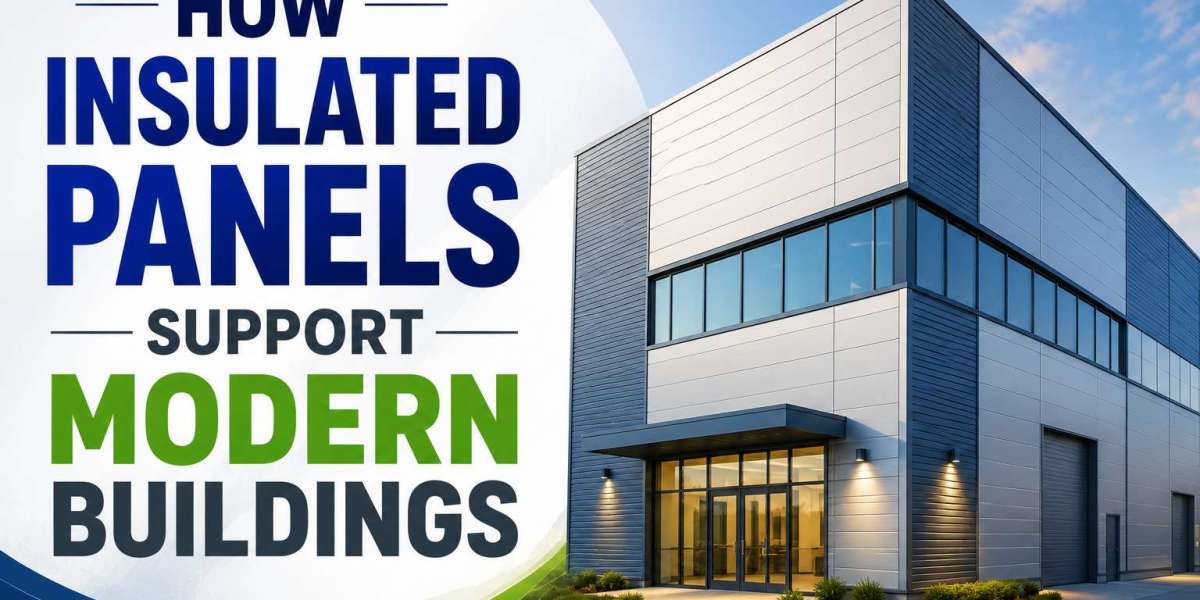
Insulated metal panels are increasingly used in commercial, industrial, cold storage, logistics, institutional, and public buildings because they combine structural strength, insulation, and exterior finish in one integrated system. These panels generally include metal facings bonded to an insulating core, allowing them to serve as wall or roof components. Their value comes from faster installation, thermal performance, durability, weather resistance, and clean architectural appearance.
A recent study by MarkNtel Advisors highlights that the global insulated metal panels sector was valued at USD 15.51 billion in 2025. It is projected to grow from USD 16.18 billion in 2026 to around USD 22.76 billion by 2032, registering a CAGR of 5.85% during the forecast period. This growth reflects demand for energy-efficient buildings, cold chain infrastructure, industrial construction, and modern building envelope solutions.
Energy Efficiency Drives Adoption
Building owners are placing more focus on insulation because heating, cooling, and indoor comfort are strongly linked with building envelope performance. Insulated metal panels help reduce heat transfer through walls and roofs, which can support more stable indoor temperatures. The IEA’s energy-efficient building envelopes roadmap explains that envelope performance has a major influence on heating and cooling energy use.
This makes insulated panels useful for facilities that need dependable thermal control. Warehouses, factories, food processing units, retail buildings, and distribution centers often require stable indoor conditions for worker comfort, product quality, and equipment performance. When panels are properly installed, they can also reduce air leakage, improve enclosure continuity, and support more predictable building operation.
Cold Storage Needs Thermal Control
Cold storage and refrigerated logistics are important demand areas for insulated metal panels. These facilities need temperature-controlled rooms, freezer areas, processing spaces, loading zones, and distribution hubs that can maintain required conditions. Panels with suitable insulation cores and tight joints help reduce energy loss while supporting hygiene and durability in controlled environments.
Food and pharmaceutical logistics especially depend on reliable building envelopes. If thermal performance is weak, cooling systems must work harder and product quality may be affected. Insulated panels support these facilities by providing cleanable surfaces, moisture resistance, and modular construction. Their use is likely to remain important as cold chain networks expand across retail, healthcare, and food distribution systems.
Industrial Buildings Use Faster Construction
Industrial and commercial projects often require quick construction schedules. Insulated metal panels can reduce installation time because they combine cladding, insulation, and interior finish into fewer building layers. This can simplify wall and roof assembly compared with systems that require separate framing, insulation, air barriers, and exterior finishes. Faster installation can help projects move from construction to operation more efficiently.
The U.S. Department of Energy’s opaque envelope program describes building envelope technologies as important for reducing building energy consumption and improving comfort. This supports the wider role of high-performance walls and roofs in modern construction. For industrial users, panel selection depends on insulation value, fire performance, durability, weather exposure, and maintenance needs.
Sustainability Shapes Material Choices
Sustainability is influencing how building materials are selected and evaluated. Developers and facility owners increasingly consider operational energy, material durability, lifecycle performance, and waste reduction. Insulated metal panels can support these goals when they improve thermal efficiency, reduce installation waste, and provide long service life. However, sustainability also depends on core material, manufacturing practices, recyclability, and end-of-life management.
The EPA’s identifying greener insulation guidance explains that insulation can conserve energy while also highlighting the importance of product selection and environmental attributes. This context is relevant for insulated panel buyers who must balance energy performance with material safety, environmental claims, and procurement requirements.
Design Flexibility Supports Wider Use
Insulated metal panels are used in both functional and architectural applications. They are available in different profiles, colors, thicknesses, finishes, and core types, making them suitable for warehouses, data centers, schools, airports, retail spaces, factories, and healthcare buildings. Their clean exterior appearance allows designers to combine performance with modern building aesthetics.
The future of insulated metal panels will depend on building codes, energy standards, cold chain growth, industrial construction, fire safety requirements, and material innovation. Demand is expected to remain supported by facilities that need faster construction and reliable thermal performance. As building owners prioritize efficiency, durability, and operational control, insulated metal panels will continue to support modern building envelope design.