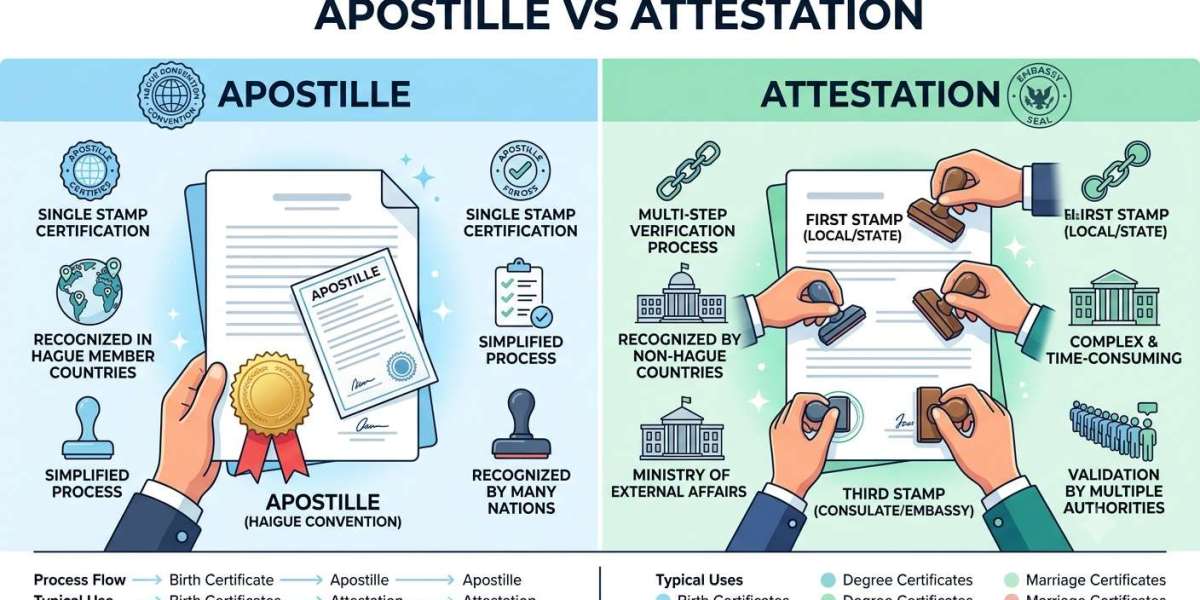
If you are planning to study, work, start a business, or settle abroad, getting your documents legalized is an essential part of the process. However, many people are confused about whether they need an apostille or attestation. Choosing the wrong process can delay your visa application or even lead to document rejection. At Secure Apostille Services Hyderabad, we help individuals and businesses identify the correct legalization process based on the destination country and document type. Understanding these differences will save you time, money, and unnecessary stress.
What is Apostille?
An apostille is an international certification issued under the Hague Apostille Convention of 1961. It verifies the authenticity of public documents so they are accepted in member countries without requiring additional embassy legalization.
In India, the Ministry of External Affairs (MEA) is responsible for issuing apostilles after the required state-level verification has been completed. Once a document receives an apostille, it is legally recognized in all Hague Convention countries.
Apostille is commonly required for:
- Degree certificates
- Birth certificates
- Marriage certificates
- Police Clearance Certificates (PCC)
- Commercial documents
- Power of Attorney
- Affidavits
Countries such as Germany, France, Italy, Spain, the Netherlands, Portugal, Australia, New Zealand, and the United States recognize apostille certification.
What is Attestation?
Attestation is a multi-level authentication process required by countries that are not members of the Hague Convention.
Instead of receiving a single apostille certificate, documents pass through several verification stages before being accepted internationally.
The process generally includes:
- Notary Attestation
- State Home Department or HRD Authentication
- Ministry of External Affairs Authentication
- Embassy or Consulate Attestation
Countries like the UAE, Qatar, Kuwait, Saudi Arabia, Bahrain, and many others require document attestation rather than apostille.
Apostille vs Attestation
Although both processes authenticate documents, they are intended for different groups of countries.
Apostille
- Applicable only for Hague Convention countries
- Single MEA certification
- Faster processing
- No embassy legalization required
- Easier international acceptance
Attestation
- Required for non-Hague Convention countries
- Multiple authentication stages
- Includes embassy verification
- Usually takes longer
- More documentation involved
Knowing which process applies to your destination country is extremely important before submitting your documents.
When Do You Need an Apostille?
You may need an apostille if you are planning to:
- Pursue higher education overseas
- Accept an international job offer
- Apply for permanent residency
- Register your marriage abroad
- Sponsor family members
- Expand your business internationally
- Complete legal formalities in another country
Using apostille services hyderabad helps ensure that every stage of the process is completed correctly without unnecessary delays.
When Do You Need Attestation?
Attestation becomes necessary when your destination country does not recognize apostille certification.
Common reasons include:
- Employment visas
- Family visas
- Residence permits
- Business registration
- Medical licensing
- School admissions
- Company incorporation
Countries in the Middle East generally require embassy attestation instead of apostille.
Documents That Usually Require Authentication
Different categories of documents require legalization depending on your purpose.
Educational Documents
- Degree Certificate
- Diploma Certificate
- Transcript
- Provisional Certificate
- Mark Sheets
Personal Documents
- Birth Certificate
- Marriage Certificate
- Divorce Certificate
- Death Certificate
- Police Clearance Certificate
Commercial Documents
- Certificate of Incorporation
- GST Registration
- Board Resolution
- Export Documents
- Power of Attorney
Each document follows a different verification route before legalization.
Who Issues an Apostille in India?
The Government of India authorizes the Ministry of External Affairs (MEA) to issue apostilles after completing the required verification process.
Depending on the document type, verification may first be completed by:
- State Home Department
- Human Resource Department (HRD)
- Sub-Divisional Magistrate (SDM)
Only after successful verification does the MEA issue the apostille certificate.
Choosing the correct verification route helps reduce delays and improves processing efficiency.
Common Mistakes People Make
Many applicants unintentionally delay their applications by making avoidable mistakes.
Some of the most common include:
- Selecting apostille instead of attestation
- Using damaged or laminated certificates
- Submitting incomplete documents
- Providing outdated certificates
- Incorrect spellings or mismatched names
- Ignoring destination country requirements
Professional guidance can help eliminate these problems before submission.