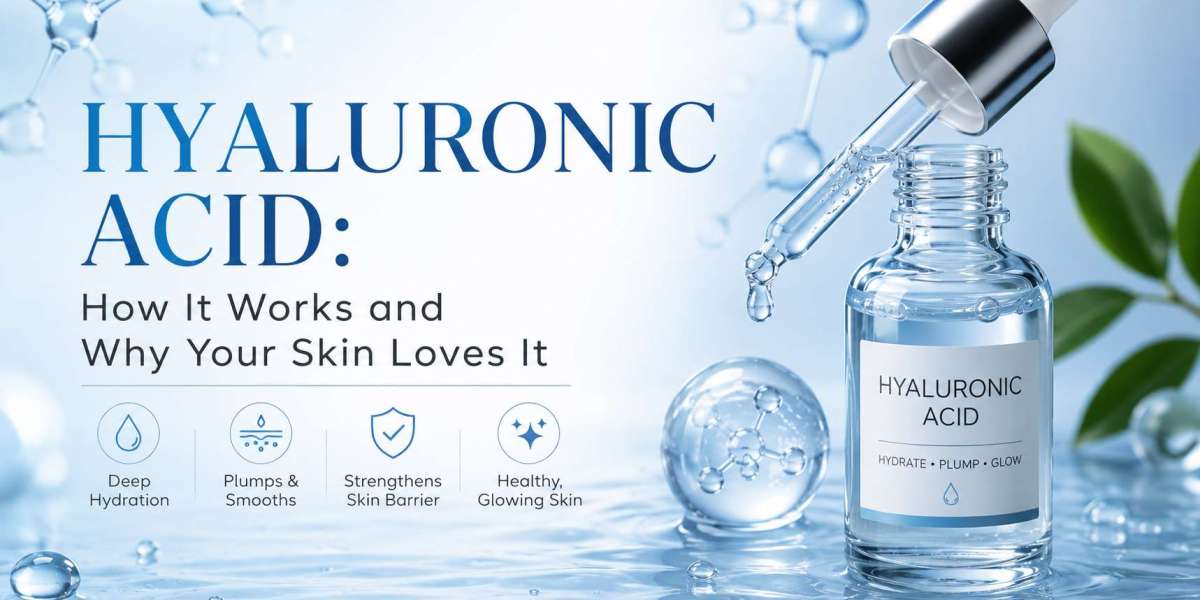
Because it keeps skin moisturized and refreshed, hyaluronic acid has long been seen as a skincare superstar. It is recommended by both dermatologists and beauty enthusiasts and is primarily found in serums, lotions, masks, and other skincare products. But many people still wonder what exactly makes hyaluronic acid so effective, and why it should be part of your daily routine.
To clear up this confusion, this guide explains what hyaluronic acid is, its key benefits, its role in skincare, and how to use it in your routine to achieve the skin you’ve always dreamed of.
What is Hyaluronic Acid
Our skin naturally contains hyaluronic acid, which helps it stay moisturized and plump by holding onto water. Think of HA like a sponge that attracts moisture from the environment and deeper skin layers to the surface. Because natural HA levels decrease with age, different HA serums and creams can help replenish moisture, so that you can achieve soft and supple skin.
Benefits of Hyaluronic Acid
- Provides Intense Hydration: Hyaluronic acid attracts and retains water in the skin, giving an instant boost of moisture. This helps even dry or dehydrated skin to feel soft and supple.
- Reduces the Appearance of Fine Lines: By plumping up the skin, HA helps smooth the look of fine lines and wrinkles. In addition, hydrated skin naturally looks firmer and more youthful.
- Improves Skin Texture & Smoothness: Regular and careful use of hyaluronic acid can soften rough patches and make the skin texture balanced. It also enhances the overall texture for a healthier-looking skin surface.
- Supports Skin Barrier: By reducing moisture loss and protecting the skin against external irritants, like pollution and dryness, HA helps in maintaining the skin's natural barrier.
- Boosts Radiance & Glow: HA helps revitalize dull or tired-looking skin for a fresher and more glowing appearance.
- Suitable for All Skin Types: The best thing about hyaluronic acid is that it’s lightweight and non-irritating, which makes it ideal for every skin type, including sensitive, dry, and acne-prone.
Hyaluronic Acid’s Role in Skincare
Hyaluronic acid is not just another hydrating ingredient; it’s a key ingredient that helps your skin to stay and look bright, healthy, and balanced. It keeps the skin smooth, supple, and plump by retaining water. In addition, HA strengthens the skin barrier by reducing moisture loss while improving its ability to resist environmental stresses like pollution and dust.
For those using other active ingredients, like retinol or vitamin C, HA can also act as a buffer, by minimizing dryness and irritation while increasing the effectiveness of your skincare routine. That’s why it is one of the most commonly found ingredients in skincare products, because unlike other ingredients, it targets a range of common skin concerns, like fine lines, dryness, and wrinkles.
How to Use Hyaluronic Acid
- Apply on Damp Skin: Hyaluronic acid works best when applied to slightly wet skin because it can attract water for hydration.
- Use a Few Drops: A small amount, like 2 to 3 drops of HA, can be enough for the entire face. Make sure to spread it gently for better absorption. Also, keep in mind that using extra will not make it act fast.
- Layer with Moisturizer: After using HA, it is recommended to follow it up with a moisturizer to seal in hydration. HA draws water into the skin, whereas a moisturizer can prevent moisture from evaporating, helping the skin appear soft for an extended period.
- Use Twice Daily (Optional): Among the best things about HA is that you can use it in both AM and PM skincare routines. Its lightweight nature makes it a skin-loving ingredient.
- Pair with Compatible Actives: Because of its lightweight nature, hyaluronic acid can be used with most other skincare ingredients, including retinol, vitamin C, and niacinamide, without causing irritation.
Conclusion
Hyaluronic acid is among the best active ingredients for hydration, smoothness, and skin liveliness. Its non-irritating, lightweight nature makes it suitable for all skin types, which is why it is found in many beauty products. Adding it to your skincare routine can also help you maintain moisture, support the skin barrier, and enhance the effectiveness of other products.
FAQs
Q1: Can oily skin use hyaluronic acid?
A. Because of hyaluronic acid’s low molecular weight, individuals with oily skin can use it.
Q2: Is hyaluronic acid only for dry skin?
A. While hyaluronic acid is suitable for dry skin, it is ideal for all skin types.
Q3: Can I layer hyaluronic acid with retinol?
A. Yes, you can. The combination of HA and retinol is also among the most effective approaches for addressing dryness and anti-aging.
Q4: How often should I use hyaluronic acid?
A. In most cases, using it once will be enough. But its lightweight nature also makes it suitable to use twice in both AM and PM routines.
Q5: Can hyaluronic acid replace a moisturizer?
A. Not entirely. While HA attracts water, it doesn’t retain it, which makes the use of a moisturizer important.
Q6: Is HA suitable for every skin type?
A. Yes, HA is suitable for every skin type.