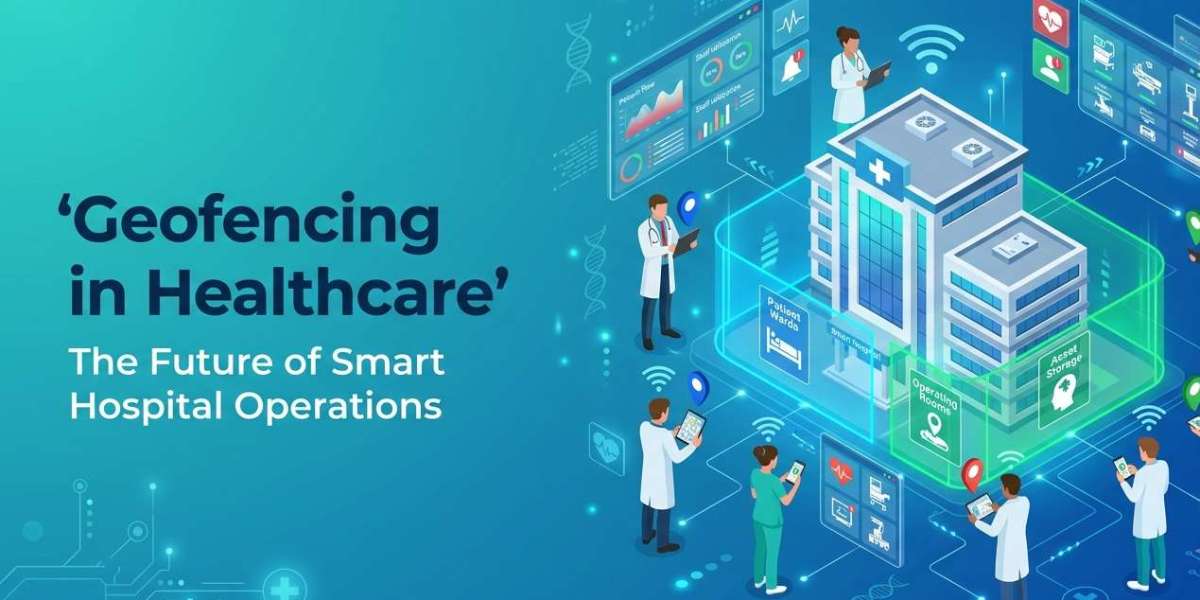
Healthcare facilities are becoming increasingly connected, intelligent, and data-driven. As hospitals continue embracing digital transformation, technologies such as artificial intelligence, IoT devices, real-time location systems (RTLS), and geofencing are reshaping how care is delivered and managed.
Among these innovations, geofencing in healthcare has emerged as a powerful solution for improving patient safety, optimizing hospital logistics, and enhancing operational efficiency.
By creating virtual boundaries around physical spaces, hospitals can automatically monitor the movement of patients, staff, and medical equipment. The result is a safer, more responsive healthcare environment where critical resources are always visible and accessible.
This guide explores how healthcare geofencing works, its key applications, implementation considerations, and why it is becoming a foundational component of modern smart hospitals.
What Is Geofencing in Healthcare?
Geofencing is a location-based technology that creates virtual perimeters around specific physical areas.
When a person, device, or asset enters or exits a predefined zone, the system automatically triggers a predefined action such as:
- Real-time alerts
- Automated workflows
- Access restrictions
- Check-in notifications
- Asset location updates
In healthcare environments, geofencing is often integrated with:
- RFID tags
- Bluetooth Low Energy (BLE) beacons
- GPS-enabled devices
- Mobile applications
- IoT-enabled medical equipment
These technologies enable healthcare organizations to track assets, monitor patients, and improve facility-wide coordination.
Why Hospitals Are Investing in Geofencing Technology
Healthcare facilities face constant operational challenges, including:
- Missing medical equipment
- Patient wandering incidents
- Staff inefficiencies
- Delayed emergency response times
- Complex navigation across large campuses
Geofencing addresses these issues by providing real-time visibility and automation.
Benefits include:
- Improved patient safety
- Faster equipment retrieval
- Better staff allocation
- Reduced operational costs
- Enhanced patient experiences
As healthcare organizations continue building smarter facilities, geofencing is becoming an essential layer within broader healthcare IT solutions strategies.
Key Applications of Geofencing in Healthcare
1. Patient Safety and Anti-Wandering Systems
Patient safety remains one of the most important priorities for healthcare organizations.
Patients with conditions such as:
- Dementia
- Alzheimer's disease
- Cognitive impairments
- Memory disorders
may unintentionally leave safe areas or enter restricted zones.
Healthcare geofencing systems can establish virtual safety boundaries around:
- Patient rooms
- Memory care units
- Restricted hospital areas
- Exit points
If a patient crosses a predefined boundary, nurses and security personnel receive immediate alerts, enabling rapid intervention.
This proactive approach improves patient safety while reducing the need for restrictive physical barriers.
2. Hospital Asset Tracking
One of the biggest operational challenges in hospitals is locating critical medical equipment.
Frequently misplaced assets include:
- Wheelchairs
- Infusion pumps
- Ventilators
- Mobile imaging devices
- Patient monitoring equipment
Without proper tracking systems, healthcare professionals often spend valuable time searching for resources.
Geofencing integrated with hospital asset tracking systems provides:
- Real-time equipment visibility
- Location history
- Utilization analytics
- Automated inventory monitoring
As a result, hospitals can maximize equipment usage while minimizing replacement costs.
3. Automated Patient Check-In
Traditional registration processes can create bottlenecks and long waiting times.
With geofencing-enabled mobile applications, patients can be automatically recognized upon arriving at a facility.
The process may include:
- Geofence detects patient arrival
- Digital check-in initiates automatically
- Appointment details are confirmed
- Navigation instructions are provided
This creates a smoother patient journey while reducing administrative workload.
RFID vs. Bluetooth: Choosing the Right Tracking Technology
Healthcare organizations commonly evaluate two technologies when implementing location-based systems.
RFID Tracking Systems
Radio Frequency Identification (RFID) has long been used for healthcare asset management.
Advantages
- Low-cost tags
- Reliable identification
- Minimal power requirements
Limitations
- Limited real-time precision
- Requires dedicated readers
- Less effective for continuous tracking
Bluetooth Low Energy (BLE)
BLE technology has gained popularity due to its flexibility and location accuracy.
Advantages
- Real-time tracking
- Indoor positioning capabilities
- Lower infrastructure costs
- Smartphone compatibility
Limitations
- Battery maintenance requirements
- Signal interference considerations
For many modern hospitals, BLE provides greater scalability and supports advanced use cases such as indoor navigation and real-time location services.
Geofencing and HIPAA Compliance
Location tracking in healthcare introduces significant privacy considerations.
Any healthcare geofencing solution must be designed with compliance and security at its core.
Key compliance requirements include:
Data Encryption
Patient location information must remain encrypted both during transmission and storage.
Access Controls
Only authorized personnel should have access to sensitive tracking information.
Audit Logs
Healthcare organizations should maintain detailed records of:
- Data access
- User activity
- Location history requests
Consent Management
Patients should be informed about how location data is collected and used.
Strong compliance frameworks not only reduce legal risks but also help build trust with patients and healthcare providers.
Preventing Infant Abduction Through Geofencing
One of the most critical applications of healthcare geofencing involves newborn protection systems.
Maternity wards can create secure virtual zones around:
- Nursery areas
- Delivery units
- Hospital exits
- Elevators
If an infant's tracking tag moves beyond authorized boundaries without proper authorization, the system can immediately:
- Trigger security alerts
- Lock designated access points
- Notify staff members
- Activate emergency protocols
This technology provides an additional layer of protection against one of healthcare's most serious security concerns.
Optimizing Hospital Staff Management
Healthcare staffing shortages continue to challenge hospitals worldwide.
Geofencing can improve workforce management by providing insights into movement patterns and operational workflows.
Applications include:
Resource Allocation
Ensure staff members are positioned where demand is highest.
Emergency Response Coordination
Quickly identify the nearest qualified personnel during critical incidents.
Workflow Optimization
Analyze travel patterns to reduce unnecessary movement and increase patient-facing time.
These insights contribute directly to improved efficiency and better patient outcomes.
Indoor Navigation for Hospitals
Large healthcare campuses can be difficult for patients, visitors, and even staff to navigate.
Geofencing combined with indoor positioning technology creates a hospital navigation experience similar to GPS-based mapping applications.
Benefits include:
- Faster appointment arrivals
- Reduced visitor confusion
- Improved accessibility
- Better emergency response routing
For patients, this significantly improves overall satisfaction and reduces stress during visits.
Geofencing as a Healthcare Marketing Tool
Healthcare organizations are also exploring location-based marketing strategies.
Known as geo-conquesting, this approach allows providers to engage prospective patients within specific geographic areas.
Potential applications include:
- Promoting specialty services
- Increasing appointment bookings
- Improving local brand awareness
- Supporting healthcare outreach campaigns
When implemented ethically and in compliance with privacy regulations, location-based marketing can enhance patient acquisition efforts.
What Does Healthcare Geofencing Cost?
Implementation costs vary depending on facility size, infrastructure requirements, and technology selection.
Hardware Investment
Typical costs include:
- BLE beacons
- RFID tags
- Tracking devices
- IoT sensors
Estimated Range:
$100,000–$250,000+
Infrastructure Deployment
This includes:
- Network upgrades
- Gateway installations
- System integrations
Estimated Range:
$150,000–$300,000+
Software Development
Custom dashboards, monitoring tools, and mobile applications often represent a significant portion of project costs.
Estimated Range:
$100,000–$500,000+
Ongoing Maintenance
Recurring expenses may include:
- Battery replacement
- Software updates
- Security monitoring
- Technical support
While implementation requires investment, many hospitals achieve substantial returns through improved efficiency, reduced equipment loss, and enhanced patient safety outcomes.
Future Trends in Healthcare Geofencing
Several emerging technologies are expanding the capabilities of healthcare geofencing.
AI-Powered Predictive Alerts
Artificial intelligence can identify unusual movement patterns before incidents occur.
Digital Twins for Healthcare Facilities
Virtual hospital models will enable advanced operational planning and simulation.
Wearable Healthcare Devices
Connected wearables will provide more accurate patient monitoring and location tracking.
Autonomous Medical Equipment
Future systems may automatically relocate equipment based on real-time demand forecasts.
Together, these innovations are helping create highly intelligent healthcare environments capable of delivering safer and more efficient care.
Conclusion
Geofencing is rapidly becoming a cornerstone technology within modern healthcare environments. From patient safety and infant protection to hospital patient tracking and staff optimization, location-based intelligence is helping facilities operate more efficiently while delivering better care experiences.
As hospitals continue investing in digital transformation, geofencing will play an increasingly important role in building connected, responsive, and patient-centered healthcare ecosystems.
Organizations seeking to modernize operations should evaluate how healthcare mobile app development, IoT integration, and advanced healthcare IT solutions can work together to unlock the full potential of geofencing technology.
For healthcare providers looking to implement secure, scalable location-based solutions, Netclues offers expertise in healthcare technology platforms designed to support operational excellence and long-term innovation.