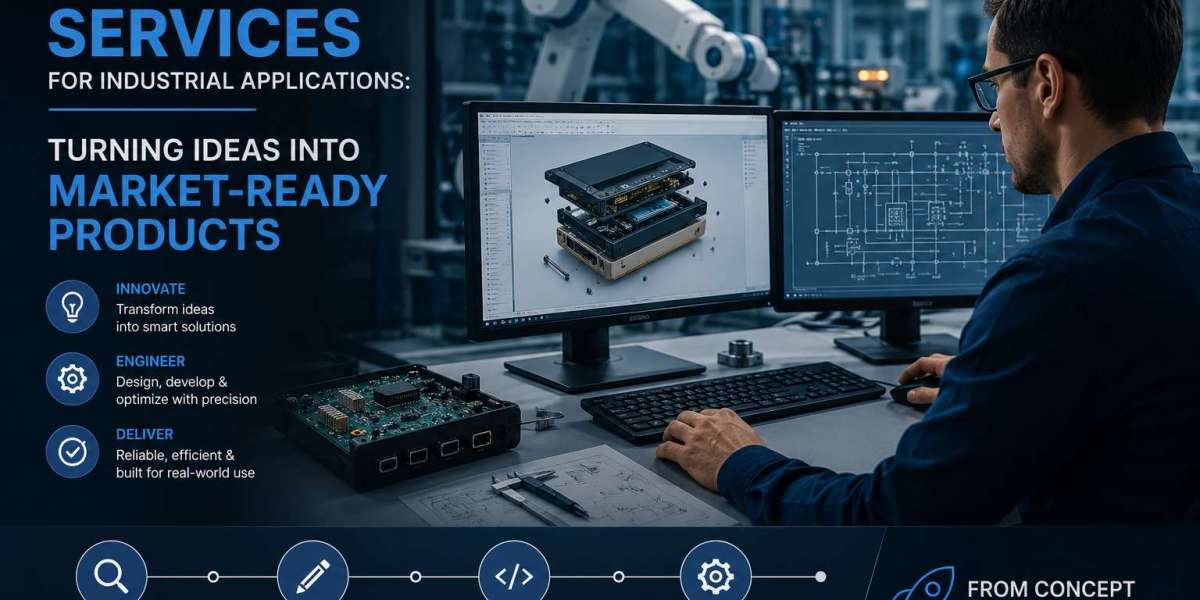
In today's competitive industrial landscape, innovation alone is not enough. Companies must transform ideas into reliable, scalable, and market-ready products that meet customer expectations, regulatory requirements, and performance standards. This process requires a combination of technical expertise, strategic planning, and efficient execution. That's where engineering services for industrial applications play a critical role.
From concept development and prototyping to product validation and production support, engineering services help businesses accelerate innovation while minimizing risks and development costs.
The Growing Demand for Industrial Product Innovation
Industrial sectors are evolving rapidly due to advancements in automation, connectivity, artificial intelligence, and Industry 4.0 technologies. Manufacturers and technology companies are under constant pressure to develop products that are smarter, more efficient, and capable of adapting to changing market needs.
However, bringing an industrial product from concept to commercialization involves numerous challenges, including:
- Technical complexity
- Product reliability requirements
- Compliance and certification standards
- Cost management
- Faster time-to-market expectations
- Integration of hardware and software systems
Professional engineering services provide the expertise needed to overcome these challenges and ensure successful product development.
The Journey from Idea to Market-Ready Product
Concept Development and Requirements Analysis
Every successful product begins with a clear understanding of customer needs and business objectives. During the concept phase, engineering teams work closely with stakeholders to define product specifications, technical requirements, performance expectations, and project goals.
This stage typically includes:
- Market and application analysis
- Feasibility studies
- Product requirement definition
- Technology evaluation
- Risk assessment
A well-planned concept phase lays the foundation for efficient development and long-term product success.
Hardware Engineering and Product Design
Industrial products often require custom hardware solutions capable of operating in demanding environments. Engineering teams develop robust electronic systems that deliver reliability, durability, and high performance.
Hardware engineering services may include:
- Electronic circuit design
- PCB development
- Embedded system architecture
- Power management design
- Sensor integration
- Industrial communication interfaces
By focusing on scalability and future requirements, businesses can create products that remain competitive for years to come.
Software Development and Embedded Systems
Modern industrial products rely heavily on intelligent software and embedded systems. Engineering services help organizations develop software solutions that enhance functionality, automation, and user experience.
Key software engineering activities include:
- Embedded software development
- Firmware programming
- Real-time operating systems
- Human-machine interface (HMI) development
- Industrial communication protocols
- Cloud and IoT integration
The seamless integration of hardware and software ensures reliable product performance and efficient operation in real-world environments.
Rapid Prototyping and Validation
Before moving into production, prototypes must be thoroughly tested and validated. Prototyping allows businesses to identify potential design issues early, reducing development risks and avoiding costly modifications later.
Benefits of prototyping include:
- Faster design verification
- Performance testing
- User feedback collection
- Functionality validation
- Reduced development costs
Engineering teams use prototype testing to refine product designs and ensure compliance with industry requirements.
Product Testing and Quality Assurance
Industrial applications demand exceptional reliability and safety. Engineering services include comprehensive testing procedures to verify that products meet required standards and perform consistently under operating conditions.
Testing may involve:
- Functional testing
- Environmental testing
- Thermal analysis
- Electromagnetic compatibility (EMC) testing
- Stress and durability testing
- Regulatory compliance verification
A rigorous testing process minimizes product failures and strengthens customer confidence.
Preparing for Manufacturing and Production
A great product design must also be manufacturable. Engineering services bridge the gap between development and production by ensuring designs are optimized for efficient manufacturing.
Production support services often include:
- Design for Manufacturing (DFM)
- Component selection
- Supply chain support
- Production documentation
- Assembly optimization
- Quality control planning
This approach helps organizations reduce manufacturing costs while maintaining product quality.
Benefits of Professional Engineering Services
Faster Time-to-Market
Experienced engineering teams streamline development processes, enabling businesses to launch products faster and respond quickly to market demands.
Reduced Development Risks
Comprehensive planning, testing, and validation help identify potential issues before they become costly problems.
Access to Specialized Expertise
Engineering partners provide knowledge across hardware, software, electronics, embedded systems, and industrial automation technologies.
Improved Product Quality
Professional engineering practices ensure products meet industry standards, customer expectations, and long-term reliability requirements.
Cost Efficiency
By optimizing designs and reducing rework, engineering services help organizations maximize their development budgets.
Applications Across Industries
Engineering services support product development across a wide range of industrial sectors, including:
- Manufacturing and automation
- Industrial electronics
- Medical technology
- Energy and utilities
- Transportation and logistics
- Telecommunications
- Smart infrastructure
- Industrial IoT solutions
Each industry presents unique challenges that require tailored engineering expertise and innovative solutions.
Choosing the Right Engineering Partner
Selecting the right engineering partner is critical to product success. Organizations should look for partners that offer:
- End-to-end development capabilities
- Hardware and software expertise
- Industry-specific knowledge
- Prototyping and testing support
- Production and lifecycle management services
- Proven experience in industrial applications
A trusted engineering partner can significantly improve project outcomes and accelerate innovation.
Conclusion
Transforming an innovative idea into a market-ready industrial product requires far more than technical design. It demands a structured development process, multidisciplinary expertise, rigorous testing, and production-ready engineering.
Engineering services for industrial applications provide the foundation for successful product development by guiding organizations through every stage of the product lifecycle—from concept and design to validation, manufacturing, and long-term support.
As industrial technologies continue to evolve, businesses that leverage professional engineering services will be better positioned to innovate faster, reduce development risks, and bring high-quality products to market with confidence.
Read More: https://tecsysproductguides.blogspot.com/2026/06/engineering-services-for-industrial.html