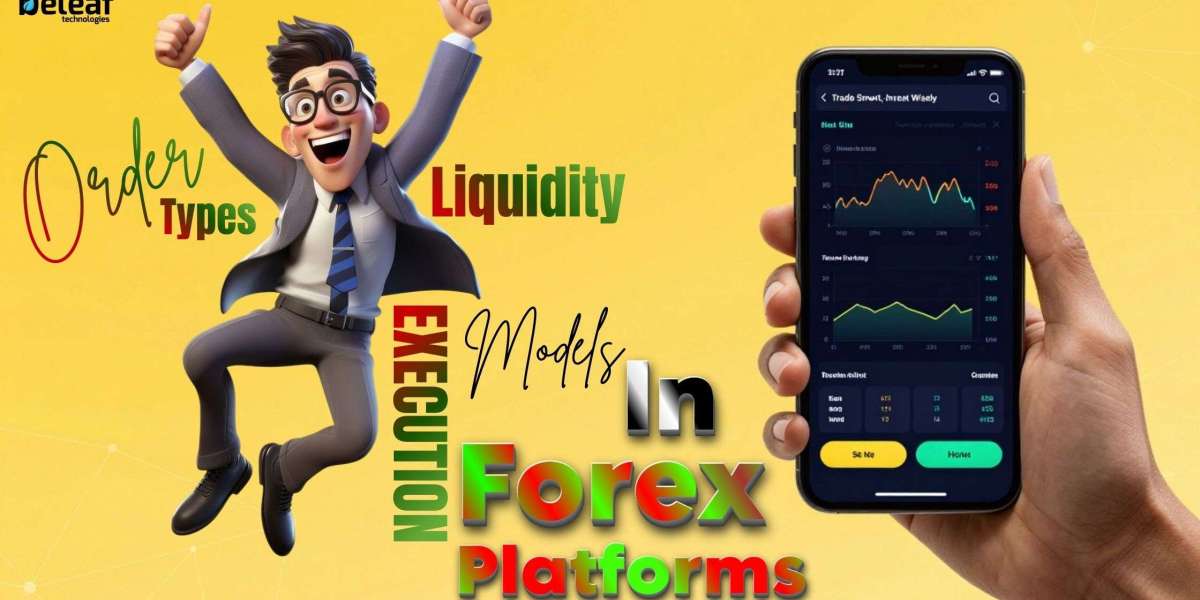
Forex trading platforms are systems that help traders connect to the global currency market. Behind every trade, there is a process that decides how orders are sent, matched, and completed. Three main things control this process: order types, liquidity, and execution models. Together, they decide how smoothly trades happen and how fair the prices are. When traders understand these basics, they can trade with more confidence, better control, and fewer surprises.
Understanding Order Types in Forex Trading
Order types tell the trading platform how and when a trade should be placed. The most common order is a market order, which buys or sells a currency immediately at the current price. Market orders are useful when fast execution is important. Another common order is a limit order, where traders choose the price they want to buy or sell at. This gives better price control, but the trade may not happen if the market does not reach that price.
There are also stop orders, which become active only after the price reaches a certain level. Stop orders are often used to enter trades during strong moves or to protect trades from big losses. These order types give traders more flexibility and allow them to trade in a way that feels comfortable and planned.
Advanced Order Types and Their Benefits
Forex platforms also offer advanced order types to help manage trades better. A stop-loss order closes a trade automatically if the price moves against the trader, helping to limit losses. A take-profit order closes a trade when a target price is reached, locking in profits. Some platforms offer trailing stops, which move with the price to protect profits as the market moves.
Because the platform handles these orders automatically, traders do not need to watch the market all the time. This makes trading more organized and less stressful.
What Is Liquidity in the Forex Market?
Liquidity means how easy it is to buy or sell a currency without causing big price changes. The forex market is very liquid, especially for major pairs like EURUSD, GBPUSD, and USDJPY. High liquidity means there are many buyers and sellers active in the market.
When liquidity is high, spreads are smaller, trades are filled faster, and prices move smoothly. When liquidity is low, such as during quiet hours or big news events, spreads can become wider and prices can move suddenly. Understanding liquidity helps traders choose better times to trade.
How Liquidity Affects Trade Execution
Liquidity directly affects how trades are filled. In high-liquidity conditions, trades are usually executed quickly and close to the expected price. In low-liquidity conditions, traders may face slippage, which means the trade is filled at a slightly worse price.
Forex platforms watch liquidity levels all the time and adjust prices when needed. Some platforms may increase spreads or limit trade size during low liquidity to protect traders. Knowing how liquidity works helps traders avoid risky conditions and trade more carefully.
Execution Models in Forex Trading Platforms
Execution models explain how a platform fills orders. One common model is market execution, where trades are filled at the best available price at that moment. This method is fast and transparent and works well in active markets.
Another model is instant execution, where the trader is offered a fixed price. The trade is either filled at that price or rejected. Some platforms use hybrid models, which combine both methods to offer better flexibility and performance.
ECN, STP, and Dealing Desk Models
Forex platforms can also be grouped by how they connect traders to the market. ECN platforms connect traders directly with liquidity providers, offering competitive prices and deep liquidity. STP platforms send orders straight to liquidity providers without manual handling.
Dealing desk platforms manage trades internally and often offer fixed spreads. Each model has its own advantages. Modern platforms aim to provide fair pricing and clear execution. Understanding these models helps traders choose a platform that fits their trading style.
The Relationship Between Order Types, Liquidity, and Execution
Order types, liquidity, and execution models all work together. For example, limit orders work best in calm and liquid markets, while market orders are better when quick action is needed. Execution models depend on available liquidity to fill trades smoothly. When all these parts work well together, trading becomes more stable and predictable.
Forex platforms are designed to manage this balance carefully. By combining flexible order options, real-time liquidity tracking, and strong execution systems, platforms support both manual and automated traders.
Risk Management and Trade Control
Modern forex platforms use order types and execution rules to help manage risk. Stop-loss and take-profit orders control losses and profits automatically. Execution systems that understand liquidity help reduce slippage and sudden price gaps. These features allow traders to focus on strategy while the platform helps protect trades.
Automated trading systems benefit even more because trades are managed in a consistent and emotion-free way. This leads to disciplined trading and better long-term results.
The Future of Forex Trading Platforms
As technology improves, forex trading platforms are becoming faster, smarter, and more transparent. Better data, stronger execution engines, and deeper liquidity access are improving trading for everyone. New tools are also helping traders understand market activity more clearly.
This progress is making forex trading easier and more professional, even for beginners. Order types, liquidity control, and execution models will continue to improve, creating better trading experiences.
Conclusion
Order types, liquidity, and execution models are the core parts of every forex trading platform. They control how trades are placed, how quickly they are filled, and how fair prices are. When traders understand how these elements work together, they can trade with more confidence, control, and discipline. Modern forex trading software is built to support safe execution, strong risk management, and easy market access. With the right knowledge and tools, traders can trade smarter and more effectively in today’s forex market.