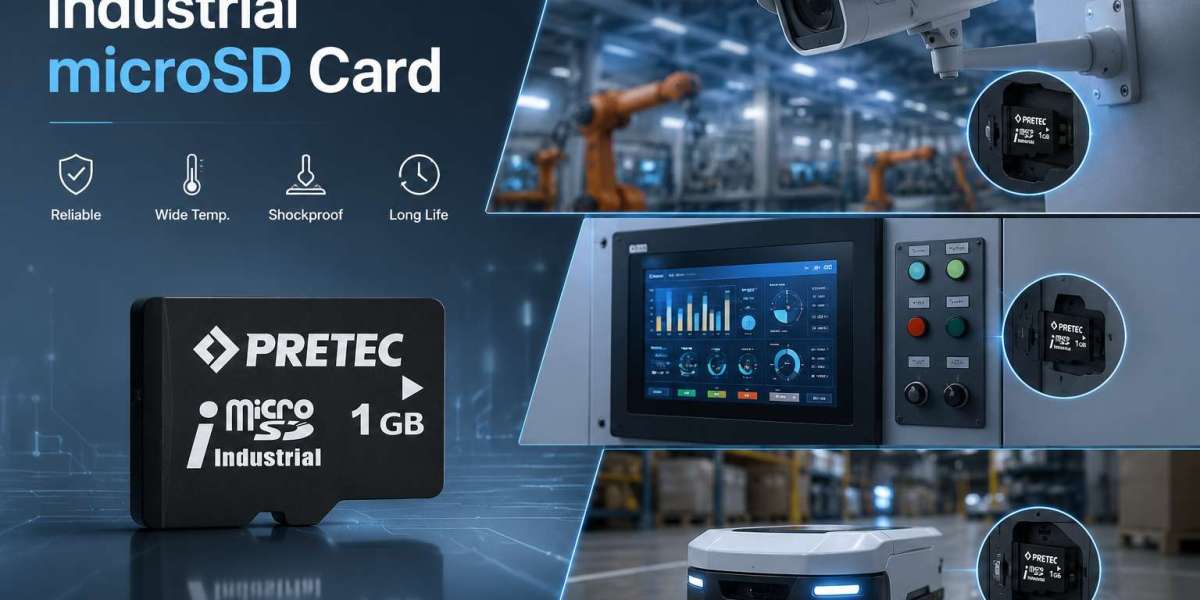
Embedded systems are the backbone of modern industrial technology. From automation controllers and industrial PCs to IoT gateways, HMI panels, and data logging systems, these devices rely on dependable storage solutions to operate continuously and efficiently. While processors and software often receive the most attention, the reliability of an embedded system can be heavily influenced by its storage media.
This is where industrial flash memory cards play a critical role. Designed specifically for demanding environments, industrial-grade flash storage delivers the durability, endurance, and stability required for mission-critical embedded applications.
The Growing Importance of Reliable Embedded Storage
As industries embrace Industry 4.0, Industrial IoT (IIoT), edge computing, and smart manufacturing, embedded devices are handling larger volumes of data than ever before. These systems continuously collect, process, and store operational information that supports real-time decision-making.
Any storage failure can result in:
- System downtime
- Data corruption
- Production interruptions
- Equipment malfunctions
- Increased maintenance costs
For industrial environments where uptime is essential, reliable flash storage is no longer optional—it is a necessity.
What Is an Industrial Flash Memory Card?
An industrial flash memory card is a storage device specifically engineered for industrial and embedded applications. Unlike consumer-grade memory cards, industrial flash cards are designed to withstand harsh operating conditions while delivering consistent long-term performance.
Common industrial storage formats include:
- microSD Cards
- SD Cards
- CompactFlash (CF) Cards
- CFast Cards
- Embedded Flash Modules
These storage solutions are widely used in industrial automation, transportation systems, medical equipment, surveillance devices, and embedded computing platforms.
Why Consumer-Grade Storage Falls Short
Consumer flash memory is designed primarily for everyday applications such as smartphones, cameras, and personal computers.
Industrial environments present significantly different challenges, including:
- Continuous operation
- Frequent read/write cycles
- Extreme temperatures
- Electrical noise
- Shock and vibration
- Long product lifecycles
Under these conditions, standard memory cards often experience premature wear, performance degradation, or unexpected failures.
Industrial flash memory cards are specifically built to address these challenges.
High-Endurance Flash Technology
One of the primary ways industrial flash memory improves embedded device reliability is through enhanced endurance.
Industrial-grade storage often utilizes high-quality NAND flash technologies such as:
MLC (Multi-Level Cell)
MLC flash provides a balanced combination of capacity, performance, and durability, making it ideal for industrial applications.
Benefits include:
- Higher write endurance
- Longer operational lifespan
- Better reliability under continuous workloads
This makes MLC-based industrial flash cards particularly suitable for data logging, automation systems, and edge computing devices.
Advanced Wear Leveling Extends Device Life
Flash memory cells wear out after repeated write cycles.
Industrial flash memory cards use sophisticated wear-leveling algorithms that distribute write operations evenly across memory cells.
This technology:
- Prevents premature cell failure
- Maximizes storage lifespan
- Improves long-term performance consistency
For embedded devices that operate continuously, wear leveling is essential for maintaining system reliability over many years.
Improved Data Integrity and Protection
Data integrity is critical in industrial applications where stored information may be used for process control, compliance reporting, or predictive maintenance.
Industrial flash memory cards often include:
- Error Correction Code (ECC)
- Bad Block Management
- Power Failure Protection
- Data Recovery Mechanisms
These features help prevent data corruption and ensure information remains accurate and accessible even under challenging operating conditions.
Reliable Operation in Extreme Temperatures
Many embedded devices are deployed in environments where temperature conditions exceed the capabilities of consumer storage products.
Industrial flash memory cards are commonly designed to operate across extended temperature ranges, making them suitable for:
- Manufacturing facilities
- Outdoor installations
- Transportation systems
- Energy infrastructure
- Industrial control cabinets
Reliable temperature performance helps ensure consistent operation regardless of environmental conditions.
Resistance to Shock and Vibration
Industrial machinery, vehicles, and production equipment often generate significant vibration and mechanical stress.
Industrial flash memory cards are engineered to withstand:
- Continuous vibration
- Mechanical shock
- Physical movement
- Harsh operating environments
This durability minimizes storage-related failures and supports reliable operation in mobile and industrial applications.
Supporting Continuous Data Logging
Many embedded systems perform ongoing data collection and monitoring.
Examples include:
- Industrial sensors
- Machine monitoring systems
- Energy management devices
- IoT gateways
- Predictive maintenance platforms
These applications generate constant write activity, which can quickly wear out consumer-grade storage.
Industrial flash memory cards are designed specifically for high-write workloads, ensuring long-term reliability in data-intensive environments.
Enabling Reliable Edge Computing
Edge computing continues to expand across industrial sectors.
Instead of sending all data to centralized servers, edge devices process information locally to improve speed and reduce latency.
Industrial flash memory supports edge computing by providing:
- Fast local data storage
- Reliable data retention
- Consistent performance
- Reduced risk of storage failures
As edge computing adoption grows, robust flash storage becomes increasingly important for system reliability.
Long Product Lifecycle Support
Industrial equipment often remains in service for many years.
Unlike consumer products that change frequently, industrial systems require stable component availability and long-term support.
Industrial flash memory suppliers typically offer:
- Extended product availability
- Controlled product revisions
- Consistent performance specifications
- Long-term supply commitments
This stability simplifies maintenance and helps manufacturers avoid costly redesigns.
Key Applications for Industrial Flash Memory Cards
Industrial flash memory cards are commonly used in:
Industrial Automation
- PLCs
- Industrial controllers
- HMI systems
Embedded Computing
- Industrial PCs
- Panel PCs
- Edge devices
Transportation
- Fleet management systems
- Vehicle monitoring equipment
Medical Technology
- Diagnostic devices
- Monitoring equipment
Industrial IoT
- Smart sensors
- Remote monitoring systems
Data Logging
- Production monitoring
- Environmental monitoring
- Equipment diagnostics
Choosing the Right Industrial Flash Memory Card
When selecting storage for embedded devices, consider:
Endurance Rating
Choose storage designed for frequent read/write operations.
NAND Technology
MLC-based solutions typically offer superior durability for industrial workloads.
Temperature Range
Ensure compatibility with the deployment environment.
Capacity Requirements
Select storage that supports both current and future data needs.
Reliability Features
Look for ECC, wear leveling, and power-loss protection.
Lifecycle Support
Choose suppliers that offer long-term availability.
Conclusion
The reliability of an embedded device depends on every component working together, and storage is one of the most critical elements. Industrial flash memory cards provide the endurance, data integrity, environmental resistance, and long-term stability needed for today's demanding industrial applications.
Whether deployed in automation systems, industrial PCs, IoT devices, or edge computing platforms, industrial-grade flash storage helps reduce downtime, protect valuable data, and extend system lifespan.
As embedded systems become increasingly connected and data-driven, investing in reliable industrial flash memory is one of the most effective ways to ensure consistent performance and long-term operational success.
Read More: https://tecsysproductguides.blogspot.com/2026/06/how-industrial-flash-memory-cards.html