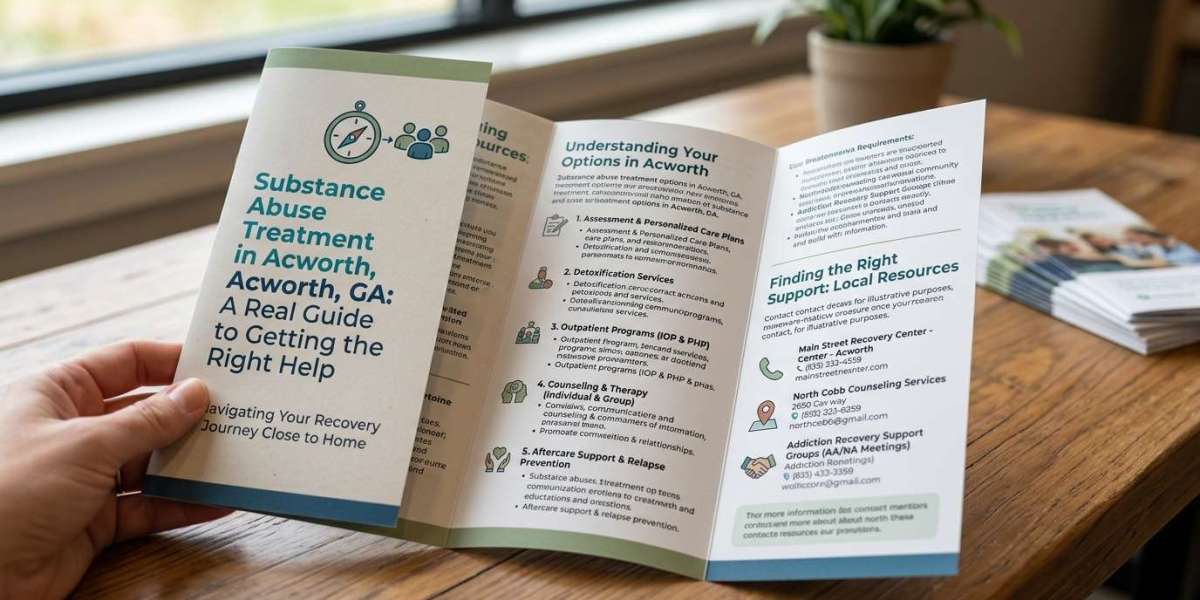
Nobody plans to need substance abuse treatment. You don't wake up one day and think, "This seems like a great path." Addiction sneaks in gradually through a prescription, a stressful season, or a habit that quietly crossed a line.
But here's what matters: it's treatable. Not just manageable, actually, meaningfully treatable. And if you're in Acworth or the surrounding Cobb County area, you don't have to travel far to find serious, professional help.
What Is Substance Abuse and When Does It Become a Disorder?
People use the words "substance abuse" and "addiction" interchangeably, but the clinical picture is a bit more specific.
According to the National Institute on Drug Abuse (NIDA), addiction is a chronic, relapsing disorder involving compulsive drug seeking and use despite harmful consequences, and it's classified as a brain disorder because it involves real changes to the brain circuits that control reward, stress, and self-control.
The American Psychiatric Association replaced older categories like "substance abuse" and "substance dependence" with a single diagnosis: Substance Use Disorder (SUD), classified as mild, moderate, or severe based on how many diagnostic criteria a person meets over a 12-month period.
Those criteria fall into four groups: impaired control over use, social impairment, risky use, and physical tolerance or withdrawal symptoms.
In other words, it's not about willpower. It's about what's happening in the brain.
The Scale of the Problem (And Why Early Treatment Matters)
The numbers around substance use disorders are genuinely sobering.
According to the 2023 National Survey on Drug Use and Health (NSDUH), 48.7 million people aged 12 or older had a substance use disorder in the past year.
An estimated 54.6 million people aged 12 and older needed treatment for a substance use disorder in 2022, but only 26% of those sought treatment.
That gap between people who need help and people who actually get it is the real problem. Not a lack of effective treatment, but a failure to start.
The good news? An estimated 29.3 million U.S. adults (11.1% of the adult population) report that they have resolved a significant substance use problem and are living in recovery. Recovery is genuinely common. It just requires real, structured support to get there.
Warning Signs: When Is It Time to Seek Help?
One of the most honest questions a person can ask is: "Is this a problem?" Here are the signs that usually answer it.
According to the Cleveland Clinic and NIDA, the progression to a substance use disorder often follows a pattern: experimental use, then occasional use, then heavy routine use with few to no days off.
One important sign is that a person continues to use drugs or alcohol even though it's clearly harming their life. This is the point where use has crossed into disorder, when you know it's causing damage and still can't stop.
Other common signs include:
- Needing more of a substance to feel the same effect (tolerance)
- Experiencing withdrawal when you stop or reduce use
- Neglecting work, family, or responsibilities to use
- Giving up activities or relationships because of substance use
- Repeated failed attempts to cut back on your own
If two or three of these apply, that's clinically meaningful. If several apply consistently, professional substance abuse treatment is the right next step, not willpower, not "trying harder."
How Substance Abuse Treatment Works at Acworth Outpatient Treatment
Acworth Outpatient Treatment uses a structured, evidence-based approach that matches each person's clinical needs to the right level of care. Not everyone needs the same intensity of treatment, and the right fit makes a significant difference in outcomes.
Partial Hospitalization Program (PHP)
PHP is the most intensive outpatient level available. Sessions run daily and include therapy, psychiatric support, and structured skill-building. You go home at night; you don't live at the facility, but treatment takes up most of your day.
This works well for people in early recovery, those stepping down from inpatient care, or anyone whose substance use has significantly disrupted daily functioning and who needs intensive support to stabilize.
Intensive Outpatient Program (IOP)
The IOP offers comprehensive treatment with more scheduling flexibility. Sessions combine individual counseling, group therapy, and medication management. If you're working or have family obligations, this program is designed to fit around real life.
Most people find IOP to be the most practical entry point, with enough structure to make genuine progress and enough freedom to keep functioning.
Outpatient Program (OP)
The OP is typically for people who have already completed a higher level of care and are integrating recovery into their daily routines. Sessions are less frequent but focused on maintaining progress and building long-term coping strategies.
Think of it as the maintenance phase where the real-life application of everything you've learned gets tested and refined.
The Therapy Approaches That Actually Work
According to NIDA's treatment guidelines, no single treatment is appropriate for all individuals. Matching treatment settings, interventions, and services to each individual's particular problems and needs is critical to their success.
Acworth Outpatient Treatment uses the therapies with the strongest evidence base.
Cognitive Behavioral Therapy (CBT)
CBT is one of the most well-researched approaches in addiction treatment. It helps people identify the specific thought patterns, emotional triggers, and automatic behaviors that drive substance use and replace them with healthier responses.
It's not abstract. CBT gives you practical, applicable tools that you use in real situations.
Dialectical Behavior Therapy (DBT)
DBT builds emotional regulation and distress tolerance skills. For people whose substance use connects to emotional pain, overwhelming feelings, or difficulty in relationships, DBT addresses those patterns directly.
EMDR
EMDR (Eye Movement Desensitization and Reprocessing) helps process trauma that often underlies substance use. Many people use substances to manage the weight of past experiences without realizing that's what they're doing. EMDR lets the brain reprocess those memories so they carry less charge.
Medication-Assisted Treatment (MAT)
MAT combines FDA-approved medications with counseling to manage cravings and withdrawal. Combining medications like buprenorphine or methadone with counseling produces success rates of up to 50% in maintaining long-term abstinence or a major reduction in use.
This is not a shortcut. It's medicine, the same way treating any other chronic condition with medication is medicine.
Addressing Substances Individually
Different substances create different dependencies, and effective treatment accounts for that. Acworth Outpatient Treatment offers specialized programs for the substances most commonly driving people to seek help in the Acworth area.
- Alcohol: The most widely misused substance in Georgia. Alcohol addiction treatment addresses both physical dependence and the behavioral patterns that maintain it.
- Prescription drugs: Opioids, benzodiazepines, and stimulants each have distinct withdrawal profiles and treatment needs. Prescription drug addiction treatment handles these specifically.
- Cocaine: A stimulant with intense psychological dependency. Cocaine addiction treatment focuses heavily on behavioral therapy.
- Methamphetamine: One of the more challenging addictions to treat. Meth addiction treatment requires intensive support and longer engagement.
- Marijuana: Often dismissed as non-addictive, but for many people, dependency is real. Marijuana addiction treatment is available for those who need it.
When Mental Health and Substance Use Co-Occur
Among the 48.7 million people with a past-year substance use disorder, 55.8% (27.2 million people) also had co-occurring mental health conditions.
That's more than half.
Depression, anxiety, PTSD, and trauma don't just sit alongside substance use; they often drive it. Treating one while ignoring the other consistently produces weaker results. That's why dual diagnosis treatment at Acworth Outpatient Treatment addresses both conditions simultaneously through an integrated clinical approach.
If you've ever felt like your substance use and your mental health are tangled up together, you're probably right. And that combination is something structured, specialized treatment is built to handle.
What to Expect in Terms of Recovery
Let's be honest about relapse, because most people wonder about it.
According to NIDA, the relapse rate for substance use disorders is between 40% and 60%, comparable to the relapse rates for other chronic diseases like hypertension and asthma, which are between 50% and 70%.
Relapse doesn't mean treatment failed. It means addiction is a chronic condition and, like other chronic conditions, it requires ongoing management, not a single cure.
The encouraging side: after 5 years of continuous recovery, a person's risk of relapse drops to less than 15%, similar to that of the general population.
Time in treatment and consistent support are the variables that shift those numbers. That's why staying engaged with the right program matters.
Getting Started at Acworth Outpatient Treatment
Starting doesn't require having everything figured out. It requires one step.
The team at Acworth Outpatient Treatment begins with a confidential clinical assessment to determine the right level of care for your specific situation. Same-day admissions may be available. They accept major insurance, and you can verify your coverage in about five minutes.
The Bottom Line
Substance abuse treatment works. The data supports it, the clinical evidence supports it, and tens of millions of people living in recovery support it.
What doesn't work is waiting. The treatment gap in this country isn't because help doesn't exist; it's because people delay too long before using it.
If you or someone close to you is struggling, reach out to Acworth Outpatient Treatment today. The first conversation is free, confidential, and genuinely without pressure.
Recovery is possible. It just needs a starting point.