
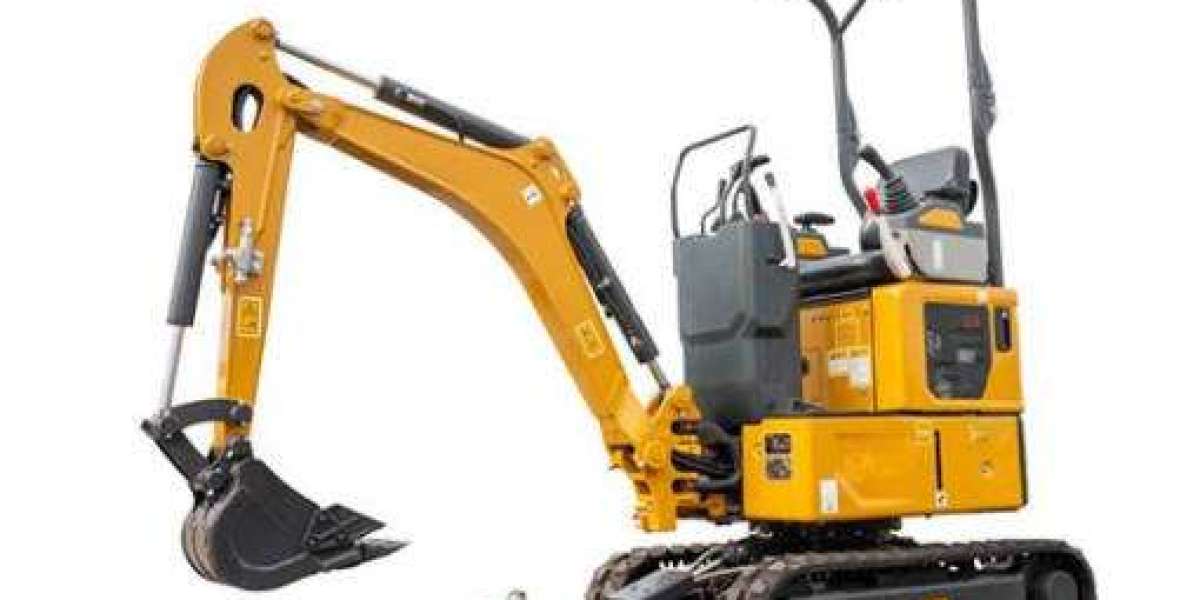
Choosing the right type of excavator can not only significantly increase work efficiency, but also reduce long-term operation and maintenance costs, and avoid project delays caused by insufficient equipment compatibility. By mastering the following 5 key parameters, you can select the right model based on your engineering needs and say goodbye to blind purchasing!
Parameter 1: Overall weight and dimensions of the machine
Weight directly determines the stability, carrying capacity and transportation convenience of the equipment, while size is the key consideration for operations in narrow spaces.
For scenarios such as interior decoration, soil loosening in greenhouses, and corridor renovation, it is recommended to choose machines with a capacity of 1 to 1.5 tons. The width of the machine body should be strictly controlled within 1.2 meters to facilitate movement through narrow passages. For outdoor operations such as municipal repairs and rural road maintenance, 2 to 3-ton machines can be selected, which can balance the stability of the operation and the flexibility of the site. In addition, the tailless rotation design can reduce the rotation radius by more than 20%, effectively avoiding the machine from colliding in restricted areas such as fences and corners.
Parameter 2: Depth of excavation and working area
The excavation depth and operation range should be strictly matched to the core requirements of the project to avoid functional redundancy or deficiency.
For shallow operations such as digging irrigation ditches in farmlands, leveling residential plots, and excavating small pits, a machine with a digging depth of 1.5 to 2.5 meters will suffice to meet the requirements. For deep operations like laying municipal pipelines and digging small wells, a machine with a digging depth of more than 3 meters is necessary. At the same time, attention should be paid to the upper limit of the digging radius to ensure that the equipment can cover the entire operation area without frequently adjusting the position of the machine body, thereby reducing unnecessary operations and further improving construction efficiency.
Parameter 3: Engine Power and Fuel Consumption
Engine power is the core guarantee for the operational efficiency of the equipment, and it needs to be selected reasonably based on the weight of the machine and the intensity of the operation.
1-1.5 ton Construction Machinery Maintenance Key Points Guide: Equipped with a 11-15kW engine can meet the daily light to moderate operation requirements. For models over 2 tons or for scenarios involving hard soil and crushing operations, it is recommended to choose an engine with a power of 19kW or above to ensure sufficient power. In terms of fuel consumption, priority should be given to models with intelligent matching function between the engine and the hydraulic pump. The power output can be dynamically adjusted according to the operation load, and compared with ordinary models, the fuel consumption is significantly lower, which can save considerable operating costs in long-term and frequent operations.
Parameter 4: Hydraulic System and Maneuverability
The hydraulic system directly affects the operation accuracy and smoothness of the equipment, and is a crucial detail in the selection process.
The leading hydraulic system has a fast response speed (≤ 0.15 seconds) and the operating force is 30% lower than that of ordinary hydraulic systems. It is not prone to fatigue during long-term operation, and is particularly suitable for precise operations such as tree planting and pipeline laying. The model with load-sensing function can real-time sense the operation load and allocate the hydraulic oil flow as needed, reducing energy loss and improving operational stability. In addition, the side swing function of the arm allows the equipment to shift to both sides for operation without moving the body, making it more agile when working closely against obstacles, thereby enhancing work efficiency.
Parameter 5: Structural Durability and Adaptability
The durability of the equipment structure determines its service life, while its adaptability affects its ability to cope with different working conditions.
It is recommended to choose the models with built-in hydraulic pipeline design, which can effectively prevent pipeline damage caused by external impacts and significantly extend the service life. If the operation environment involves dusty, hot, humid and other harsh conditions, it is necessary to select reinforced dust-proof sealing components to prevent impurities from entering the machine body. The telescopic design of the tracks enables flexible adjustment of the track width, balancing the navigability on narrow roads and the stability on complex terrains.
Construction Machinery Maintenance Key Points Guide https://www.yongzhiding.com/what-are-the-key-points-for-the-maintenance-and-upkeep.html