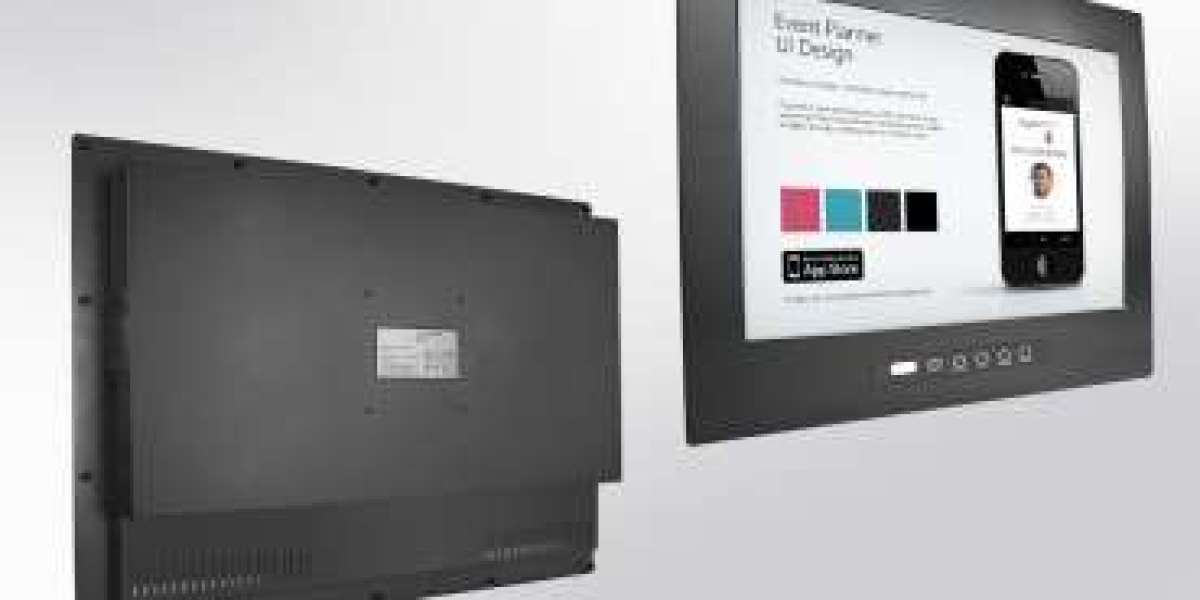
Control rooms are the operational center of many industrial environments. Manufacturing plants, utilities, transportation infrastructure, energy systems, and process industries all depend on centralized monitoring to maintain stable and efficient operations. Operators rely on visual information to identify alarms, track system performance, and make timely decisions. This is why an industrial monitor for control rooms plays a critical role in modern industrial facilities.
Choosing the right display is not only about screen size. It directly affects alarm visibility, operator response time, and overall workflow efficiency.
Why alarm visibility matters
Industrial environments generate large amounts of real-time operational data. At the same time, systems continuously produce alerts, warnings, and alarm notifications that may require immediate attention.
Poor alarm visibility can lead to:
- delayed operator response
- reduced process awareness
- missed critical events
- slower troubleshooting
- workflow interruptions
In busy control rooms, information must be visible clearly and instantly. The display becomes one of the most important elements in supporting fast and accurate decisions.
How industrial monitors support control room operations
A properly selected industrial monitor helps operators manage multiple sources of information in a structured and efficient way.
Industrial monitors commonly display:
- SCADA dashboards
- process graphics
- machine status information
- trend charts
- alarm notifications
- system health indicators
- operational reports
A larger and clearer display environment helps operators maintain better situational awareness.
Better visibility improves response speed
In control room environments, operators often monitor several systems at the same time. A display that offers clear visual presentation makes it easier to identify changes quickly.
Benefits of improved visibility include:
- faster alarm recognition
- easier interpretation of process conditions
- reduced navigation time
- improved confidence during operational decisions
When alarms appear clearly and consistently, operators can respond faster and reduce the risk of escalation.
Workflow efficiency depends on display usability
Control room productivity is influenced by how easily operators can interact with information.
An industrial monitor designed for control room use helps support:
- efficient screen navigation
- better layout visibility
- improved readability during long shifts
- reduced visual fatigue
- easier multi-window monitoring
In long-running industrial environments, small usability improvements can have a meaningful effect on workflow efficiency.
Why widescreen formats are often preferred
Modern control rooms frequently use widescreen industrial displays because they allow more information to be viewed simultaneously.
A widescreen display can help operators:
- view multiple dashboards side by side
- monitor alarms while tracking live data
- access trend graphs and control interfaces together
- reduce constant switching between screens
This improves workflow continuity and reduces unnecessary interruptions.
Common control room applications
Manufacturing and factory automation
Operators monitor production lines, machine performance, and alarm conditions in real time.
Utilities and energy systems
Control centers supervise power distribution, infrastructure performance, and operational stability.
Transportation systems
Rail, fleet, and traffic control environments depend on centralized visual monitoring.
Process industries
Chemical, pharmaceutical, and food processing operations use industrial visualization to maintain safe and stable process conditions.
What buyers should evaluate before purchasing
When selecting an industrial monitor for control rooms, several practical factors should be considered.
Screen size
The amount of information displayed should match screen size and operator viewing distance. Larger control rooms often benefit from wider display formats.
Image clarity
Look for:
- good brightness
- sharp graphics
- wide viewing angles
- clear rendering of alarms and dashboards
Good image quality helps operators maintain visibility across long operating hours.
Touch or non-touch operation
Some control rooms use touch-enabled interfaces, while others rely on keyboard and mouse-based control. The correct option depends on operational workflow.
Continuous operation capability
Control rooms often operate:
- 24 hours a day
- across multiple shifts
- in continuous monitoring environments
Industrial-grade monitors should support long-term stable performance.
Environmental reliability
Industrial displays may need to tolerate:
- temperature variation
- vibration
- dust exposure
- demanding runtime conditions
Industrial-grade construction is important for dependable operation.
Why industrial-grade displays matter
Standard office displays are not designed for industrial control environments.
Industrial monitors are typically selected because they provide:
- longer operational life
- stronger mechanical durability
- stable long-term performance
- predictable lifecycle support
- better suitability for critical monitoring environments
For industrial buyers, this reduces long-term risk and helps improve operational continuity.
A practical buying decision for control rooms
When evaluating a display for control room applications, buyers should ask:
- How much information needs to be visible at one time?
- Will operators monitor multiple dashboards simultaneously?
- Is rapid alarm recognition a priority?
- Will the display operate continuously?
- Does the environment require industrial-grade durability?
- Is long-term product availability important?
Answering these questions helps identify the most suitable monitor for the application.
Supporting better industrial operations
A well-chosen industrial monitor for control rooms helps improve alarm visibility, operator awareness, and workflow efficiency.
For manufacturers, utilities, infrastructure operators, and system integrators, investing in the right control room display supports faster decisions, more reliable monitoring, and long-term operational stability.
In modern industrial environments, better visibility often leads directly to better performance.
Read More: https://tecsysproductguides.blogspot.com/2026/05/industrial-monitor-for-control-rooms.html