When we invest money in something, we want to know how much it really costs and where that money goes. For example, if one is building a house, they will want to look at direct costs such as raw materials, site labor, equipment rentals, subcontractor charges, and concrete, steel, wiring, or plumbing supplies. They will also consider indirect costs such as permits, insurance, project management, supervision, safety compliance, temporary site facilities, transport, inspections, overhead, and contingency reserves. For a project involving technology, direct costs will include materials, labor, and software fees, while indirect costs will include overhead, maintenance, training, or support. These costs can be calculated through methods or software named cost analysis tools. But while cost analysis focuses only on identifying and understanding costs. cost-benefit analysis (CBA) goes a step further by comparing those costs with expected benefits. In simple terms, cost analysis tells you what something will cost, while cost-benefit analysis helps you decide whether the cost is justified.
Benefits of cost-benefit analysis
The five main benefits of cost-benefit analysis are better decision-making, clearer comparison of alternatives, improved resource allocation, stronger justification for spending, and greater visibility into long-term impact. It helps decision-makers judge whether a project, purchase, or strategy is worth pursuing by weighing expected gains against total costs. It also makes it easier to compare different options side by side, so teams can choose the one that delivers the most value. Because it highlights both financial and practical outcomes, it supports smarter use of budgets and resources. Another benefit is that it gives managers a clearer way to explain and defend investments to stakeholders. Finally, it can reveal longer-term effects, such as future savings, efficiency gains, or hidden costs that may not be obvious at first.
Enter ROI: same same….
The common link between ROI and cost calculators is that both are tools used by decision-makers to evaluate the financial side of a decision. A cost calculator helps them determine how much money will be spent, while an ROI calculator helps assess whether that spending is likely to generate enough value in return. In that sense, cost is one of the main inputs in ROI. Before a business can measure return, it first needs a clear picture of the total investment, which may include purchase costs, implementation, labor, maintenance, training, or operating expenses. Once those costs are understood, they can be compared with expected gains such as revenue growth, savings, efficiency improvements, or productivity gains. So, in practical terms, both tools are connected because they help organizations judge whether an expense is justified, but they do so from slightly different angles: one focuses on the amount being invested, and the other focuses on the value that investment may deliver.
Click here for more information : https://qksgroup.com/roi-framework
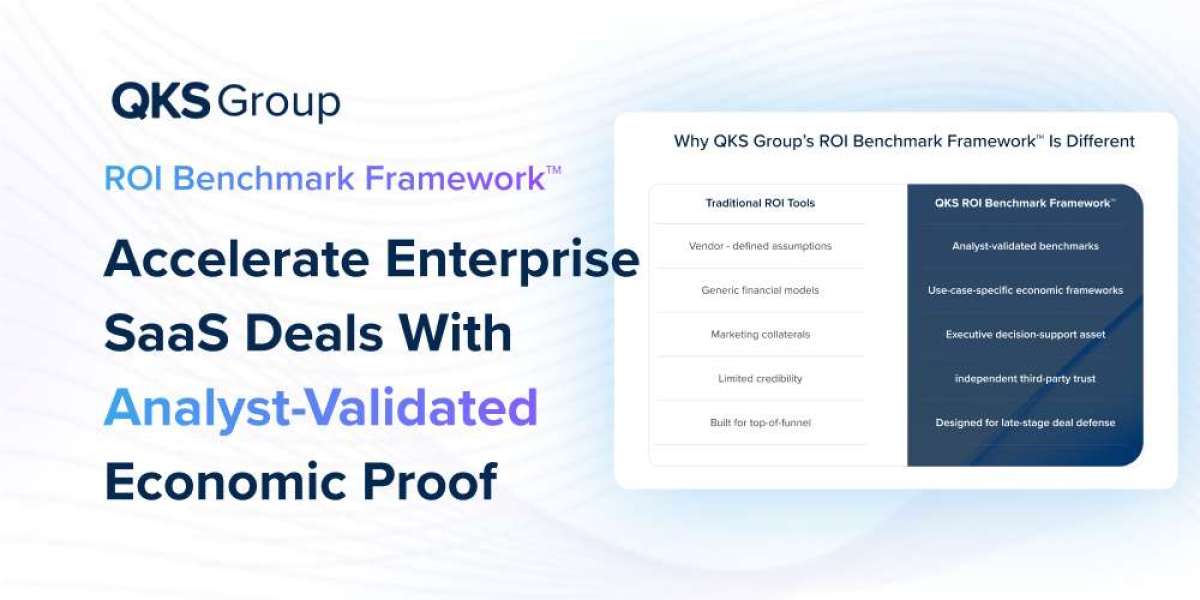
Here’s a clear comparison in table form:
Aspect | Cost Analysis Tools | ROI Tools |
Primary purpose | Measure and break down costs | Measure returns compared to investment |
Main focus | Expenses, spending patterns, cost drivers | Profitability, value gained, financial return |
Key question answered | “What are we spending, and where?” | “What are we gaining from what we spent?” |
Typical use | Budgeting, cost control, expense tracking | Investment decisions, project evaluation, value justification |
Looks at | Direct costs, indirect costs, fixed and variable costs | Benefits, gains, savings, revenue impact versus cost |
Output | Cost estimates, cost breakdowns, cost trends | ROI percentage, payback value, business impact |
Time orientation | Often focused on current and past spending | Often focused on past and expected future returns |
Decision support | Helps reduce waste and improve efficiency | Helps decide whether an investment is worth making |
In software/business context | Used to understand development, operations, licensing, or maintenance costs | Used to assess whether software, tools, or projects generate enough business value |
Main limitation | Does not show whether spending creates value | Can be misleading if benefits are estimated poorly |
Best used for | Cost control and financial planning | Comparing investments and prioritizing initiatives |
Relationship to risk | Helps identify overspending and hidden cost risks | Helps reduce investment risk by clarifying expected return |
Together, they work best when used side by side: cost analysis shows what something costs, while ROI tools show whether that cost is justified.
..But different
Cost analysis tools and ROI tools serve different but related purposes. Cost analysis tools focus on understanding expenses. They break down what something costs, including direct costs such as materials, labor, or software, and indirect costs such as overhead, maintenance, or training. Their key role is to show where money is being spent. ROI tools go further by comparing those costs with the benefits gained, such as revenue growth, savings, or efficiency improvements. In simple terms, cost analysis asks how much something costs, while ROI asks whether the cost is worth it. Cost analysis usually comes first, and ROI builds on it.