The medical billing process has always been complex. But for most of its history, it was also deeply manual — paper-based claim forms, phone calls to verify eligibility, hand-keyed data entry, and physical mail for patient statements. The margin for error was high, and the administrative burden was enormous.
That era is over. Digital health technology has fundamentally transformed every stage of the billing cycle — from AI-powered claim scrubbers and real-time eligibility verification to automated denial management and online medical bill payment platforms that let patients pay from their phones. The practices that embrace these tools are faster, more accurate, and more financially resilient than those that have not.
This guide examines how technology is changing each of the eight steps of the medical billing process — and what it means for the future of healthcare revenue cycle management. For related insights, see our roundup of medical billing trends 2025.
The Digital Transformation of Medical Billing
The shift from paper-based to digital billing has been underway for two decades, accelerated by the adoption of Electronic Health Records (EHR) and Electronic Medical Records (EMR) systems. These systems do not just digitize patient records — they create a connected data environment in which clinical information flows directly into billing workflows, eliminating manual transcription and reducing error at the source.
The next wave of transformation — AI, machine learning, predictive analytics, and patient-facing digital payment tools — is now reshaping what is possible in billing performance. Practices that are leveraging these technologies are achieving clean claim rates above 98%, denial rates below 5%, and patient collection timelines measured in days rather than months.
Staying compliant throughout this digital transformation requires adherence to HIPAA compliance guidelines data security standards — a non-negotiable requirement for any technology handling protected health information.
The Eight Steps: A Technology Lens
Step 1: Patient Registration — Automated Intake and Verification
Modern patient registration uses digital intake forms — often completed by patients on their own devices before the appointment — that feed directly into the EHR. This eliminates the manual data entry step at the front desk, reducing transcription errors and freeing staff for higher-value tasks.
Integrated identity verification tools cross-check patient information against insurance databases in real time, flagging discrepancies before the patient even arrives. Some practices now use AI-driven intake systems that pre-populate returning patient data and prompt for updates automatically.
Step 2: Real-Time Eligibility Verification
Eligibility verification has moved from phone calls and fax confirmations to instant API-based queries against payer databases. Automated eligibility engines check coverage, benefits, deductibles, and co-pay requirements in real time — often triggering automatically when an appointment is scheduled.
For practices with large Medicare populations, these tools stay current with Medicare billing requirements policy changes automatically — eliminating one of the most common sources of eligibility-related denials. AI-powered eligibility tools can also flag patients who are likely to have coverage gaps based on plan type, geography, or enrollment history.
Step 3: AI-Assisted Medical Coding
Computer-assisted coding (CAC) uses natural language processing to analyze clinical documentation and suggest appropriate ICD-10 and CPT codes. These tools do not replace certified coders — they make them faster and more accurate by surfacing code suggestions from clinical notes, reducing the cognitive load of manual code lookup.
The result is more complete charge capture, fewer coding errors, and more consistent code application across encounters. AcerHealth's medical coding services team uses technology-assisted workflows to maximize both speed and accuracy, staying current on ICD-10-CM codes and CPT coding standards updates as they are released.
Step 4: Digital Superbill Generation
In a digitally connected billing environment, the Superbill is generated automatically from the coded clinical encounter — pulling data from the EHR into the billing system without manual re-entry. This eliminates one of the most error-prone steps in the traditional billing workflow and ensures that every Superbill is complete and consistent.
Step 5: Automated Claim Scrubbing and Submission
Modern claim scrubbing engines use machine learning to identify error patterns and apply payer-specific editing rules at scale. These tools catch coding mismatches, missing modifiers, invalid code combinations, and demographic errors before the claim is submitted — achieving error detection rates that no manual review process can match.
Claims are submitted electronically through HIPAA-compliant EDI systems and generate instant acknowledgments. Many practices working with AcerHealth's medical billing services services achieve clean claim rates above 98% through this combination of AI-powered scrubbing and certified human review.
Step 6: Intelligent Denial Management
Denial management has historically been reactive — a denied claim shows up, and someone works on it. Modern denial management services platforms are proactive. Machine learning models analyze historical denial patterns to predict which claims are most likely to be denied — enabling intervention before submission, not after.
When denials do occur, automated categorization routes them to the appropriate work queue based on denial code, payer, and priority. This ensures that high-value denials are addressed first and that appeal deadlines are never missed. See our guide on denial codes in medical billing for a breakdown of the most common denial codes and how technology accelerates their resolution.
Step 7: Digital Patient Statements and Payments
Patient billing has undergone perhaps the most visible transformation of any stage in the billing cycle. Digital patient statements — delivered by text, email, or patient portal — are clearer, more accessible, and more actionable than paper bills. And platforms like patient payment portal take this further, enabling patients to view their complete billing history, understand their insurance explanation of benefits, and pay their balance online with a few clicks.
The results are measurable: practices that offer online medical bill payment options collect faster, receive fewer billing inquiries, and see higher patient satisfaction scores. In an era when patients expect the same digital convenience from healthcare that they get from retail and banking, this is no longer optional.
Step 8: Analytics-Driven AR Management
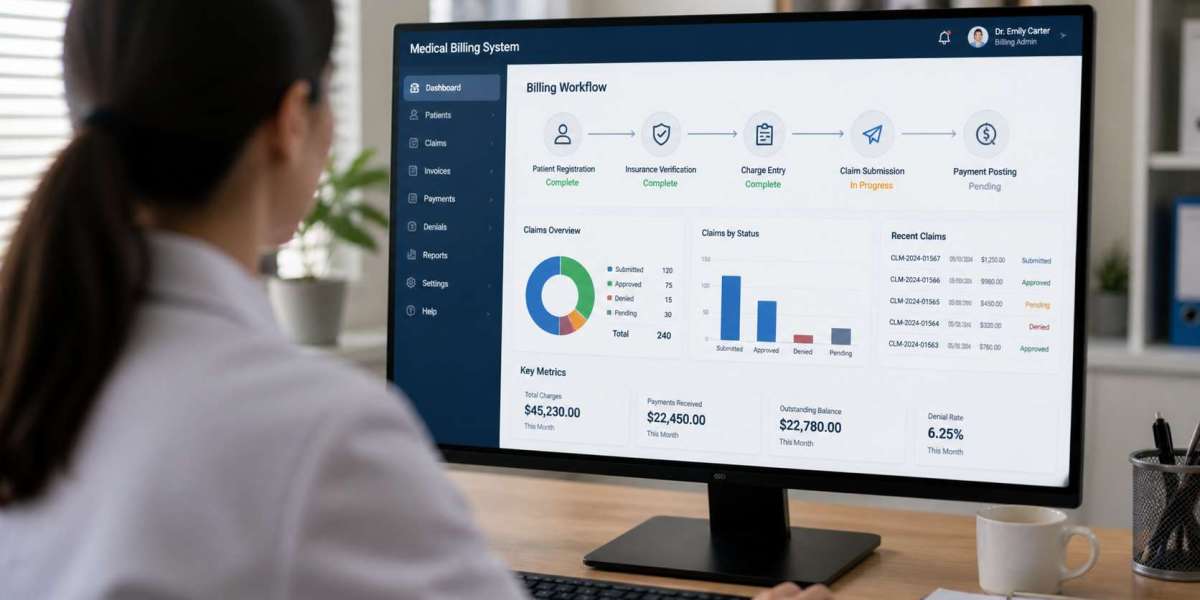
Accounts receivable management has been transformed by analytics. Real-time dashboards give revenue cycle managers visibility into every claim — by payer, by aging bucket, by denial code, by service line — enabling data-driven prioritization of follow-up activity.
Predictive tools can identify claims at risk of aging past the filing deadline and trigger automated follow-up workflows. AI-powered payment prediction models estimate the likelihood of patient payment and inform collection strategy — determining when to send a reminder, when to offer a payment plan, and when to escalate. For strategies on applying these insights, see our revenue cycle management tips guide.
The Future of Medical Billing Technology
The next frontier in medical billing technology includes autonomous coding — AI systems that assign codes without human review for straightforward encounters — fully automated prior authorization through payer API integrations, and blockchain-based claims processing that could eliminate many of the friction points in the current EDI-based system.
AcerHealth stays at the leading edge of these developments, continuously updating our technology stack and training our team on emerging tools and standards. Our medical billing services and revenue cycle management services are built to evolve with the industry — ensuring that our clients always benefit from the most advanced billing capabilities available.
Conclusion
Technology has changed what is possible in medical billing — from automated eligibility verification that eliminates coverage-related denials to AI-powered scrubbing that catches coding errors before they reach the payer to digital payment platforms that make it easy for patients to pay their bills. Practices that harness these tools achieve meaningfully better financial performance than those that do not.
AcerHealth combines certified human expertise with advanced billing technology to deliver end-to-end revenue cycle management solutions that consistently outperform traditional billing operations. Explore our full suite of medical billing services and connect with our team to discover how technology-powered billing can transform your practice's financial performance.
Frequently Asked Questions
What technology should a practice invest in for better billing?
At minimum: EHR with integrated billing, automated eligibility verification, claim scrubbing software, and a patient-facing online medical bill payment platform. For comprehensive capability, partnering with AcerHealth provides all of these plus certified coding and denial management expertise.
Is AI replacing human medical billers and coders?
No. AI is augmenting human billers and coders — making them faster and more accurate — not replacing them. Certified human expertise remains essential for complex cases, appeals, payer negotiations, and compliance management. See our medical billing trends 2025 for the latest on this topic.
How does technology help with HIPAA compliance in billing?
Modern billing platforms include built-in HIPAA compliance features: encrypted data transmission, role-based access controls, audit trails, and automatic safeguards for protected health information. See HIPAA compliance guidelines for complete compliance requirements.