
Introduction
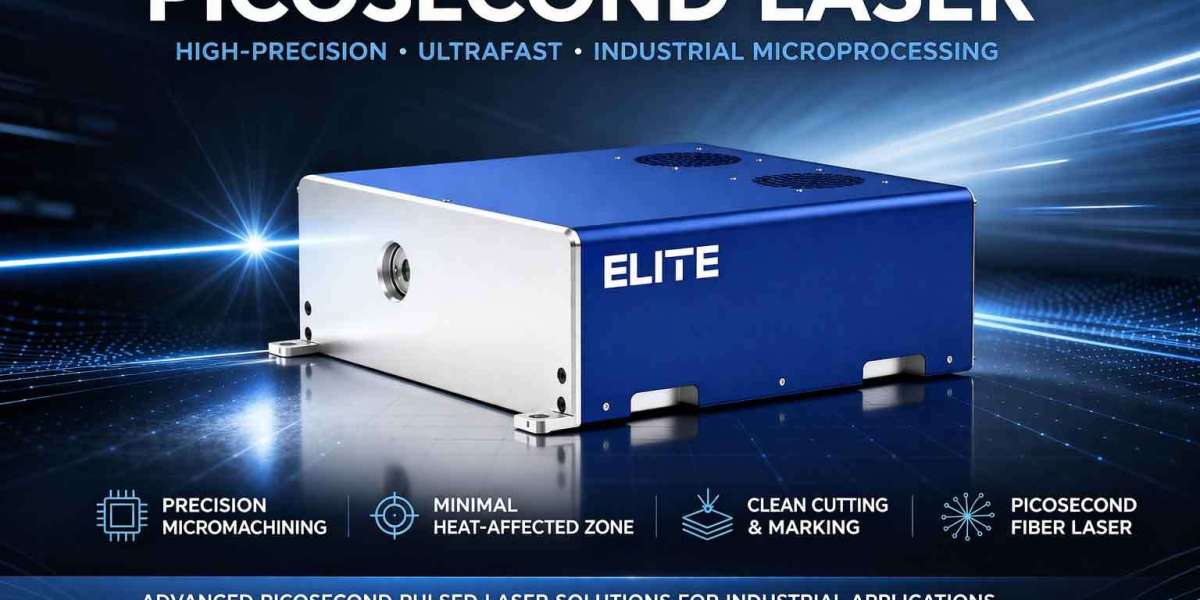
In today’s advanced manufacturing industry, picosecond lasers are becoming one of the most important tools for high-precision processing. Compared with traditional nanosecond systems, picosecond laser technology delivers ultra-short pulse durations, allowing materials to be processed with minimal thermal damage and extremely fine detail.
For industries requiring micro-level accuracy, picosecond lasers provide a stable and efficient solution for delicate marking, cutting, drilling, and surface treatment.
What Are Picosecond Lasers?
Picosecond laser systems generate laser pulses in the picosecond range, typically one trillionth of a second. This ultra-short pulse duration means the laser energy interacts with materials so quickly that heat diffusion is significantly reduced.
Because of this, picosecond lasers are widely used when processing heat-sensitive materials such as glass, ceramics, semiconductors, and thin metals.
Advantages of Picosecond Lasers in Industrial Applications
The major advantage of picosecond lasers is cold processing. Traditional laser systems often create heat-affected zones, while picosecond lasers greatly reduce material deformation.
Key benefits include:
- extremely small heat-affected area
- high edge quality
- reduced carbonization
- high repeatability
- precise micro-hole drilling
This makes picosecond lasers ideal for manufacturers seeking premium processing quality.
Common Applications of Picosecond Lasers
Picosecond lasers are widely used in several industrial sectors:
- precision marking for electronic components
- glass cutting for mobile device manufacturing
- ceramic drilling
- semiconductor wafer processing
- medical device micromachining
In recent years, Laser micromachining has increasingly relied on picosecond systems because of their ability to handle complex materials.
Why More Manufacturers Choose Picosecond Lasers
As industrial standards continue to rise, manufacturers need better control over quality and productivity. Picosecond lasers allow cleaner processing while reducing post-treatment steps.
Compared with nanosecond laser systems, picosecond lasers often improve production consistency, especially in high-value industries such as electronics and precision components.
Choosing the Right Picosecond Laser Supplier
When selecting a picosecond laser solution, buyers usually focus on:
- pulse stability
- wavelength options
- average power output
- scanning compatibility
- software integration
A reliable supplier should also provide full technical support and customized integration solutions.
Future Development of Picosecond Lasers
With the growth of smart manufacturing, picosecond lasers are expected to play a larger role in automated production lines. Future systems will offer higher power, faster scanning speed, and better compatibility with intelligent control systems.
For companies investing in precision manufacturing, picosecond lasers represent a long-term technology upgrade.