
Island Trade Show Booth Rental: How to Avoid Empty Space, Blind Spots, and Wasted Budget
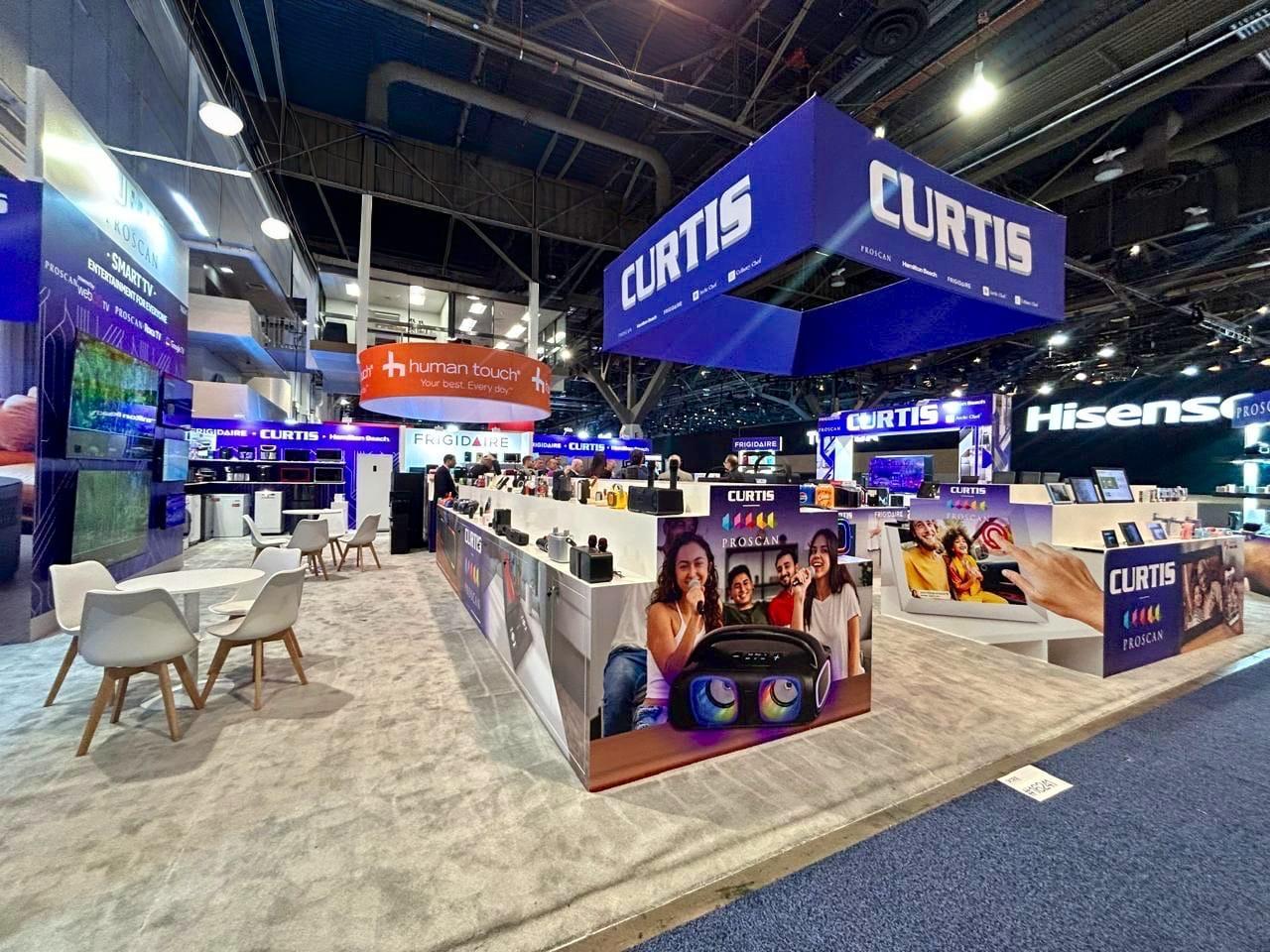
An island booth is the dream spot on any show floor. With visitors approaching from all four sides, it offers more visibility, more traffic and more branding opportunity than any other booth type. It is also the easiest place to waste money. A large island with no clear purpose can feel like an empty warehouse, hide your best products from half the aisle, and burn through budget before the first badge is scanned.
If your 2027 calendar includes NRF Big Show (January, New York), CES 2027 (January 6 to 9, Las Vegas), IWCE 2027 (March 8 to 11, Las Vegas), MRO Americas 2027 (April 13 to 15, Orlando) or the National Restaurant Show (May, Chicago), this guide is for you. Here is how an island trade show booth rental can help you avoid the three biggest island booth problems: empty space, blind spots and wasted budget.
Why Renting an Island Booth Makes Sense
Buying a large custom island means paying for design, fabrication, storage, repairs and freight, whether you use it twice a year or ten times. If you are exhibiting at several very different shows, you are likely to run into layouts that do not fit, branding that no longer matches, and crates that cost a fortune to move.
An island trade show booth rental gives you the footprint and visual impact of an island without owning one. You can adjust the size, structure and look for each event, and you only pay for what you need. Many exhibitors also combine rental trade show displays such as towers, counters, kiosks and video walls with custom graphics to get a fresh, branded look every time.
The same logic applies whether you are booking large-format event booth rentals for a flagship show or smaller vendor booth rentals for regional events. The goal is always to match the booth to the show, not the other way around.
Problem 1: Empty Space
Empty space is the most common island booth mistake. A 20x20 or 30x30 island looks impressive on a floor plan, but without a clear plan for every zone, it can feel hollow. Visitors walk in, see nothing worth stopping for and walk out.
What causes it:
-
Booking a larger footprint than your team can staff or fill.
-
Placing all products and activity in one corner.
-
Relying on a single large graphic instead of a layout that guides people through the space.
How to fix it:
-
Plan by zones. Divide your island into a welcome area, a product or demo area, a meeting space and a storage space. Every zone should have a job.
-
Use rental components to scale. If your footprint feels too big, add modular structures, counters or lounge seating. If it is too small, remove pieces. Flexible rental trade show displays make this simple.
-
Create reasons to stay. Live demos, charging stations, interactive screens and short presentations give visitors a reason to linger, not just pass through.
Problem 2: Blind Spots
Because an island is open on all sides, a weak design leaves some sides facing away from your audience. Tall walls, bulky storage rooms or counters placed with their backs to an aisle can create dead zones where no one stops.
What causes it:
-
A "front" and "back" mindset, even though the booth has four open sides.
-
Storage or meeting rooms placed in the most visible corner.
-
Branding that only appears on one or two sides.
How to fix it:
-
Design for 360 degrees. Put your logo and key message on every side, and use overhead signage or hanging structures so the booth is recognizable from across the hall.
-
Walk the aisles. Look at your booth from every approach, not just the main one. Check sight lines, especially at crowded shows where people approach from all directions.
-
Keep tall structures purposeful. Place enclosed rooms toward the center or back, and keep the perimeter open and welcoming.
Problem 3: Wasted Budget
Island booths cost more than inline booths, so every dollar counts. The waste usually comes from small decisions that add up: oversized structures that are barely used, rush shipping fees, last-minute graphic changes, and features that do not support your goals.
How to fix it:
-
Start with your goals. Know whether you are there to generate leads, launch a product, hold meetings or build brand awareness. Spend on what supports that goal.
-
Ask for a complete cost breakdown. Include rental fees, graphics, installation and dismantle labor, shipping, drayage, and show services like electricity and internet.
-
Order early. Show services often cost more after advance deadlines, and rush production costs more than a planned timeline.
-
Reuse smartly. Choose neutral structures that can carry different graphics and messages across shows, so a single investment works harder.
Tailoring Your Island to Each 2027 Show
A good island looks different at different events, because the audiences and goals differ. Here is how to think about each one.
NRF Big Show (January, New York): Retail. Retail buyers want to see solutions in action. Build demo areas that show how your product works in a store environment, and use clean, modern design that signals innovation. Make sure your messaging speaks directly to retail outcomes like sales, customer experience and efficiency.
CES 2027 (January 6 to 9, Las Vegas): Consumer tech. CES is crowded, loud and visual. Your island needs strong lighting, large video elements and hands-on product experiences. Heavy competition means standing out from a distance matters more than ever, so lean on height and bold graphics.
IWCE 2027 (March 8 to 11, Las Vegas): Critical communications. Attendees here are technical and solution-focused. Prioritize clear product displays, private meeting spaces for deeper conversations, and staff who can answer detailed questions on the spot.
MRO Americas 2027 (April 13 to 15, Orlando): Aviation MRO. This audience values credibility and relationships. A professional, uncluttered island with comfortable meeting areas often works better than flashy gimmicks. Show your capabilities with clear visuals and case studies.
National Restaurant Show (May, Chicago): Foodservice. Sampling, demonstrations and sensory experiences matter here. Design your layout around demo counters, tasting stations and easy traffic flow, and plan for cleanup and storage needs.
Your Island Booth Rental Checklist
Before you sign an agreement, run through these questions:
-
Does the layout work from all four sides of the island?
-
Is every zone planned, with a clear purpose and staffing?
-
Are branding and signage visible from every aisle?
-
Is the total cost clear, including labor, shipping and show services?
-
Can the rental structure be adjusted if the floor plan changes?
-
Has the provider worked with your show and venue before?
If you can answer yes to all six, your island is set up to work.
Final Thoughts
An island is a big opportunity, but it only pays off when the space is designed with purpose. By choosing an island trade show booth rental, planning your zones carefully, designing for all four sides and controlling costs from the start, you can avoid empty space, blind spots and wasted budget. Whether you need flexible event booth rentals for a major national show or practical vendor booth rentals for a smaller event, the right partner will help you build a booth that fits your goals, your audience and your budget.
Planning for NRF, CES, IWCE, MRO Americas or the National Restaurant Show? Talk to a trade show exhibit specialist now to secure your island design, confirm your timeline and make your 2027 show season count.


