
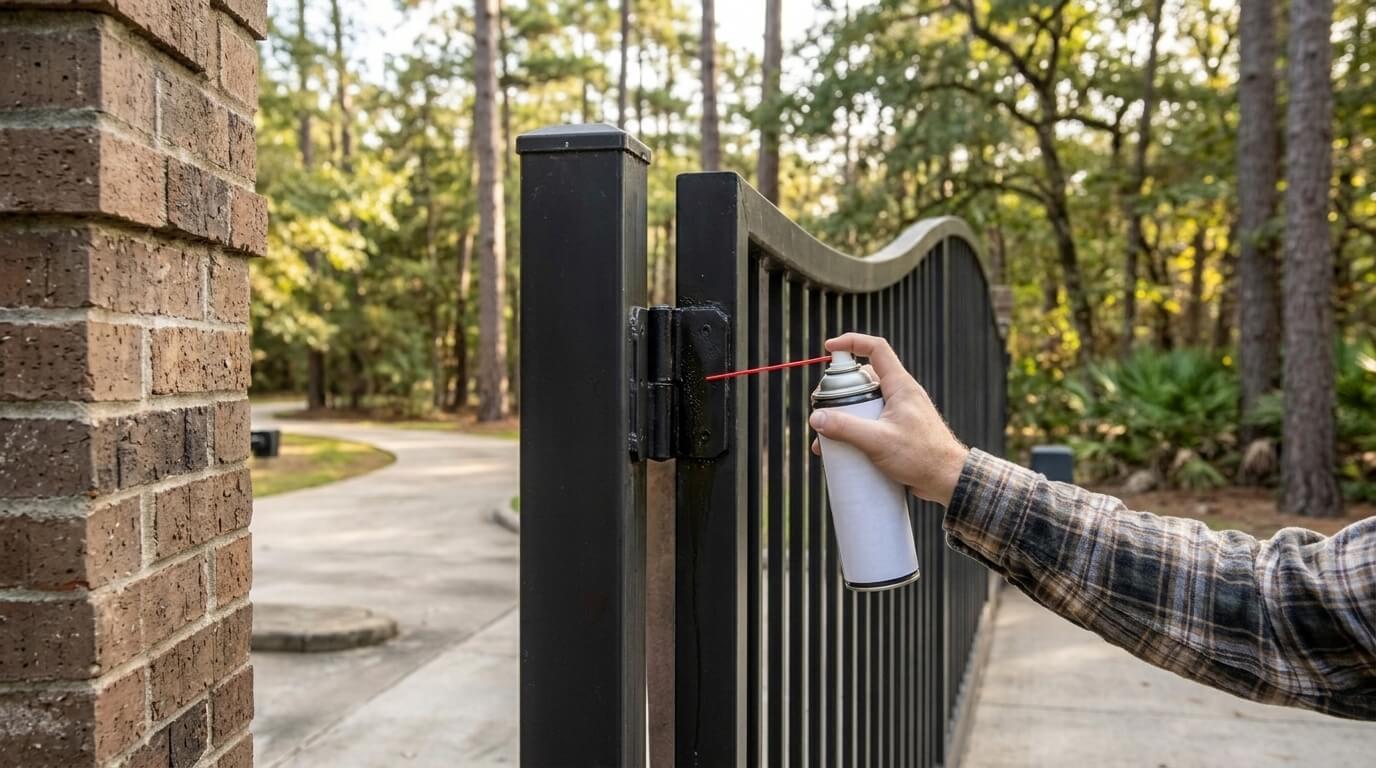

A home gate does more than frame the driveway. It keeps children and pets contained, marks the boundary of the property, adds privacy, and gives the house a first impression. Unlike a front door, though, it lives outdoors all year, takes sun, humidity, and storms, and carries its full weight on a few hinges or rollers. Over time, even a well-built gate will need attention, and homeowners who understand what wears out, how to maintain each material, and when residential gate repair makes more sense than replacement can protect both security and budget.
This guide is written for homeowners in The Woodlands. It covers how gate materials age, a seasonal care routine, what's safe to do yourself, how to decide between repair and replacement, and what to expect from a professional.
What Wears Out on a Home Gate
Most residential gates have the same basic parts, and each ages in its own way.
|
Part |
What It Does |
How It Wears |
|
Hinges |
Carry the gate's weight |
Rust, loosening, worn pins, sag |
|
Posts and footings |
Anchor the gate |
Leaning, rot (wood), cracking concrete, soil movement |
|
Latch and lock |
Keep the gate closed |
Misalignment, sticking, corrosion |
|
Frame and panels |
Form the barrier |
Rust, rot, cracks, bent bars |
|
Operator (if automatic) |
Moves the gate |
Motor wear, electrical faults, drive wear |
|
Sensors and controls |
Protect people and vehicles |
Dirt, misalignment, wiring faults |
|
Rollers or tracks (sliding gates) |
Guide the gate |
Debris, flattened wheels, bent track |
If you can name these parts, it becomes much easier to describe a problem to a technician and to notice changes early.
How Different Materials Age
The material your gate is made from shapes what maintenance it needs.
Wrought Iron and Steel
Strong and secure, but vulnerable to rust, especially at joints, welds, and the bottom edges where moisture collects.
Watch for: Orange staining, bubbling paint, rust at welds, and stiff hinges. Care: Clean periodically, touch up chipped paint promptly, and treat rust before it spreads.
Aluminum
Resistant to rust and lighter in weight, but it can dent, and fasteners and hinges may still corrode.
Watch for: Dents, loose panels, and corroded hardware. Care: Wipe clean, inspect fasteners, and lubricate moving parts as recommended.
Wood
Warm and attractive, but sensitive to moisture, sun, and insects. In humid climates, wood needs the most upkeep.
Watch for: Warping, cracking, rot at the base, loose joints, and peeling finish. Care: Keep the finish sealed or painted, check the bottom edge and post contact points, and address moisture quickly.
Vinyl and Composite
Low maintenance and rot-resistant, but they can crack from impact, fade, or sag if they lack internal reinforcement.
Watch for: Cracks, sagging, and loose hardware. Care: Clean gently and inspect hinge areas, where stress concentrates.
Chain Link and Wire
Practical and durable, though fabric can bend, and tension can loosen over time.
Watch for: Bent frames, sagging fabric, and rusted fittings. Care: Check tension and fittings, and straighten or replace damaged sections.
A Seasonal Care Routine
A little routine attention catches most problems early.
Spring
-
Inspect for winter and storm damage
-
Check posts for leaning and soil erosion
-
Clean sensors and tracks
-
Lubricate hinges and rollers
-
Test the latch and lock
Summer
-
Look for heat-related issues such as warping or fading
-
Trim vegetation away from the gate, sensors, and solar panels
-
Check automatic operators for unusual noise or slow travel
Fall (Before Storm Season Peaks)
-
Inspect hardware and tighten loose bolts
-
Test backup batteries and remote batteries
-
Check drainage near posts
-
Make sure the manual release works and is accessible
Winter
-
Watch for rust and moisture buildup
-
Clear debris from tracks
-
Re-check alignment after any ground changes
After Any Storm or Impact
-
Look for bent frames, shifted posts, and loose hinges
-
Check sensors, wiring, and control boxes for moisture
-
Test the gate's operation and safety reversal before returning to normal use
What Homeowners Can Safely Do
Some tasks are well within reach:
-
Watch a full open-and-close cycle and note any noise, sag, or hesitation
-
Lubricate hinges and rollers with a product suited to outdoor hardware
-
Tighten visible loose bolts if the gate isn't under unusual stress
-
Clean sensor lenses and check alignment
-
Clear debris from tracks and around posts
-
Touch up paint or finish on small areas
-
Replace remote and keypad batteries
-
Check the latch and make sure it catches without lifting or pushing
Stay away from automatic operators' housings, wiring, springs or tensioned parts, and anything that requires lifting or removing a heavy gate.
When to Call a Professional
Call for help when:
-
The gate sags, drags, or won't latch reliably
-
Hinges are cracked, bent, or heavily rusted
-
Posts lean or footings are cracking
-
The frame is bent or welds have failed
-
An automatic gate won't move, moves erratically, or smells hot
-
Safety sensors don't work properly
-
The gate was struck by a vehicle
-
You're unsure what's wrong
Gates are heavy and often attached to electrical equipment. A professional can lift, re-hang, weld, and test safely.
Repair or Replace?
Homeowners often face this decision, so a simple framework can help.
Repair is usually a good choice when:
-
The problem is isolated, such as a hinge, latch, or sensor
-
The frame and posts are sound
-
The gate is otherwise in good condition
-
The repair cost is a modest part of replacement cost
Replacement is worth discussing when:
-
Rust or rot has spread through the frame
-
The gate repeatedly needs expensive repairs
-
Posts and footings are failing across the board
-
The operator is outdated and parts are hard to find
-
The gate no longer suits your needs, such as security, privacy, or appearance
Ask for options in writing, including what each option would involve and what you'd expect from it. If you're comparing a large repair with a new setup, it can also help to ask about gate installation costs so you see the full picture.
Homeowner Considerations Beyond the Gate
HOA and Community Rules
Some neighborhoods have rules about gate style, height, color, and materials. If you're repairing in a way that changes appearance, or replacing the gate, check with your HOA before work begins.
Kids and Pets
Gate gaps, sag, and latches matter more with kids and pets. Make sure latches close securely and that gaps aren't large enough for small animals or children to slip through. Automatic gates should have working safety sensors.
Curb Appeal and Home Value
A gate in good repair signals a well-kept property. A rusted, leaning, or sagging gate can have the opposite effect. Repairs and maintenance can be a cost-effective way to protect curb appeal.
Neighbors and Property Lines
If a gate sits on or near a property line, check ownership and responsibilities before major changes.
What to Expect From a Professional Visit
-
A conversation about symptoms, history, and concerns
-
A full inspection of the gate, hinges, posts, latch, operator, and sensors
-
Testing of operation, alignment, and safety features
-
A plain-language diagnosis and options
-
A written estimate before additional work
-
The repair, which may include re-hanging, hinge replacement, post resetting, welding, or operator work
-
Final testing and a short summary of what was done and what to monitor
Choosing a Provider
Because home gates combine structure, hardware, and sometimes electronics, look for a provider who explains what they find. Useful questions include:
-
Are you licensed and insured?
-
Do you work on my gate material and operator type?
-
Will you inspect posts, hinges, and the latch, not just the visible symptom?
-
Is your estimate written and itemized?
-
What warranty covers parts and labor?
A local company such as 2Quick Garage Doors is an example of the kind of provider homeowners in The Woodlands can compare. If you want to see how a focused provider describes the work, reading about Residential Gate Repair can help you judge whether their process covers the full-system inspection described above. Some homeowners also prefer a provider that handles related entry equipment, such as garage door installation and openers, so their driveway and garage are looked after together.
Frequently Asked Questions
How often should a home gate be inspected? A quick personal check every few months and a professional look once a year is a sensible baseline, with extra checks after storms.
Why does my gate keep sagging? Common causes include worn hinges, a leaning post, or a frame that has weakened. A technician can identify which applies.
Can I repaint a rusty gate? Small areas can be cleaned, treated, and repainted. Extensive or structural rust may need professional treatment or part replacement.
Is an automatic gate worth the upgrade? It depends on your priorities. Automatic gates add convenience and security but also need more maintenance and sensor upkeep.
Do I need permission from my HOA to repair a gate? Minor repairs that don't change appearance usually don't, but changes in style, color, or materials often do. Check your community's rules.
How can I make my gate safer for children and pets? Make sure the latch closes securely, check for gaps, and keep sensors working on automatic gates.
Final Thoughts
A home gate that's kept in good repair protects the property, the people and animals on it, and the way the house looks from the street. Learn how your gate's material ages, follow a simple seasonal routine, and bring in a professional for heavy lifting, structural work, and electrical issues. With a little steady attention, your gate can stay secure, smooth, and dependable for years.


