
Upgrade to Next Generation Facial Recognition with TekSight in the UAE

What Face Matching Actually Does
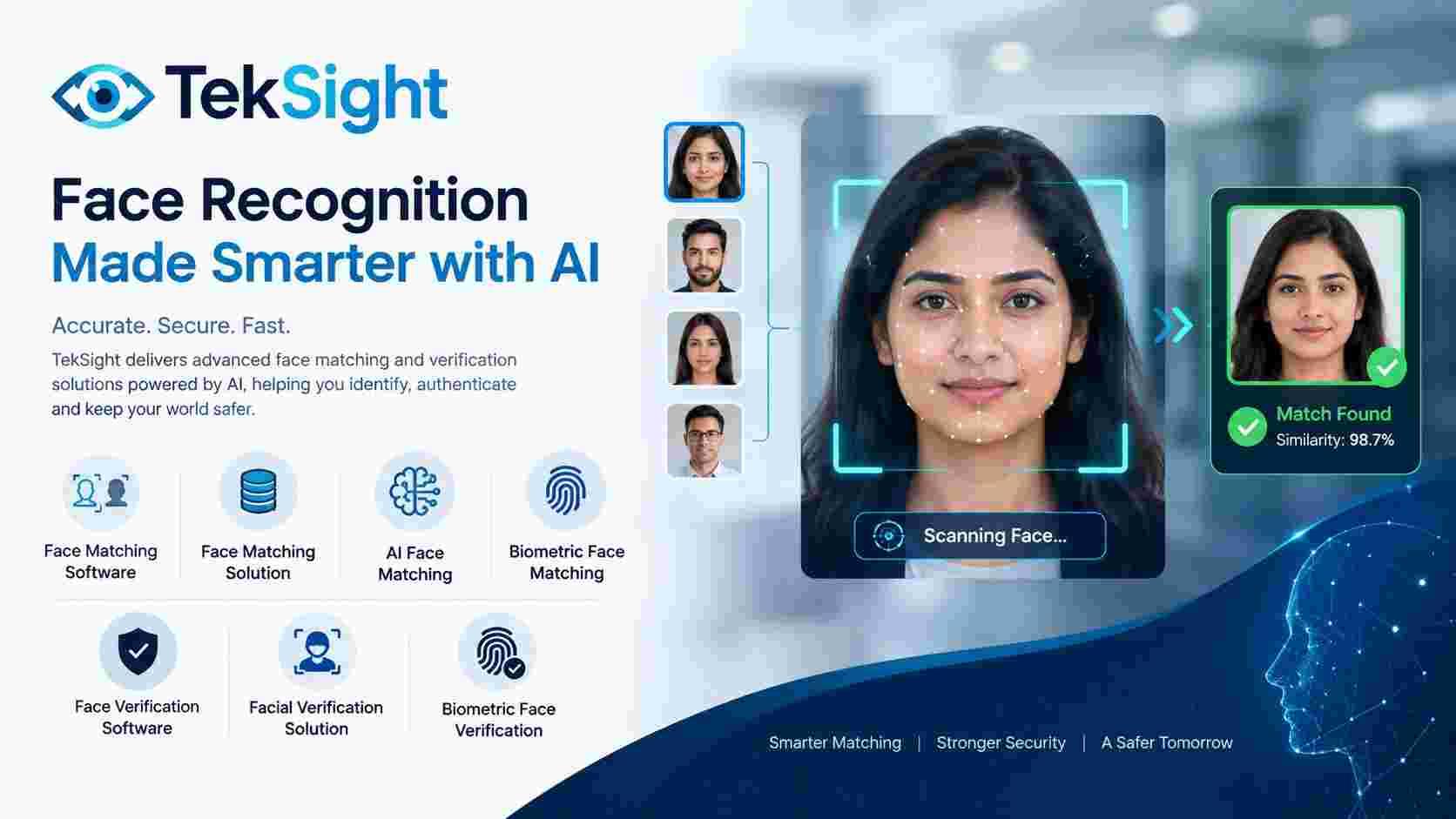
A camera captures an image, software finds the face, and an algorithm converts it into a compact numerical template that describes its features. That template is compared with others, and the system returns a similarity score. If the score passes a threshold set by the organization, the faces are treated as a match. No photograph needs to be compared pixel by pixel, which is why modern systems are fast, and why the templates can be stored more compactly and securely than images.
Face Matching Solution: More Than an Algorithm
The algorithm is only one part of what a business need. A complete Face Matching Solution includes cameras or capture devices, software that manages enrolment and templates, integration with doors, apps, or back office systems, reporting, and support. Organizations that evaluate only the headline accuracy of an algorithm often discover that image quality, lighting, integration effort, and administration matter just as much to the daily experience.
AI Face Matching and Why Deep Learning Changed Accuracy
AI Face Matching uses deep neural networks trained on very large collections of faces. This training allows the system to cope with changes in angle, lighting, expression, glasses, facial hair, and ageing that defeated earlier methods. Because the UAE population is extremely diverse, buyers should ask how a system performs across different ages, genders, skin tones, and head coverings, and should request evidence from independent testing rather than relying on a single headline figure.
Biometric Face Matching and Template Security
Biometric Face Matching treats the face as a biometric identifier, which means the templates are sensitive personal data. Good practice includes encrypting templates in storage and in transit, separating them from other personal records, restricting who can view them, and defining retention and deletion rules. Some deployments keep the template only on the user's own device or credential, which reduces the amount of sensitive data held in a central database.
Matching Versus Verification: Two Different Questions
People often use the words interchangeably, but the tasks differ. Verification asks whether this person is the specific person they claim to be, comparing one live face with one stored template. Identification asks who this person is among many enrolled people, comparing one live face with a whole database. Verification is faster, needs less computing power, and produces fewer false matches, so it suits logins, payments, and secure doors. Identification suits watchlists and large staff populations where nobody states a name first.
Face Verification Software for Secure Transactions
Face Verification Software is built for the one to one case. A customer opening an account takes a selfie, and the software compares it with the photograph on their identity document. An employee approving a sensitive transaction looks at the camera, and the software confirms they are the account holder. Because the comparison is limited to a single claimed identity, it can be tuned for very low false acceptance rates, which matters in finance and government services.
Facial Verification Solution for Onboarding and Access
A full Facial Verification Solution wraps verification in a complete workflow. For onboarding, it may guide the user to capture a clear image, read the identity document, check that the document is genuine, compare the face, and record the result for audit. For access control, it links the verified identity to doors, turnstiles, or lifts. The value lies in a smooth process that users can complete in seconds without help from staff.
Biometric Face Verification and Liveness Protection
Biometric Face Verification is only trustworthy if it can tell a real person from a copy. Attackers may hold up a photograph, play a video, or wear a mask. Liveness detection and anti-spoofing checks examine depth, texture, and movement to reject these attempts, ideally without asking the user to perform awkward actions. Buyers should ask how presentation attack protection has been tested, and whether results from independent laboratories are available.
Face Matching Software UAE: Regulation and Market Direction
The UAE has made digital identity and smart services a national priority, and organizations across finance, government, travel, and retail are adopting biometric tools to serve customers faster. Face Matching Software UAE projects must also respect the personal data protection law, which means a clear purpose for collection, consent where required, secure storage, and defined retention. Organizations should confirm their obligations with their own legal advisers before deploying.
Face Matching Software Dubai: Hospitality, Finance, and Retail
Dubai's hotels, financial centres, shopping destinations, and large residential communities all handle high volumes of people who expect fast service. Face Matching Software Dubai deployments often support contactless hotel check in, staff entry at towers, secure customer onboarding, and recognition of registered members at premium venues. Speed, accuracy under varied lighting, and respect for guest privacy are the main priorities.
Face Matching Software Abu Dhabi: Government, Energy, and Critical Sites
The capital hosts government entities, energy companies, and institutions that apply stringent security standards. Face Matching Software Abu Dhabi projects typically emphasise layered verification at sensitive areas, detailed audit trails, and integration with wider security platforms, so that a match event can be reviewed alongside video, visitor records, and alarms when needed.
Performance in Real UAE Conditions
Laboratory accuracy does not guarantee street level performance. Desert glare, deep shadows beneath canopies, glass fronted lobbies, face masks, sunglasses, and head coverings all challenge a camera. A good project begins with a site survey, selects cameras with wide dynamic range, positions them to avoid backlight, and tests matching on real users during a pilot. Tuning thresholds on site balances convenience against security for each location.
Privacy, Consent, and Responsible Use
Face matching is powerful, so it must be used responsibly. Organizations should explain why biometric data is collected, collect only what is needed, obtain consent where required, offer a non-biometric alternative for those who prefer one, restrict access to templates, and delete them when no longer needed. Clear signage and plain language policies build trust with customers and staff, and reduce the risk of complaints.
Questions to Ask Before You Upgrade
Ask how accuracy has been measured and by whom, how the system performs across diverse users, how presentation attacks are handled, where templates are stored, how the platform integrates with existing systems, and how updates are delivered. Ask also about local support response times, because a matching system that stays offline during a fault interrupts the services that depend on it.
Engineering Experience and Trust Behind Every Deployment
Tektronix has engineered and commissioned security, access control, and biometric systems across the UAE for many years. An in-house engineering team handles site surveys, network integration, and configuration rather than passing installation to a subcontractor unfamiliar with the platform, and regional support helps keep a failed device from interrupting services for long. Technical information is available through the company's face recognition solution page, giving buyers specific detail to review rather than a marketing summary alone.
Choosing the Right Partner in the UAE
Compare suppliers on evidence of accuracy, clarity about data handling, integration capability, local support, and willingness to run a pilot. Organizations that want one accountable partner for capture devices, matching software, integration, and support can review Tektronix's full range of face matching and verification solutions alongside other shortlisted suppliers before deciding.
Conclusion
Modern Face Matching Software lets UAE organizations confirm identity in a fraction of a second. A complete Face Matching Solution built on AI Face Matching and Biometric Face Matching delivers accuracy across a diverse population. Face Verification Software, a Facial Verification Solution, and Biometric Face Verification secure onboarding, payments, and doors. Buyers evaluating Face Matching Software UAE projects should demand evidence of accuracy, liveness protection, and privacy controls. Organizations planning Face Matching Software Dubai and Face Matching Software Abu Dhabi projects should choose a partner like Tektronix with proven regional engineering.
FAQs
1. What is the difference between matching and verification?
Verification compares a live face with one claimed identity, while identification searches a whole database to find who a person is, so verification is faster and suits logins, payments, and doors.
2. Does the system work with masks or head coverings?
Modern systems can match using the visible parts of the face, though accuracy is best when enrolment reflects real conditions, and buyers should test with their own users during a pilot.
3. Can a photograph or video fool the system?
Liveness detection and anti-spoofing checks examine depth, texture, and movement to reject copies, and buyers should ask how these protections have been independently tested.
4. Is a face stored as a photograph?
Most systems store a numerical template rather than a viewable image for daily matching, though organizations should confirm exactly what is retained, where, and for how long.
5. Can the software connect to our existing systems?
Yes, enterprise platforms normally offer interfaces for doors, applications, and identity systems, and


