
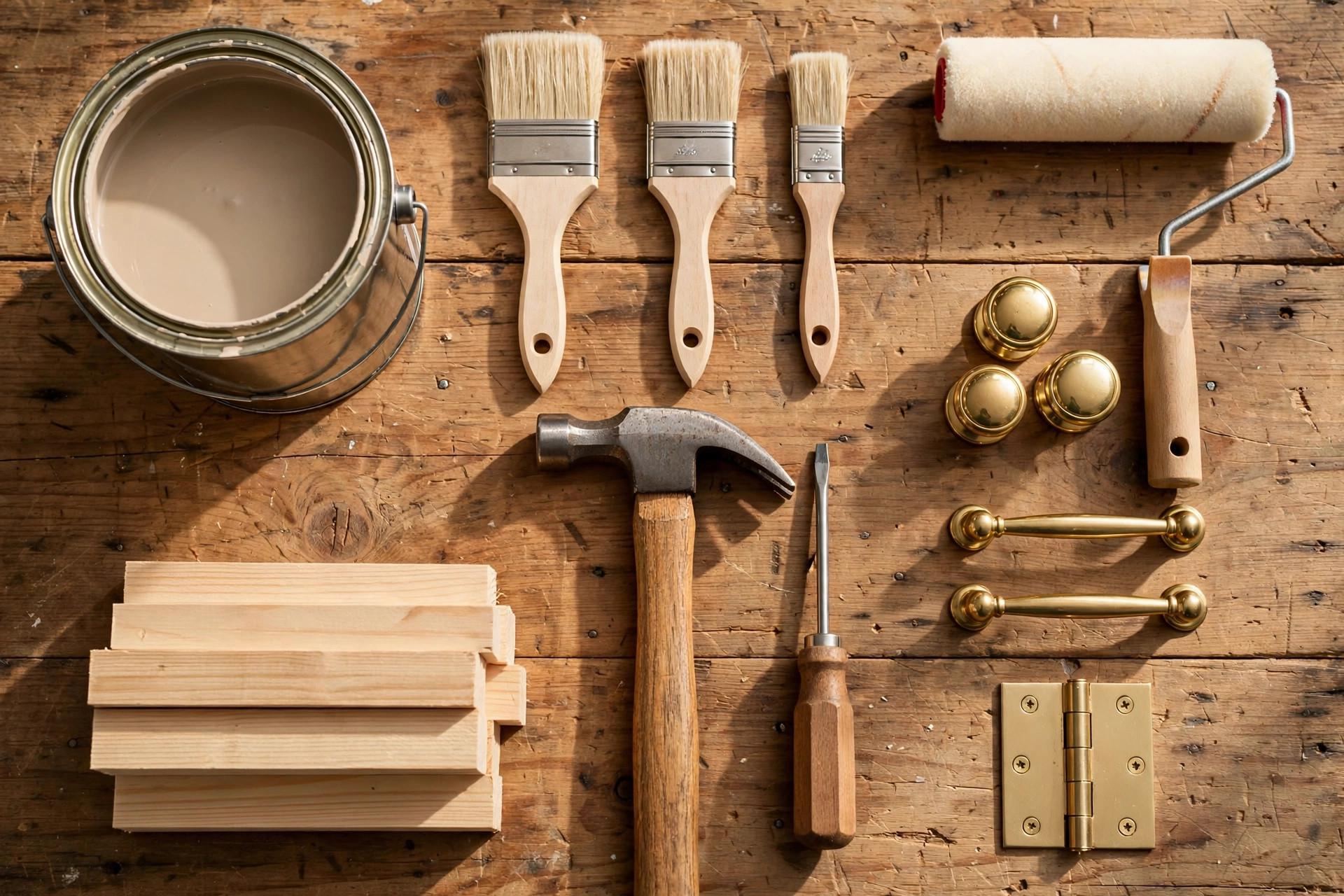

Painting tools shape the finish as much as the paint itself. The right brush, roller, tray, and preparation tools help paint go on evenly, reduce drips, and cut the time spent fixing mistakes. Before buying, think about the surface, the paint type, and the size of the job, because a tool that suits a smooth wall may not suit trim or rough exterior wood.
Brushes for Detail and Control
Brushes are best for edges, trim, corners, and small areas where a roller cannot reach cleanly. A good brush holds paint well, releases it evenly, and keeps its shape after washing. Angled brushes help with cutting in along ceilings and window frames, while a smaller brush suits detailed moulding and touch-ups.
Match Bristle Type to Paint
Natural bristles are often used with oil-based paints, while synthetic bristles suit water-based paints and keep their shape when wet. Check the brush label for the paint type, and avoid using a brush that sheds bristles, as loose fibres will show in the finish. Rinse brushes promptly after use.
Size Matters for the Area
A wide brush covers large flat trim faster, but it is harder to control in tight corners. Keep two or three sizes: a larger brush for broad trim, a medium brush for general work, and a small brush for detail. This range avoids forcing one brush to do every job.
Rollers for Large, Flat Areas
Rollers cover walls and ceilings far faster than a brush and give a consistent texture when used correctly. Choose the roller frame, sleeve, and nap length for the surface. Smooth walls need a short nap, lightly textured walls need a medium nap, and rough surfaces need a longer nap to reach into the texture.
Load and Roll Evenly
Load the roller evenly in a tray, roll off excess, and work in manageable sections with overlapping strokes. Keep a wet edge where possible to avoid lap marks, and do not press so hard that paint squeezes out at the sides. A sturdy frame and extension pole reduce fatigue on ceilings and tall walls.
Preparation Tools Save Rework
Preparation tools are just as important as applicators. Painter's tape protects edges, drop cloths protect floors and furniture, sandpaper smooths rough spots, and a scraper removes loose paint. A putty knife and filler repair small dents and cracks before painting, so the new coat does not highlight old damage.
Clean Up and Store Properly
Clean brushes and rollers according to the paint type, dry them before storage, and keep sleeves in covers so they keep their shape. Label trays and poles, and replace worn sleeves that leave lint or uneven texture. Good storage means the kit is ready for the next room.
Shopping for Painting Tools
List the job first: walls, ceilings, trim, or exterior surfaces, then choose brushes, rollers, and preparation tools to match. Compare bristle type, nap length, frame strength, and ease of cleaning, rather than buying the largest set available. To compare a focused range, browse Painting Tools and shortlist a kit for your next project.
The right painting tools make the work smoother and the finish more even. Prepare well, choose by surface, and clean up after each job. For the wider store, visit ColorHaus Paint and start with the tools for the room you plan to paint first.


