

LED lighting solutions help homeowners, businesses, and industrial facilities meet their lighting requirements with efficient and adaptable technology. From residential ceiling fixtures to warehouse high bays and outdoor security lights, LED products offer options for different spaces, operating schedules, and visual needs.
Choosing the right lighting system involves more than selecting individual fixtures. Buyers must consider room dimensions, brightness, colour temperature, energy consumption, electrical compatibility, and installation requirements. A well-planned LED lighting solution can improve visibility, support daily activities, and help manage long-term operating expenses.
What Are LED Lighting Solutions?
Led Lighting Solutions are systems and products that use light emitting diodes to illuminate indoor and outdoor environments. They may include individual fixtures, complete lighting layouts, controls, drivers, sensors, and accessories.
Residential solutions often include LED bulbs, downlights, ceiling fixtures, and strip lighting. Commercial installations may use LED panels, linear fixtures, wall packs, and canopy lights. Industrial projects frequently require high bay fixtures, floodlights, and specialised lighting equipment.
The most suitable option depends on the environment and the purpose of the installation. A small office has different lighting requirements from a manufacturing plant or outdoor parking facility.
Benefits of LED Lighting Solutions
Improved Energy Efficiency
LED lighting generally uses less electricity than traditional incandescent lighting for comparable light output. This can help reduce electricity consumption in homes and businesses, particularly where fixtures operate for extended periods.
Actual savings depend on the existing system, product efficiency, daily operating hours, and local electricity rates. Comparing lumen output and wattage helps buyers evaluate the efficiency of different products.
Businesses can also assess whether replacing older fixtures across multiple areas would improve overall energy performance.
Flexible Lighting Designs
LED products are available in many shapes, sizes, and configurations. This allows lighting systems to accommodate different ceiling heights, architectural features, workstations, and outdoor environments.
Recessed downlights can provide a streamlined appearance in residential interiors. LED strips can highlight counters and ceiling coves, while high bay fixtures can illuminate large industrial spaces.
Combining different fixture types can help create balanced lighting throughout a building.
Reduced Maintenance Requirements
Many LED fixtures have long rated lifespans, which can reduce replacement frequency compared with some traditional lighting technologies.
This can be especially useful in warehouses, offices, retail stores, and exterior installations where maintenance may interrupt operations or require specialised equipment.
Product quality, operating temperature, electrical conditions, and driver performance influence actual service life. Selecting fixtures suitable for their intended environment helps support reliable operation.
Better Control Options
LED lighting systems can work with compatible dimmers, occupancy sensors, daylight sensors, and automated controls. These features allow users to adjust brightness and operating schedules according to specific needs.
For example, meeting rooms may use adjustable lighting for presentations, while storage areas may benefit from occupancy-based controls.
Control compatibility should be checked before purchasing fixtures, drivers, and accessories.
Multiple Colour Temperatures
LED lighting solutions offer different white light appearances, from warm white to cool white. This makes it possible to select lighting that suits the activity and atmosphere of each space.
Warm white lighting is often suitable for lounges and hospitality areas. Neutral white can work well in offices and kitchens, while cooler white may be appropriate for some workshops and industrial environments.
Colour temperature should be considered alongside brightness, glare, and colour rendering.
Types of LED Lighting Solutions
Residential LED Lighting
Residential LED lighting covers bedrooms, living rooms, kitchens, bathrooms, hallways, and outdoor home areas.
Common products include LED bulbs, recessed downlights, ceiling fixtures, pendant lights, and decorative strips. Each product serves a different purpose, from general room illumination to focused task lighting.
When selecting fixtures, homeowners should consider room size, furniture placement, ceiling height, existing fittings, and preferred colour temperature.
Bathrooms and exterior areas may require fixtures with suitable protection against moisture and environmental exposure.
Office LED Lighting
Office lighting solutions should provide suitable visibility for computer work, reading, meetings, and collaboration.
LED panels and linear fixtures are commonly used for general illumination. Desk lamps can support individual tasks, while strip lights may provide indirect lighting around architectural features.
A balanced office lighting plan considers glare, reflections on computer screens, brightness distribution, and daylight availability.
Businesses may also benefit from separate lighting controls for meeting rooms, workstations, corridors, and shared spaces.
Retail LED Lighting
Retail environments require lighting that helps customers see products clearly and navigate the store comfortably.
LED track lights can highlight selected merchandise, while panels and linear fixtures provide general illumination. Accent lighting can draw attention to displays, shelves, promotional areas, and signage.
Colour rendering is particularly important when presenting clothing, food, cosmetics, and other products whose appearance influences purchasing decisions.
Retail lighting should also account for glare, shadows, product positioning, and the visual consistency of the store.
Industrial LED Lighting
Industrial LED lighting solutions support factories, workshops, warehouses, production lines, and distribution facilities.
LED high bay fixtures are often suitable for high ceilings, while linear lights can illuminate workbenches and equipment areas. Floodlights may be used for loading zones and exterior work areas.
The lighting design should consider mounting height, required illumination levels, machinery, dust exposure, operating temperatures, and maintenance access.
Some industrial environments require specialised fixtures with specific safety or environmental ratings. Buyers should verify these requirements before selecting equipment.
Outdoor LED Lighting
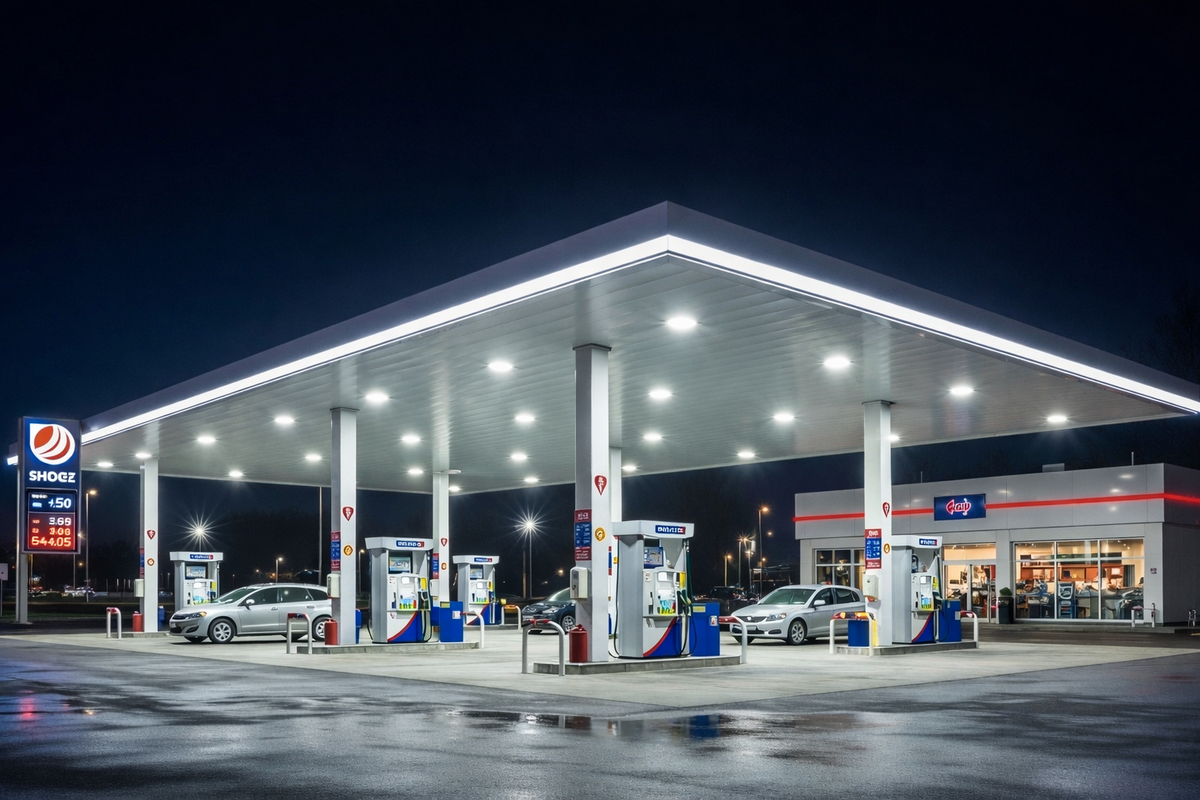
Outdoor LED lighting solutions can illuminate building entrances, walkways, parking areas, loading bays, gardens, and perimeter zones.
Common options include LED floodlights, wall packs, canopy lights, pathway fixtures, and parking lot luminaires.
Outdoor products should be selected according to their exposure to rain, dust, moisture, and temperature changes. Appropriate ingress protection, mounting arrangements, and electrical connections are important for safe operation.
Lighting placement should also minimise glare and unnecessary light spill onto neighbouring properties.
Choosing the Right LED Fixtures
Selecting suitable fixtures begins with understanding the space and its intended use.
Determine the lighting purpose. Decide whether the area needs general illumination, task lighting, accent lighting, or outdoor visibility.
Measure the space. Room dimensions, ceiling height, and layout influence fixture quantities and placement.
Compare lumen output. Lumens indicate the amount of visible light produced. They provide a more useful brightness comparison than wattage alone.
Review energy consumption. Wattage and lumens per watt help estimate electrical demand and compare efficiency.
Select colour temperature. Choose a white light appearance that complements the activity and surrounding environment.
Check colour rendering. A higher colour rendering index can be useful when accurate colour appearance matters.
Confirm electrical compatibility. Verify voltage, drivers, dimming systems, and existing fixture requirements.
Review environmental protection. Outdoor and moisture-prone locations may require specific ingress protection ratings.
Considering these factors together helps prevent unsuitable purchases and improves the overall lighting design.
Understanding LED Lighting Performance
Several specifications influence how well an LED lighting system performs.
Lumens and Wattage
Lumens measure visible light output, while watts measure electrical power consumption. A fixture with higher wattage does not necessarily provide more light.
Comparing lumens per watt can help identify products that produce more light relative to their electrical demand. However, efficiency alone does not determine suitability because beam distribution, glare, and installation height also affect performance.
Colour Temperature
Colour temperature is measured in kelvin. Lower values generally produce warmer-looking light, while higher values appear cooler.
Consistent colour temperature can help create a unified appearance throughout a room. Different areas may use different temperatures when their activities and design requirements vary.
Colour Rendering Index
The colour rendering index, or CRI, describes how accurately a light source reveals object colours compared with a reference source.
High colour rendering may be important in retail displays, art studios, design workspaces, and other environments where colour differences are noticeable.
Beam Distribution
Some fixtures spread light across broad areas, while others concentrate illumination in a narrower direction.
The beam angle and fixture optics influence where light reaches the floor, walls, work surfaces, and displays. Selecting suitable distribution can improve visibility while limiting glare and wasted light.
Energy Management Through Lighting Controls
Lighting controls can improve the way an LED system operates throughout the day.
Occupancy sensors can switch lights off when a room is unoccupied. Daylight sensors can adjust artificial lighting according to the amount of natural light entering a space. Timers can manage lighting schedules in areas with predictable operating hours.
Dimming provides another way to adjust brightness when full output is unnecessary. However, the selected fixtures, drivers, and controls must be compatible.
Large commercial buildings may benefit from centralised systems that manage lighting across several rooms or operational zones.
LED Lighting Solutions for New Buildings and Renovations
New construction projects provide an opportunity to plan lighting before ceilings, walls, and electrical systems are completed. Designers can determine fixture locations, wiring routes, switching arrangements, and control requirements during the planning stage.
Renovation projects require additional attention to existing electrical infrastructure and mounting dimensions. Replacement fixtures must be compatible with the available supply and installation space.
For both project types, an assessment of lighting requirements can help determine suitable fixture quantities and distribution. Larger projects may require professional lighting calculations to evaluate illumination levels, uniformity, glare, and energy use.
Planning ahead can also reduce unnecessary installation changes and help coordinate lighting with other building systems.
Installation and Safety Considerations
Proper installation is essential for dependable LED lighting performance.
Before installing fixtures, check the manufacturer's instructions, voltage requirements, mounting hardware, driver specifications, and wiring arrangements. Some products operate at low voltage and require a compatible power supply, while others connect to mains electricity through suitable fixtures or drivers.
Mains wiring and electrical modifications should be handled by qualified professionals in accordance with applicable regulations.
Heat management is also important. Although LEDs generally produce less waste heat than incandescent bulbs, excessive temperatures can affect electronic components and reduce service life.
Outdoor installations need suitable weather protection and secure mounting. Fixtures should only be used in environments for which they are rated.
Maintenance and Troubleshooting
Routine maintenance helps keep lighting systems operating as intended.
Dust and debris can accumulate on accessible fixtures, affecting appearance and light output. Cleaning should follow the manufacturer's recommendations, with the power switched off before inspecting or maintaining components.
Flickering, uneven brightness, and unexpected shutdowns may indicate a faulty driver, loose connection, overheating, or incompatible controls.
Repeated failures should be investigated rather than addressed through frequent replacements alone. A qualified electrician can inspect electrical faults and determine whether the problem comes from the fixture, power supply, wiring, or control system.
Commercial facilities may benefit from keeping maintenance records to track recurring issues and plan replacement schedules.
Calculating the Cost of an LED Lighting Project
The total cost of an LED lighting solution includes more than the fixtures themselves. Drivers, wiring, mounting accessories, sensors, controls, labour, and electrical modifications may contribute to the final expense.
Energy consumption can be estimated with this formula.
Electricity use in kilowatt-hours = Total watts × Operating hours ÷ 1,000
For example, a lighting system with a combined load of 1,000 watts operating for 8 hours consumes 8 kilowatt-hours of electricity.
Multiplying this figure by the applicable electricity rate provides an estimate of operating cost for that period.
To evaluate potential savings, compare the proposed system with the existing lighting installation. Consider operating schedules, maintenance requirements, purchase costs, and expected service life rather than relying on energy efficiency alone.
Common Mistakes to Avoid
Choosing fixtures based only on price can result in unsuitable brightness, poor colour quality, or unnecessary maintenance.
Another common mistake is selecting wattage without comparing lumen output. This can lead to installations that provide insufficient illumination or consume more electricity than necessary.
Ignoring dimmer compatibility, driver requirements, and mounting dimensions can also create installation problems.
For outdoor and industrial applications, overlooking environmental conditions may affect safety and reliability.
A clear assessment of the space, product specifications, and installation requirements helps avoid these issues.
Conclusion
LED lighting solutions provide adaptable options for residential properties, offices, retail stores, warehouses, and industrial facilities. Different fixture types can support general illumination, detailed tasks, architectural accents, and outdoor visibility.
The right solution depends on brightness, energy consumption, colour temperature, light distribution, electrical compatibility, and environmental conditions. By evaluating these factors and planning the installation carefully, property owners and businesses can create lighting systems that meet their practical needs and support long-term performance.


