
Data Center Security in Kuwait: Protecting Critical Business Data with Advanced Security Solutions

In today's digital world, data is one of the most valuable assets for any business. Companies depend on digital systems to store customer information, manage financial records, operate business applications, and communicate with employees and customers. As organisations in Kuwait continue to adopt digital technologies, protecting this information has become increasingly important. Data centres play a major role in supporting these activities, making strong security essential for business continuity and information protection.
Data Center Security helps protect servers, storage devices, networks, applications, and sensitive information from cyberattacks, unauthorised access, equipment damage, and other risks. A security incident can lead to data loss, service interruptions, financial damage, and a loss of customer confidence. For this reason, businesses need a security strategy that combines physical protection, cybersecurity, continuous monitoring, and reliable recovery procedures.
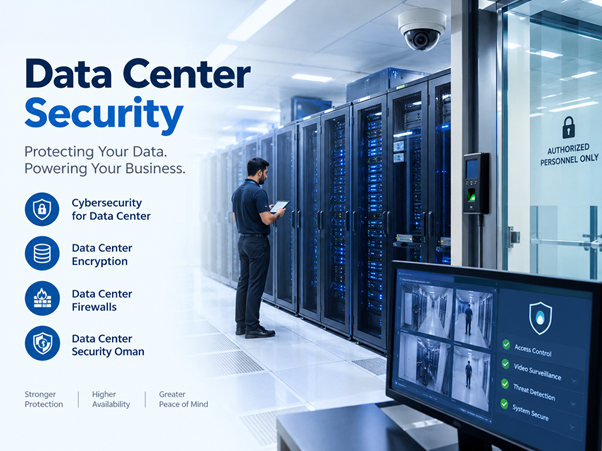
For organisations operating in Kuwait, Data Center Security Kuwait solutions can provide multiple layers of protection for critical IT infrastructure. These solutions may include cybersecurity for data centres, data encryption, advanced firewalls, threat detection, and physical access control. When properly designed and maintained, these technologies help businesses protect their digital assets and maintain reliable operations.
Whether an organisation operates in banking, healthcare, telecommunications, retail, logistics, or government services, investing in suitable data centre security can support long term business stability and customer trust.
What Is Data Center Security?
Data Center Security refers to the technologies, policies, and procedures used to protect data centre facilities and the information they manage. It covers both physical security and digital security because protecting servers requires more than preventing unauthorised people from entering a building.
Physical security focuses on protecting server rooms, equipment racks, storage systems, and other critical infrastructure. Common measures include surveillance cameras, access control systems, visitor registration, biometric authentication, and environmental monitoring. These measures help prevent unauthorised entry, equipment theft, and physical interference.
Digital security protects the data, applications, and networks operating within the data centre. It includes firewalls, encryption, identity management, vulnerability management, security monitoring, and protection against malicious software.
For example, a financial company in Kuwait may use Data Center Access Control to restrict entry to its server rooms while deploying firewalls and encryption to protect customer records. If unusual network activity occurs, Data Center Threat Detection tools can help security teams investigate the incident.
Combining physical and digital protection creates a stronger security environment. Each layer supports the others, helping organisations reduce risks and respond more effectively to potential incidents.
Types of Data Center Security Solutions
Cybersecurity for Data Center Infrastructure
Cybersecurity for Data Center environments protects servers, applications, databases, and networks from digital threats. These threats may include ransomware, malware, phishing related account compromise, unauthorised access, and attempts to exploit software vulnerabilities.
A strong cybersecurity strategy uses several protective measures together. Network segmentation helps separate important systems, while endpoint protection and secure configurations reduce the risk of malicious activity. Regular software updates and vulnerability assessments help address weaknesses before attackers can exploit them.
Businesses can also use multi factor authentication to strengthen access to administrative accounts. This means users must provide additional verification rather than relying on a password alone.
For businesses in Kuwait, cybersecurity is especially important when data centres support critical services or store sensitive customer and business information. A successful cyberattack could interrupt important applications or expose confidential records.
Cybersecurity should therefore be treated as an ongoing process. Regular monitoring, employee awareness, security testing, incident response planning, and system maintenance all contribute to better protection.
Data Center Encryption
Data Center Encryption protects information by converting readable data into a form that cannot be understood without the appropriate decryption key. It is an important security measure for businesses that store financial records, customer details, business documents, and confidential operational information.
Encryption should be considered for data at rest and data in transit. Data at rest refers to information stored on servers, storage devices, and backups. Data in transit refers to information moving between systems, applications, users, and networks.
For example, a company storing customer information in a database can encrypt its stored data. When the same information moves between an application and a server, encrypted network connections can help protect it from interception.
Effective encryption also depends on proper key management. Businesses should control who can access encryption keys, protect those keys from unauthorised use, and establish procedures for key rotation and recovery.
For organisations seeking Data Center Security Kuwait solutions, encryption can provide an additional layer of protection. However, encryption should work alongside access control, monitoring, secure configurations, and backup protection rather than being treated as a complete security solution by itself.
Data Center Firewalls
Data Center Firewalls help protect networks by controlling incoming and outgoing traffic according to defined security rules. They can block unauthorised connections and reduce exposure to suspicious network activity.
Modern firewall solutions may provide additional features such as application awareness, intrusion prevention, traffic inspection, and protection against selected network attacks. The exact capabilities depend on the product and its configuration.
For example, a business may configure its firewall to allow approved communication between its customer application and database while blocking unnecessary connections from other network segments.
Firewalls can also support network segmentation, which helps limit the movement of an attacker if one system becomes compromised. Separate security zones can be created for public facing applications, internal servers, administrative systems, and backup infrastructure.
Businesses in Kuwait should choose firewall solutions that match their network architecture, traffic requirements, and security risks. Proper configuration, regular rule reviews, software updates, and ongoing monitoring are essential for effective protection.
Data Center Security Kuwait Solutions
Data Center Security Kuwait solutions combine multiple security technologies and operational procedures to protect critical IT infrastructure. These solutions can be designed for organisations with small server rooms, enterprise data centres, or complex multi site environments.
A complete security approach may include Data Center Access Control, surveillance cameras, intrusion detection, cybersecurity tools, encryption, firewalls, and environmental monitoring. Backup power, temperature monitoring, fire detection, and suitable fire suppression arrangements can also help protect equipment and support service continuity.
For example, a healthcare organisation may require strict control over server room access, protection for patient information, secure network connections, and reliable backup systems. A logistics company may focus on protecting business applications, warehouse management systems, and operational databases.
The right combination depends on the organisation's size, industry, data sensitivity, and risk profile. A professional provider can assess these requirements and recommend a suitable security architecture rather than offering the same solution to every business.
Key Benefits of Data Center Security
Protection Against Data Breaches
One of the main benefits of Data Center Security is improved protection against unauthorised access and information theft. Firewalls, encryption, access controls, and threat monitoring can work together to reduce the likelihood and impact of a security incident.
These measures are particularly important for businesses that handle financial information, employee records, customer data, or confidential business documents.
Although no security system can eliminate every risk, a layered approach can make it more difficult for attackers to compromise critical systems.
Improved Business Continuity
Data centre disruptions can affect business applications, customer services, internal communications, and essential operations. Strong security measures help reduce the risk of incidents that could interrupt these services.
Backup systems, disaster recovery planning, redundant infrastructure, and tested recovery procedures can help organisations restore operations after a cyberattack, equipment failure, or other disruption.
For businesses in Kuwait, maintaining reliable digital services is important for customer satisfaction and daily operations. Security planning should therefore include both prevention and recovery.
Better Control Over Physical Access
Data Center Access Control helps ensure that only authorised individuals can enter sensitive areas. Access cards, biometric readers, electronic locks, and visitor management procedures can help organisations manage entry to server rooms and equipment areas.
Businesses can assign permissions according to job responsibilities and remove access when employees or contractors no longer require it. Access records can also support investigations and security reviews.
Restricting physical access reduces the risk of equipment tampering, theft, and unauthorised changes to critical infrastructure.
Stronger Customer Confidence
Customers and business partners expect organisations to handle their information responsibly. A well-managed security programme demonstrates that a company takes data protection and operational reliability seriously.
This can strengthen customer relationships and support business credibility, particularly in sectors where confidentiality and service availability are essential.
Support for Compliance and Risk Management
Businesses may need to meet specific security, privacy, contractual, or industry requirements depending on their activities. A suitable data centre security programme can help organisations implement relevant controls and maintain records for internal reviews and external assessments.
Organisations in Kuwait should identify which national requirements, sector specific rules, and contractual obligations apply to them. Working with a qualified security provider can help clarify technical requirements, although compliance should be assessed against the actual rules applicable to the organisation.
Why Data Center Security Is Important for Businesses in Kuwait
Kuwait's business environment includes financial institutions, healthcare providers, telecommunications companies, government organisations, retail businesses, and industrial operators that rely on digital infrastructure. As these organisations use more connected applications and data services, protecting their IT environments becomes increasingly important.
Data centre security can help businesses protect confidential information, reduce exposure to cyber threats, and maintain access to essential applications. It can also help limit the operational impact of unauthorised access, network attacks, and infrastructure failures.
Businesses should consider the requirements of Kuwait's regulatory environment when selecting security solutions. For example, the Communications and Information Technology Regulatory Authority publishes cybersecurity guidance and requirements relevant to its areas of responsibility. Organisations should review the official and seek appropriate advice on which requirements apply to their operations.
Data location and cloud hosting decisions also require attention. Organisations handling sensitive information should assess applicable data classification, residency, contractual, and sector specific requirements before selecting a hosting arrangement.
For companies in Kuwait, a well-planned Data Center Security strategy can support secure digital growth while helping protect the systems that customers and employees depend on every day.
Important Features to Look for in Data Center Security
Data Center Threat Detection
Data Center Threat Detection involves identifying suspicious activity that may indicate a cyberattack, unauthorised access attempt, or security weakness. Threat detection tools can analyse network traffic, system logs, user activity, and other security information to identify events that require investigation.
For example, a monitoring platform may flag repeated failed login attempts, unusual data transfers, or unexpected administrative activity. Security teams can review these alerts to determine whether further action is necessary.
An effective detection solution should provide useful alerts, clear incident information, and integration with the organisation's wider security monitoring processes. Businesses should also establish procedures for investigating and escalating potential incidents.
Advanced Data Center Access Control
Data Center Access Control should provide reliable methods for restricting entry to critical areas. Depending on the facility, this may include access cards, biometric authentication, PIN codes, electronic locks, and additional verification for sensitive rooms.
The system should allow administrators to assign permissions according to job roles and maintain appropriate access records. Visitor procedures and periodic access reviews can further strengthen physical protection.
For sensitive environments, businesses should consider separate controls for building entrances, server rooms, and individual equipment areas. The level of protection should reflect the risks associated with the infrastructure and the information it contains.
Reliable Encryption and Key Management
A suitable security solution should support encryption for stored information and network communications. It should also provide secure key management procedures that limit access to authorised personnel.
Businesses should understand how encryption is configured, where keys are stored, how keys are recovered, and what happens when a key must be replaced. These details are important for protecting information without creating unnecessary operational difficulties.
Continuous Monitoring and Incident Response
Continuous monitoring helps organisations identify potential security issues as they occur. A well-designed monitoring process can bring together firewall alerts, access records, server logs, and other security events.
However, monitoring tools are most useful when supported by clear incident response procedures. Businesses should know who investigates alerts, who approves emergency actions, and how affected systems are isolated and recovered when necessary.
Backup and Disaster Recovery
Security planning should include reliable backups and a documented recovery strategy. Backups should be protected against unauthorised access and ransomware, with separate or isolated copies where appropriate.
Organisations should regularly test whether important data and applications can be restored successfully. A backup that has never been tested may not provide the expected protection during an emergency.
Scalability and Integration
A suitable Data Center Security solution should support future growth and integrate with the organisation's existing infrastructure. This may include identity management platforms, network monitoring tools, access control systems, and security information management software.
Businesses should confirm compatibility, licensing requirements, implementation costs, and future expansion options before investing.
Why Choose a Professional Data Center Security Provider?
Choosing a professional provider helps businesses build a security solution that matches their technical requirements and operational risks. Data centre protection involves several connected technologies, and poorly planned installations can leave important gaps.
A professional provider can assess the existing environment, identify vulnerabilities, and recommend suitable physical and digital safeguards. This may include improving Data Center Access Control, deploying Data Center Firewalls, implementing encryption, and configuring Data Center Threat Detection.
Installation and configuration are equally important. Even advanced security products can perform poorly when access permissions, firewall rules, monitoring settings, or encryption controls are incorrectly configured. Professional implementation helps ensure that different components work together as intended.
Businesses should also consider the provider's experience, technical certifications, support arrangements, maintenance services, and ability to work with existing systems. Clear documentation and staff training are important because employees need to understand their responsibilities for maintaining security.
Ongoing support is essential as threats and business requirements change. A professional provider can help with security reviews, system updates, troubleshooting, and improvements to the security architecture.
For businesses searching for Data Center Security Kuwait services, the best provider is one that understands the local business environment, explains technical options clearly, and offers a practical approach to long term protection.
Conclusion
Data Center Security is essential for protecting the information, applications, and infrastructure that modern businesses depend on. By combining Cybersecurity for Data Center environments, Data Center Encryption, Data Center Firewalls, Data Center Access Control, and reliable threat monitoring, organisations can strengthen their defences and improve operational resilience.
For businesses in Kuwait, investing in suitable Data Center Security Kuwait solutions can help reduce the risk of data breaches, support business continuity, and build customer confidence. The right approach should consider the organisation's industry, security risks, data sensitivity, infrastructure, and applicable regulatory requirements.
Working with a professional provider helps ensure that security measures are selected, installed, configured, and maintained correctly. With regular monitoring, staff training, tested backups, and ongoing reviews, businesses can create a stronger foundation for secure digital operations.
Protect Your Critical Data with Professional Data Center Security
Is your business ready to strengthen its data centre protection? Choose a security solution designed around your infrastructure, information protection needs, and business goals. Contact a professional Data Center Security provider in Kuwait today to discuss your requirements, explore suitable technologies, and request a customised consultation for your organisation.
Frequently Asked Questions
1. What Is Data Center Security?
Data Center Security is the combination of physical safeguards, cybersecurity technologies, and operational procedures used to protect servers, networks, applications, and sensitive information from unauthorised access, cyberattacks, and physical damage.
2. Why Is Data Center Security Important for Businesses in Kuwait?
It helps businesses protect confidential information, reduce cybersecurity risks, maintain access to critical applications, and support business continuity. It can also help organisations address relevant contractual, regulatory, and industry security requirements.
3. What Is Data Center Threat Detection?
Data Center Threat Detection identifies suspicious activity across systems, networks, and security logs. It helps security teams investigate potential cyberattacks, unusual access attempts, and other events that may threaten data or infrastructure.
4. How Do Data Center Firewalls and Encryption Work Together?
Data Center Firewalls control network traffic and restrict unauthorised connections, while encryption protects information by making it unreadable without the correct decryption key. Together with access control and monitoring, these technologies provide multiple layers of security.
5. How Can I Choose the Right Data Center Security Provider in Kuwait?
Choose a provider that can assess your infrastructure, recommend suitable security technologies, integrate existing systems, and offer professional installation, monitoring, maintenance, and technical support. Review its experience, security practices, service commitments, and understanding of the requirements relevant to your business before making a decision.


