
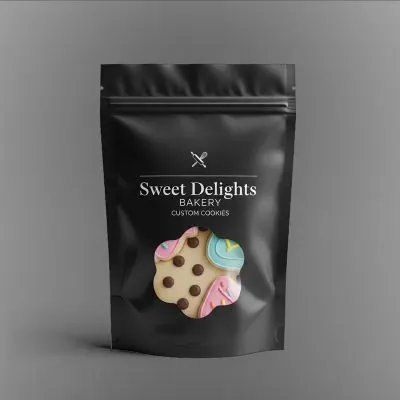
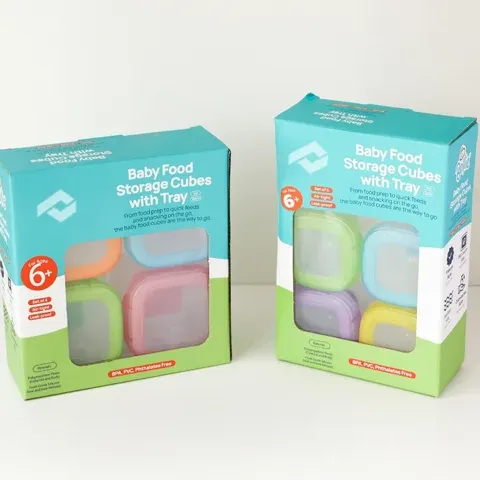
Packaging plays an important role in the cannabis industry, influencing product protection, brand identity, customer experience, and regulatory compliance. As the market becomes more competitive, businesses must choose packaging that meets their operational needs while appealing to their target audience. Two common options are custom cannabis packaging and standard packaging, each offering different advantages depending on the product and business goals.
Standard packaging generally uses pre-designed boxes, bags, or containers with limited customization. Custom cannabis packaging, on the other hand, is developed around a brand's requirements, product dimensions, and presentation preferences. It can include customized printing, specialized inserts, tamper-evident features, and child-resistant closures where required.
Choosing between these options requires more than comparing prices. Businesses should consider product safety, applicable regulations, marketing objectives, storage requirements, and long-term costs. Understanding these factors can help cannabis brands select packaging that supports their products and customers.
What Is Custom Cannabis Packaging?
Custom cannabis packaging refers to packaging designed specifically for cannabis products and the requirements of the business selling them. It can be manufactured in different sizes, shapes, materials, and styles to accommodate products such as dried cannabis flower, pre-rolls, edibles, concentrates, and other cannabis-related goods.
Depending on the product and local regulations, custom packaging may incorporate child-resistant closures, tamper-evident seals, protective barriers, product information panels, and customized inserts.
Branding is another important feature. Businesses can use their logos, colors, typography, and approved graphics to create packaging that customers can recognize easily.
Common custom cannabis packaging options include:
-
Custom cannabis boxes.
-
Printed pouches and bags.
-
Child-resistant containers.
-
Custom jars and cartons.
-
Packaging for pre-rolls.
-
Boxes for cannabis edibles.
-
Specialty packaging for concentrates.
The exact structure depends on the product's physical properties, shelf-life requirements, distribution method, and applicable legal standards.
What Is Standard Cannabis Packaging?
Standard cannabis packaging generally refers to ready-made packaging available in established shapes and sizes. Businesses select from existing containers, boxes, pouches, or jars rather than developing a completely customized structure.
These options are often suitable for companies that need straightforward packaging or want to launch products without investing heavily in customized tooling and design.
Standard packaging may include plain cartons, generic pouches, jars, and containers that can be labeled with product information where permitted.
Its main advantages include simplicity, availability, and potentially lower initial costs. However, standard packaging may offer fewer opportunities to differentiate a product visually or achieve a precise fit for unusual product dimensions.
Businesses must still verify that any standard packaging meets the safety, labeling, and compliance requirements of the market in which their products will be sold.
1. Custom vs. Standard Packaging: Key Differences
Both packaging options can serve legitimate business needs, but they differ in several important areas.
| Feature | Custom Cannabis Packaging | Standard Cannabis Packaging |
|---|---|---|
| Design | Tailored to the brand and product | Uses established designs |
| Branding | Extensive customization options | Often limited to labels or simple printing |
| Initial investment | May require design and setup costs | Usually lower setup requirements |
| Product fit | Can be designed for exact dimensions | Limited to available sizes |
| Ordering | May involve production lead times and minimum quantities | Often available in ready-made formats |
| Protection | Can be engineered for specific requirements | Depends on the selected standard design |
| Customer experience | Offers more opportunities for distinctive presentation | Usually prioritizes simplicity and function |
| Scalability | Can support a consistent branded product range | Can be convenient for smaller or changing product lines |
Neither option is automatically better for every cannabis business. The right choice depends on the company's budget, product range, distribution requirements, and branding strategy.
2. Branding and Product Recognition
Brand recognition is one of the strongest reasons businesses choose custom cannabis packaging. In a competitive retail environment, a consistent visual identity can help customers distinguish one company from another.
Custom packaging allows businesses to control colors, typography, logo placement, illustrations, and other design elements. These details can be coordinated across different product categories to create a recognizable brand experience.
For example, a cannabis company selling flower, pre-rolls, and edibles could use a consistent color palette and logo placement while adapting the package structure to each product.
Standard packaging usually provides fewer design options, although labels and approved printed elements may still communicate essential brand information.
For a business focused on establishing a distinctive market presence, custom packaging may offer a clear advantage. However, visual appeal should never compromise readability, product safety, or legal compliance.
Cannabis brands should also avoid designs that violate restrictions on youth-oriented imagery, misleading claims, or prohibited promotional content.
3. Product Protection and Packaging Performance
Protecting the product is a fundamental purpose of cannabis packaging. Different cannabis products have different requirements, so businesses should evaluate packaging according to the contents rather than choosing based on appearance alone.
For dried cannabis flower, packaging may need to help manage moisture exposure, protect the contents from contamination, and maintain product quality. Suitable barrier properties and reliable closures can be important.
Cannabis edibles may require packaging that protects the product from physical damage and environmental exposure. Concentrates may need compatible containers that account for their consistency and material interactions.
Custom packaging can be designed around these specific requirements. Businesses may select particular materials, closure systems, inserts, or barrier layers based on the product's needs.
Standard packaging can also provide effective protection when the selected format is suitable for the product. A ready-made container that meets the required specifications may be a practical choice for businesses with straightforward packaging needs.
The key is to assess performance through supplier specifications, compatibility checks, and appropriate testing rather than assuming customized packaging is always more protective.
4. Child-Resistant and Tamper-Evident Features
Safety features are particularly important in regulated cannabis markets. Depending on the jurisdiction and product category, packaging may be required to meet specific child-resistance, tamper-evidence, labeling, or closure standards.
Custom packaging can incorporate child-resistant mechanisms and tamper-evident seals into the overall design. These features must be appropriate for the product and independently verified against the applicable requirements.
Standard packaging may also be available with certified or tested child-resistant closures and tamper-evident features. Businesses should confirm the exact specifications and evidence of compliance rather than relying on general product descriptions.
Important considerations include:
-
Whether child-resistant packaging is legally required.
-
Whether the closure meets the applicable testing standard.
-
Whether tamper evidence is required.
-
Whether the packaging can be used safely by the intended adult consumer.
-
Whether the design accommodates mandatory warnings and product information.
Custom printing does not automatically make packaging compliant, and a child-resistant-looking closure is not necessarily certified or tested.
Businesses should consult the relevant regulatory authority and qualified packaging suppliers before approving a design for commercial use.
5. Cost Comparison: Which Option Is More Affordable?
Cost is often a deciding factor when comparing custom and standard cannabis packaging.
Standard packaging may have a lower initial cost because it uses existing designs and does not always require specialized setup. This can make it suitable for startups, small production runs, or businesses testing a new product.
Custom packaging may involve design fees, printing setup, tooling, specialized materials, or minimum order quantities. These expenses can increase the initial investment, especially for complex structures and specialty finishes.
However, the cost per unit may become more competitive at higher production volumes, depending on the supplier and production method.
Businesses should evaluate the total cost rather than comparing the price of the empty package alone. Relevant expenses include:
-
Packaging materials.
-
Printing and finishing.
-
Design and setup.
-
Inserts and closure systems.
-
Assembly and packing labor.
-
Shipping and storage.
-
Product damage and returns.
-
Compliance testing, where applicable.
A low-cost package may create additional expenses if it fails to protect the product or requires frequent replacement. Similarly, a premium custom design may not be worthwhile if the business cannot use the full order quantity.
The best financial decision balances unit cost, product protection, brand objectives, and expected demand.
6. Flexibility and Product Customization
Cannabis businesses may sell products in several formats, sizes, and quantities. Packaging flexibility can help them accommodate these differences without compromising functionality.
Custom packaging allows companies to tailor dimensions, compartments, materials, and closures to specific product requirements. This can be particularly useful for unusual product shapes, multi-item kits, premium collections, or coordinated product ranges.
For example, a company selling several sizes of pre-roll products may need different internal layouts to secure each format properly.
Standard packaging offers less structural flexibility but may be easier to source when products fit common container sizes. It can also simplify purchasing for businesses with a limited product range.
Before choosing either option, businesses should identify which packaging features are essential and which are optional. Customization is most valuable when it solves a specific problem, improves product fit, or supports a meaningful brand objective.
7. Shelf Appeal and Customer Experience
Packaging influences how customers perceive a product before they open it. A well-designed package can communicate professionalism, consistency, and attention to detail.
Custom cannabis packaging offers opportunities to create a distinctive retail presentation through coordinated graphics, suitable finishes, clear information, and a product-specific structure.
For example, a premium product line might use a refined visual identity and carefully selected materials, while a practical everyday range could prioritize simple graphics and convenient opening features.
Standard packaging can still appear professional when businesses use clean labels, consistent typography, and a logical layout. It may be sufficient for products sold primarily through channels where visual differentiation is less important.
Customer experience also depends on practical features such as ease of opening, reliable resealing where appropriate, legibility, and convenient storage.
An effective design balances appearance with functionality and does not rely on excessive decoration to communicate product value.
8. Sustainability and Material Selection
Sustainability is an increasingly important consideration for packaging decisions. Both custom and standard packaging can use materials with different environmental characteristics, so businesses should evaluate the complete packaging system.
Custom packaging may provide opportunities to reduce unnecessary material, optimize box dimensions, or select paper-based structures suited to the product. Standard packaging may also offer efficient formats made from recyclable or reusable materials.
However, neither option is automatically more sustainable.
Businesses should consider:
-
The materials used in the container and closure.
-
Whether the package can be recycled in the intended market.
-
Whether different materials need to be separated before disposal.
-
The amount of packaging required to protect the product.
-
The availability of suitable recycling facilities.
-
The environmental impact of rejected or damaged products.
Cannabis packaging may require special barriers, child-resistant mechanisms, or other components that complicate recycling. These requirements should be evaluated alongside environmental goals.
Brands should also ensure that sustainability claims are accurate and supported by reliable information about the materials and disposal conditions.
9. Compliance and Labeling Requirements
Regulatory compliance is one of the most important factors when selecting cannabis packaging. Requirements vary significantly by country, state, province, and product category.
Depending on the market, packaging may need to display product identity, net quantity, ingredient information, allergen details, batch or lot information, warnings, manufacturer details, or other required statements.
Some jurisdictions also impose restrictions on colors, imagery, packaging dimensions, promotional language, and how products may be presented to consumers.
Custom packaging can provide greater control over label placement and available space. This can make it easier to organize the required information while maintaining a consistent design.
Standard packaging may also meet these needs if it offers sufficient space and is compatible with the required closure and labeling specifications.
Before production, businesses should confirm:
-
The rules applicable to their location and product category.
-
The required warnings and information.
-
Child-resistant and tamper-evident requirements.
-
Restrictions on branding and promotional graphics.
-
Whether the packaging material is suitable for the product.
-
Whether any required testing or documentation is available.
Regulations can change, so businesses should verify current requirements with the relevant authority or a qualified compliance professional.
10. Which Option Is Better for Small Businesses?
For small cannabis businesses, the choice often depends on budget, order volume, and the stage of product development.
Standard packaging may be appropriate for startups that want to control initial costs, test customer demand, or launch a limited product range. It can also reduce the time needed to select a packaging format when ready-made options are available.
Custom packaging may be more suitable when a business has an established brand identity, needs specific protective features, or wants a distinctive presentation.
A small business does not necessarily need a fully custom box for every product. It could use a suitable standard container with consistent labels or printed sleeves, provided the complete packaging meets applicable requirements.
This approach can help balance brand presentation with financial constraints.
The best decision is to prioritize safety and compliance first, followed by product protection, branding needs, and cost.
11. Which Option Is Better for Large-Scale Cannabis Businesses?
Larger cannabis businesses often manage higher production volumes, multiple product lines, and more complex distribution operations. Packaging consistency and supply reliability can therefore become especially important.
Custom packaging may help standardize brand presentation across products and create structures suited to established production processes. Large orders may also offer opportunities to negotiate production pricing, depending on the supplier and specifications.
Standard packaging can still be useful for high-volume operations when existing formats meet product requirements and offer reliable availability.
Large businesses should evaluate more than unit pricing. Supplier capacity, quality control, lead times, storage needs, and the ability to maintain consistent specifications are also important.
A packaging solution that works well for one product may not be appropriate for every item in a broad portfolio. Different products may require different combinations of custom and standard formats.
12. Common Mistakes to Avoid When Choosing Cannabis Packaging
Selecting packaging without evaluating the full requirements can lead to unnecessary expenses, product damage, or compliance problems.
Common mistakes include:
Choosing based on appearance alone: Attractive packaging is not useful if it does not protect the contents or meet legal requirements.
Ignoring product compatibility: Materials and closures must be suitable for the specific cannabis product.
Overlooking regulations: Packaging should be reviewed against the rules of the intended market before production.
Ordering too much packaging: Large quantities can create storage problems and lead to waste if product details or regulations change.
Using unclear labels: Important product information should be legible and organized.
Failing to test samples: Sample evaluation can reveal problems with dimensions, closures, printing, or durability before a large order is manufactured.
Assuming custom is always better: Standard packaging may be entirely appropriate when it meets the business's requirements.
Avoiding these mistakes helps businesses make packaging decisions based on performance and long-term value rather than appearance alone.
Conclusion
Custom cannabis packaging and standard packaging both offer valuable benefits, but the right choice depends on a business's product requirements, budget, branding goals, and regulatory obligations.
Custom packaging provides greater control over design, dimensions, printing, and specialized features. It can be especially useful for businesses that want distinctive branding or need packaging tailored to specific products. Standard packaging offers a practical alternative for companies that prioritize simplicity, lower initial costs, and ready-made formats.
Neither option should compromise product protection, child safety, labeling accuracy, or legal compliance. Businesses should evaluate material compatibility, closure performance, supplier reliability, and total packaging costs before making a decision.
For many companies, a combination of standard containers and customized branding may provide a practical middle ground. By focusing on safety, functionality, and business objectives, cannabis brands can choose packaging that supports product quality and a consistent customer experience.


