
Manual vs Pneumatic vs Electric Valves: Which Automation Solution Is Right for Your Industry?
Industrial valves play an important role in controlling the flow of liquids, gases and other process media. However, selecting the right valve is not only about its design, size or material. The operating method is equally important, especially in industrial systems where reliable flow control and efficient operation are essential.
Depending on the application, valves can be operated manually or equipped with pneumatic and electric actuators. Each option has its own advantages, limitations and suitable applications.
Understanding the differences between manual, pneumatic and electric valves can help engineers, plant operators and procurement professionals choose the right solution for their process requirements.
Understanding Manual Valves
Manual valves are operated by hand using a lever, handwheel or gearbox. They are commonly used in pipelines where frequent operation or remote control is not required.
Ball valves, butterfly valves, gate valves and globe valves are some common examples of manually operated industrial valves.
Key Advantages of Manual Valves
-
Simple operating mechanism
-
Lower initial investment
-
No requirement for an external power source
-
Easy installation and maintenance
-
Suitable for isolation and occasional operation
Manual valves are commonly used in water treatment plants, chemical processing units, utility pipelines and general industrial applications.
However, manual operation may become inconvenient when valves are installed in difficult-to-access locations or need to be operated frequently.
Understanding Pneumatic Actuated Valves
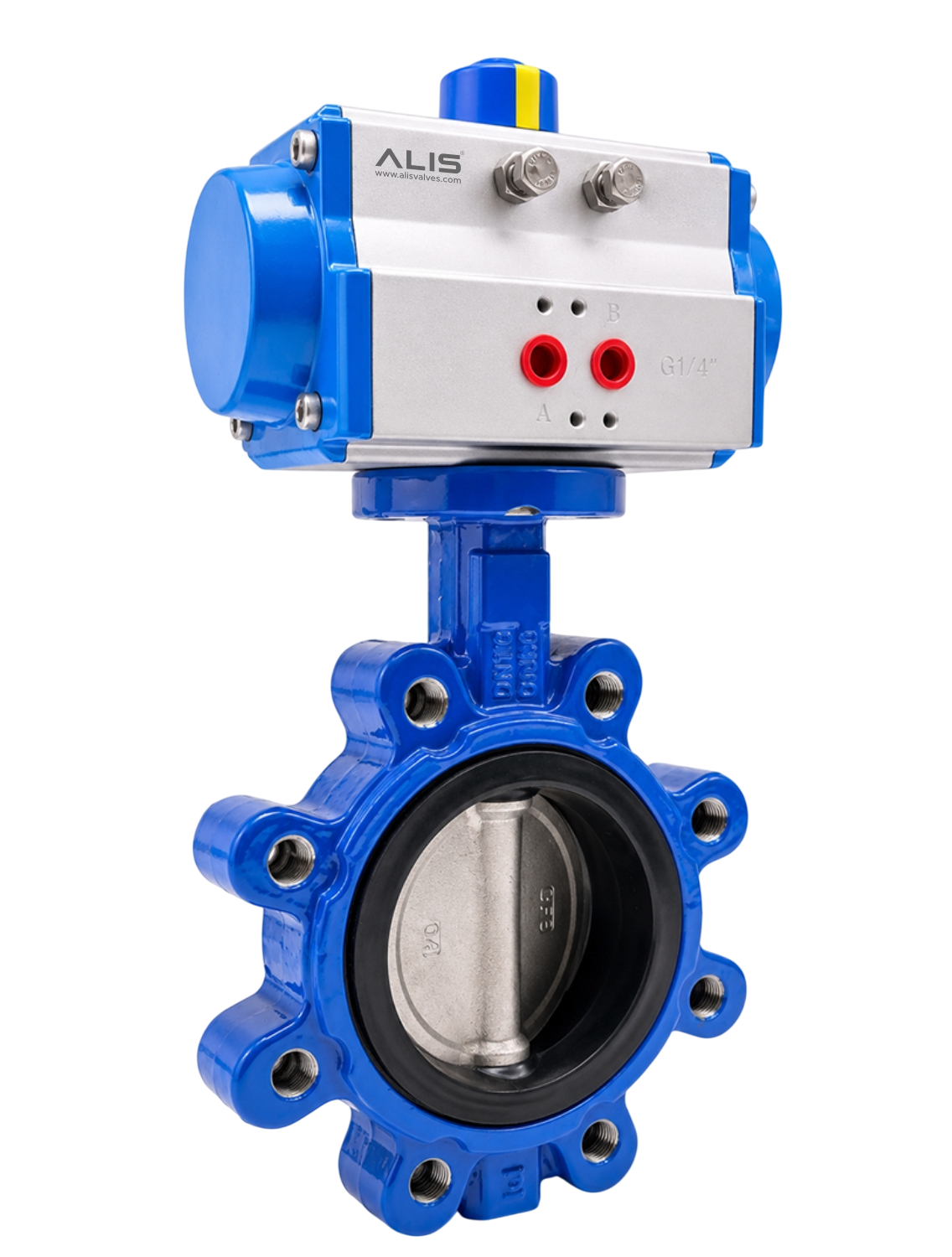
Pneumatic valves use compressed air to operate the valve through a pneumatic actuator. They are widely used in industrial processes where quick operation, automation and repetitive control are required.
Depending on the application, pneumatic actuators are available in double-acting and spring-return configurations.
Key Advantages of Pneumatic Valves
-
Fast opening and closing operation
-
Suitable for automated process systems
-
Reliable operation in repetitive applications
-
Available in double-acting and spring-return designs
-
Can be integrated with control systems
Pneumatic actuated butterfly valves and ball valves are commonly used in chemical plants, pharmaceutical facilities, food processing units and other process industries.
For proper operation, pneumatic systems may require accessories such as solenoid valves, limit switch boxes, air filter regulators and positioners.
Understanding Electric Actuated Valves
Electric actuated valves use an electric motor to open, close or regulate the valve. They are suitable for applications where electrical control, remote operation or precise positioning is required.
Electric actuators can be configured for ON/OFF or modulating control, depending on the process requirements and actuator specifications.
Key Advantages of Electric Actuated Valves
-
Remote operation through electrical controls
-
Suitable for automated industrial systems
-
Available for ON/OFF and modulating applications
-
No compressed air supply required
-
Can be integrated with PLC and control systems
Electric actuated ball valves and butterfly valves are used in water treatment, HVAC systems, power plants and industrial process applications.
Before selecting an electric actuator, it is important to consider the required torque, operating time, voltage supply, enclosure protection.
Important Factors to Consider Before Selecting an Actuator
Choosing an actuator requires more than comparing operating methods. Engineers should evaluate the complete application before making a decision.
Valve Size and Operating Torque
The actuator must provide sufficient torque to operate the selected valve under actual working conditions. An incorrectly sized actuator can affect performance and operating reliability.
Operating Frequency
For applications requiring frequent opening and closing, automated solutions may be more suitable than manual operation.
Available Utilities
Pneumatic actuators require a suitable compressed air supply, while electric actuators need an appropriate electrical supply.
Control Requirements
For simple isolation, ON/OFF operation may be sufficient. Applications requiring flow regulation may need a modulating actuator with suitable control accessories.
Installation Environment
Temperature, moisture, dust, hazardous-area classification and enclosure protection should also be considered during actuator selection.
Role of Valve Automation Accessories
Valve automation often requires additional accessories to achieve reliable and controlled operation.
Some commonly used accessories include:
-
Solenoid Valve: Controls the air supply to a pneumatic actuator.
-
Limit Switch Box: Provides valve open and closed position feedback.
-
Air Filter Regulator (AFR): Filters and regulates compressed air.
-
Valve Positioner: Helps control the valve position according to the required signal.
-
Gearbox: Reduces operating effort and helps operate valves requiring higher torque.
Selecting compatible accessories is important for achieving the required automation performance.
Which Valve Operating Method Is Right for Your Industry?
The right choice depends on the specific application and operating conditions.
Water treatment plants may use manual valves for isolation and electric actuated valves for remote operation. Chemical processing facilities may require pneumatic actuated valves for repetitive automated operations. Power generation and utility systems may use a combination of manual and automated valves depending on process requirements.
There is no single operating method suitable for every industrial application. A proper evaluation of operating conditions, control requirements and available utilities helps determine the most appropriate solution.
Choosing the Right Industrial Valve and Automation Solution
Selecting the right valve and actuator combination can improve operational convenience, process control and maintenance planning. Buyers should consider valve type, body material, pressure rating, temperature range, connection type and actuator specifications before finalising a purchase.
ALIS Valves offers industrial valve and automation solutions for different process requirements, including ball valves, butterfly valves, pneumatic actuators, electric actuators and related accessories.
By understanding the differences between manual, pneumatic and electric operation, engineers and procurement professionals can make more informed decisions for their industrial applications.
Conclusion
Manual, pneumatic and electric valves each serve a different purpose in industrial systems. Manual valves are suitable for simple isolation, pneumatic actuators are useful for fast automated operation, and electric actuators provide electrical control and remote operating capabilities.
The best solution depends on the application, operating conditions, automation requirements and available utilities. Evaluating these factors before purchasing helps ensure a suitable valve selection for long-term industrial operation.


