
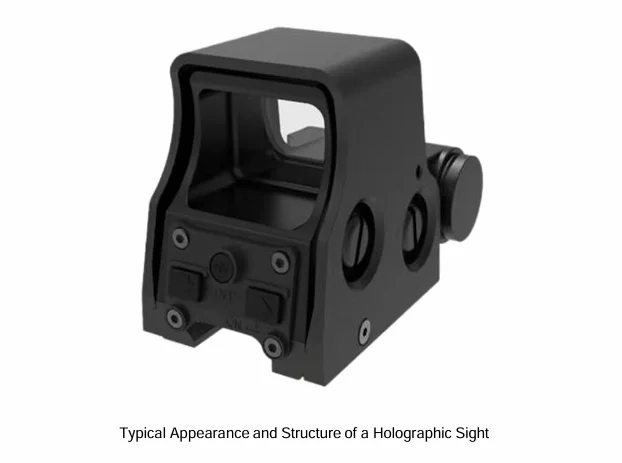
Light, Reflection, and Innovation: Exploring the Technology Behind Holographic Optics

Modern optical engineering uses different methods to control and present light, creating viewing systems for specialized applications. Among these technologies, holographic optics stand out because they use carefully engineered optical elements to produce a visible reference within a viewing area. A Holographic sight demonstrates how light-based technology and precision manufacturing can work together to create a compact optical viewing system.
What Is Holographic Optical Technology?
Holographic technology is based on recording and reconstructing light-wave information. Unlike conventional reflective systems that simply redirect light from a surface, holographic optical elements use diffraction principles to control how light travels.
In optical equipment, this approach can help present a visual reference while allowing the viewer to see the surrounding scene. The technology depends on carefully designed optical elements that interact with light in a controlled way.
The final arrangement varies according to the intended application, optical architecture, and manufacturing requirements. Understanding these differences is important when evaluating specialized optical products.
How Holographic Optical Systems Work
A holographic optical system uses light and specially prepared optical elements to create or direct a visual image. In a typical arrangement, an illumination source interacts with a holographic element, which directs the relevant light toward the viewing position.
The optical element is designed to produce a specific response under suitable illumination conditions. Its performance depends on factors such as wavelength, material characteristics, diffraction efficiency, and alignment.
Unlike a simple transparent window, a holographic element has an engineered optical function. This makes material quality and precision manufacturing especially important.
Important Optical Components
Several components contribute to the performance of a holographic viewing system.
Holographic optical element: This is the central component responsible for diffraction-based light control. Its design determines how incoming light is redirected or presented.
Optical window: A transparent protective element may help shield internal components while maintaining the required visual clarity.
Illumination source: The light source must be compatible with the optical element's design and operating wavelength.
Protective coatings: Coatings may help manage reflections, improve transmission, or protect optical surfaces from environmental exposure.
Mechanical structure: The housing maintains the relative positions of optical components. Stable alignment is necessary for consistent system performance.
Why Precision Matters in Holographic Optics
Holographic optical elements can be sensitive to variations in their manufacturing and operating conditions. Small differences in optical structure, material properties, or alignment may influence the way light is diffracted.
For this reason, manufacturers pay attention to several quality factors:
-
Optical uniformity: Consistent optical characteristics help maintain predictable light behavior.
-
Material stability: Suitable materials should retain their required properties under expected operating conditions.
-
Surface protection: Appropriate protective measures can help preserve optical performance.
-
Dimensional accuracy: Correct component dimensions support reliable integration into the complete assembly.
-
Optical testing: Inspection and evaluation help confirm that components meet their specified requirements.
These factors become especially important when optical elements are integrated into compact devices with limited adjustment space.
Holographic and Reflective Optical Designs
Holographic and conventional reflective systems may appear similar because both can present visual information within a viewing area. However, their operating principles are different.
Reflective systems primarily use surfaces that redirect light through reflection. Holographic systems use diffraction-based optical structures to control light according to their designed properties.
Each approach has its own engineering considerations. The choice depends on factors such as required image presentation, optical efficiency, physical dimensions, environmental conditions, and overall system architecture.
Understanding these distinctions helps product developers assess which optical technology is appropriate for their intended application.
Manufacturing Considerations for Specialized Optical Elements
Producing advanced optical components requires careful control over materials and processing. Depending on the design, manufacturing may involve optical substrate preparation, precision surface processing, holographic pattern formation, coating, and inspection.
Clean production conditions are important because contamination can affect optical surfaces. Consistent processing also helps reduce variations between components.
Testing should evaluate the characteristics relevant to the application. These may include transmission, diffraction behavior, surface quality, dimensional accuracy, and environmental stability.
Working with an experienced optical manufacturer can help development teams understand available materials and manufacturing capabilities before finalizing a design.
The Future of Holographic Optical Engineering
Holographic technology continues to attract interest across advanced imaging, display development, and specialized optical equipment. Improvements in optical materials, fabrication techniques, and precision measurement may create further opportunities for compact and application-specific systems.
As these technologies evolve, the relationship between optical design and manufacturing quality will remain central. Understanding the principles behind a Holographic sight provides a useful introduction to how diffraction-based optics can contribute to specialized viewing systems and broader optical engineering developments.


