
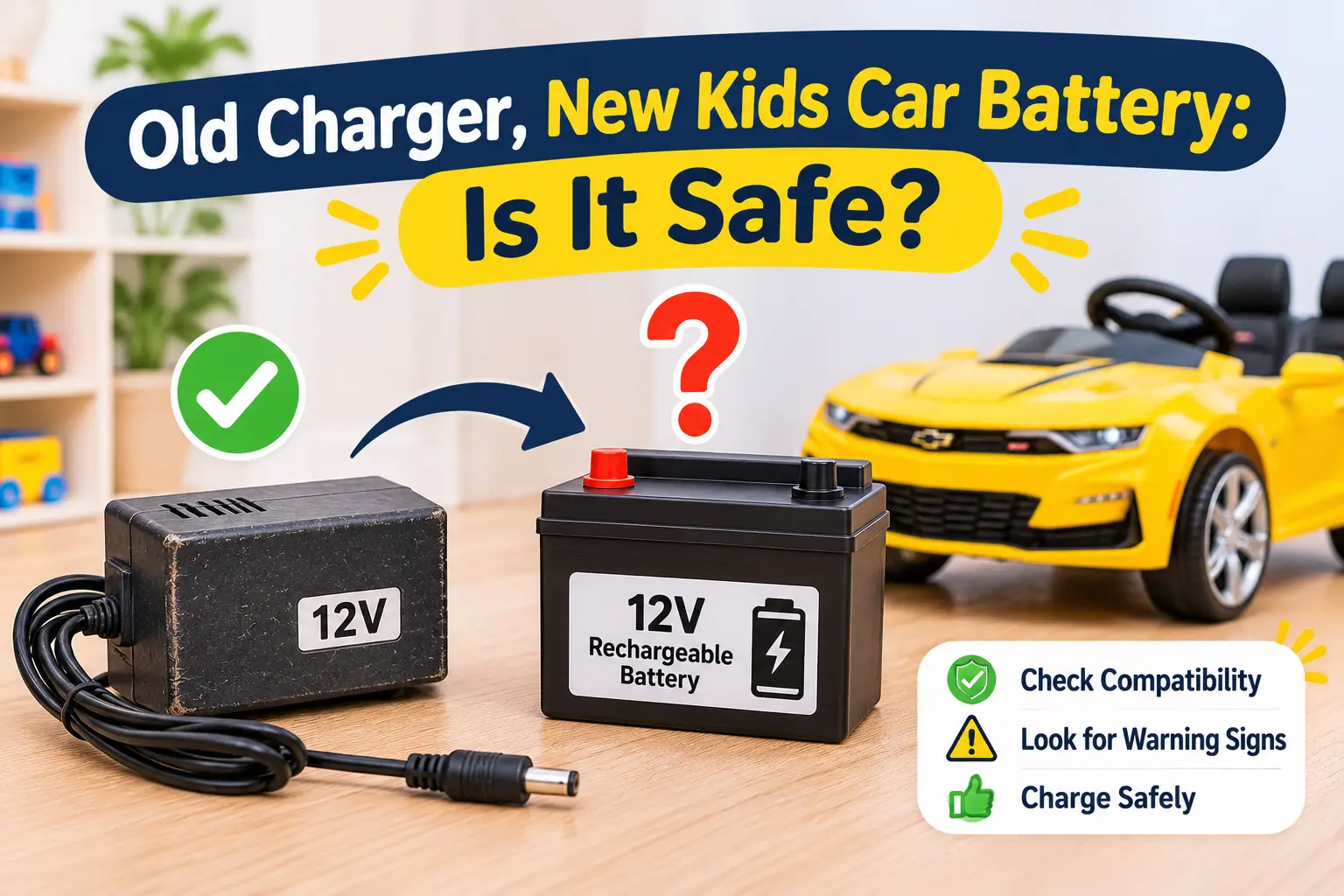

Kids Car batteries sometimes need replacement when they become weak, stop holding power, or no longer provide enough driving time. When buying a new battery, many parents wonder if they can continue using the old charger instead of purchasing another one. It may seem like an easy way to save money, especially when the charger still looks perfectly fine. However, using an old charger with a new battery is not always safe. The important thing is whether both products have matching electrical requirements and are approved to work together.
Can You Use an Old Charger With a New Battery?
Yes, you can use an old charger with a new battery, but only if both are compatible.
A charger is designed to provide a specific amount of electrical power. Every battery also has its own charging requirements. If these requirements do not match, the charger may not work properly.
For example, if the old charger provides a different voltage than the new battery requires, it can cause charging problems or even damage the battery.
Before connecting an old charger, always check the information printed on both the charger and the battery. If you are unsure, ask the manufacturer or a qualified technician.
5 Things to Check Before Using an Old Charger
Before connecting a new battery, take a few minutes to check these important details.
1. Check the Voltage
Voltage is one of the most important things to check when choosing a charger.
For example, some rechargeable vehicles use 6V batteries, while others use 12V or 24V batteries. Each battery needs a charger designed for its specific voltage.
Using a charger with the wrong voltage can lead to incomplete charging, overheating, or battery damage.
What to do: Compare the voltage written on the old charger with the charging requirements of the new battery. Do not use it if the specifications do not match.
2. Check the Battery Type
Not all rechargeable batteries work in the same way.
Many ride-on vehicles use sealed lead-acid batteries, while some newer models use lithium-ion batteries.
These battery types have different charging requirements. A charger designed for one type should not automatically be used with another.
For example, a charger made for a lead-acid battery may not have the correct charging settings for a lithium-ion battery.
What to do: Make sure the old charger is specifically approved for the battery type you are using.
3. Check the Charging Current
Apart from voltage, charging current is another important detail.
Charging current affects how quickly electricity flows into the battery. If the charger supplies more current than the battery allows, it may create excessive heat or damage the battery.
A charger with unsuitable current settings may also take too long to charge the battery.
What to do: Check the battery manufacturer's recommended charging current and compare it with the charger's output.
4. Check the Charging Connector
Sometimes an old charger fits perfectly into a new battery's charging port. However, this does not mean both products are compatible.
Different chargers may have different connector designs and electrical arrangements. Even if the plug fits, the wiring or polarity may be different.
What to do: Check the connector type and polarity before connecting the charger. Never force a plug into a charging port.
5. Check the Condition of the Old Charger
Even if the old charger has the correct specifications, its condition matters.
After regular use, charging cables and adapters can develop problems. A damaged charger may not provide stable power and can become unsafe.
Look for these warning signs:
- Cracks in the charger body.
- Exposed or damaged wires.
- Loose charging plugs.
- Burn marks around the connector.
- Unusual heat during charging.
- Burning smells or strange sounds.
What to do: Stop using a damaged charger. Replace it with an approved compatible model instead of trying to repair it yourself.
What Happens If You Use an Incompatible Charger?
Using the wrong charger may create several problems, even if the battery appears to charge normally at first.
Here are some possible results:
- Battery overheating: Incorrect charging conditions can cause the battery to become unusually hot.
- Slow charging: The battery may take much longer to reach full capacity.
- Reduced battery life: Repeated incorrect charging can affect battery performance over time.
- Incomplete charging: The battery may not receive the correct amount of power.
- Battery damage: In serious cases, an unsuitable charger can damage the battery or create a safety risk.
For a kids electric car, choosing the correct charger is just as important as choosing the right replacement battery. Both parts need to work together properly.
How to Charge a New Battery Safely
Once you have confirmed that the charger and battery are compatible, follow a few simple steps to make charging safer.
Read the Instructions First
Check the battery and charger manuals before connecting them. Follow the recommended charging time and instructions.
Choose a Safe Charging Place
Charge the vehicle in a dry, cool, and well-ventilated area. Keep the charger away from water, direct sunlight, and flammable materials.
Check the Connections
Make sure the charging plug is properly connected. Avoid loose connections or damaged cables.
Avoid Unnecessary Overnight Charging
Do not leave the battery connected longer than the recommended charging time. Automatic charging protection can help, but it is still important to follow the manufacturer's instructions.
Watch for Unusual Heat
A little warmth during charging may be normal. However, if the charger or battery becomes extremely hot, produces a burning smell, or shows visible damage, stop charging and arrange an inspection.
Should You Buy a New Charger With a New Battery?
Not every battery replacement requires a new charger. If your old charger is in good condition and the battery manufacturer confirms that it is compatible, you may be able to continue using it.
However, buying an approved replacement is a better choice when the old charger is damaged, has different specifications, or is not suitable for the new battery type.
Parents comparing rechargeable ride-on vehicles through online stores such as ToysUAE should also check the battery and charger details before making a purchase. Knowing these specifications can make future battery replacements easier.
Final Thoughts
Using an old charger with a new battery can be safe, but only when both are designed to work together. Checking voltage, battery type, charging current, connector, and charger condition can help prevent unnecessary problems.
Instead of assuming that an old charger will work simply because its plug fits, always check the manufacturer's instructions. Choosing compatible charging equipment and following the correct charging routine can help protect the battery, maintain its performance, and make playtime more enjoyable.
Frequently Asked Questions (FAQs)
1. Can I use my old charger for a new battery?
Yes, but only if the charger is approved for the new battery and matches its voltage, charging current, battery type, and connector requirements.
2. What happens if the charger voltage is too high?
A charger with excessive voltage can cause overheating, battery damage, and other charging problems. Always use the correct charger recommended by the manufacturer.
3. Can I use a charger that fits but has different specifications?
No. A matching connector does not guarantee electrical compatibility. Always check the charger's specifications before connecting it.
4. Does a new battery need a different charger?
Not always. If the old charger is compatible with the new battery and is still in good condition, it may be suitable. Check the manufacturer's instructions first.
5. How do I know if my old charger is damaged?
Look for exposed wires, loose plugs, cracks, burn marks, unusual heat, or burning smells. Stop using the charger if you notice any of these signs.
6. Can the wrong charger reduce battery life?
Yes. Repeated charging with an unsuitable adapter can affect battery performance and may shorten its lifespan.


