
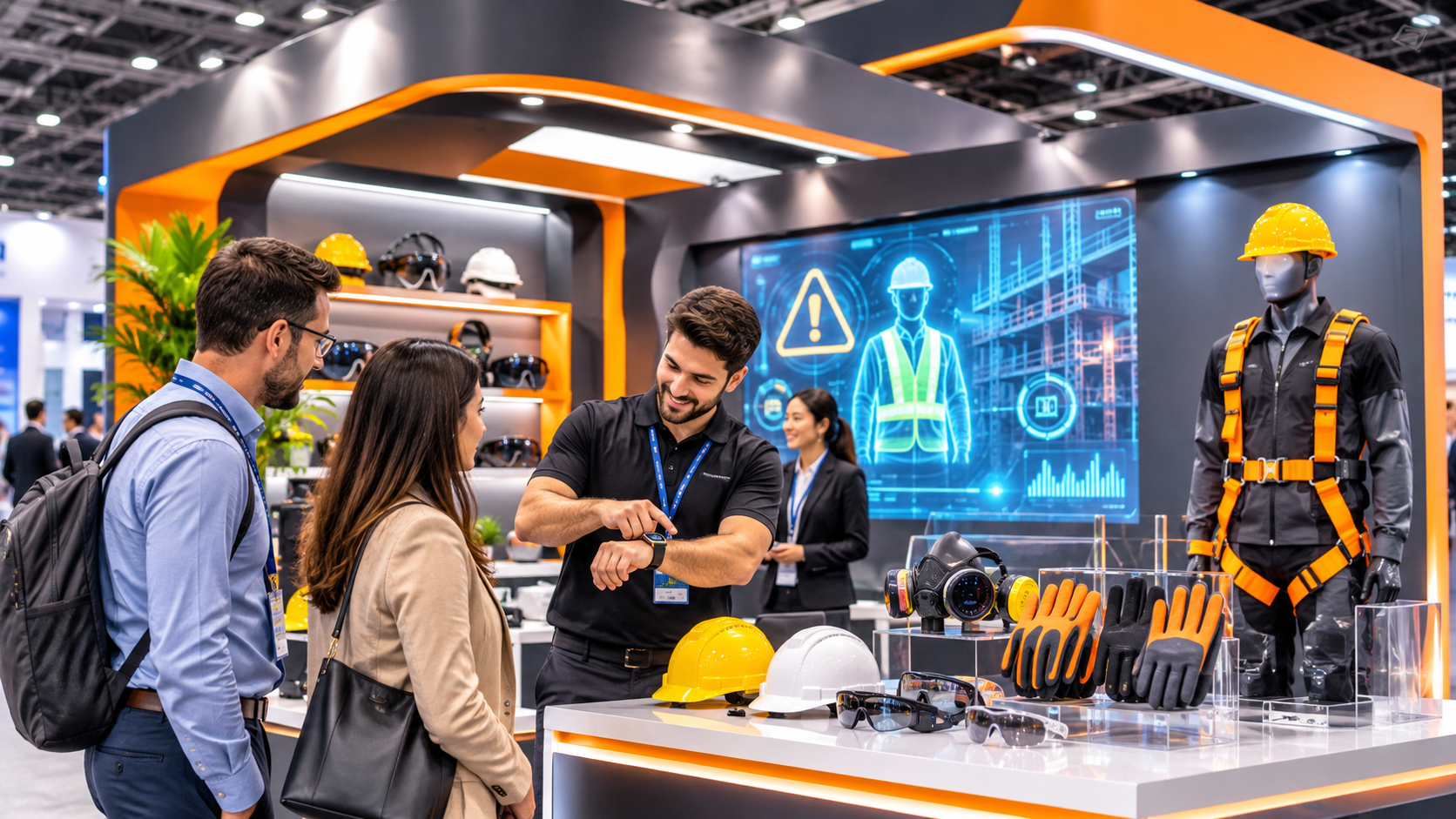
Occupational Safety Expo Exhibit Design Trends to Watch in 2026

The occupational safety industry continues to evolve as businesses adopt new technologies, improve workplace protection standards, and seek more effective ways to communicate their solutions. Trade shows remain important platforms for manufacturers, safety equipment suppliers, technology providers, and industry experts to showcase innovations and connect with potential customers. In this competitive environment, Occupational safety expo exhibits need to do more than display products. They must create engaging experiences, communicate technical information clearly, and reflect the changing expectations of modern exhibition visitors.
In 2026, exhibit design is increasingly influenced by interactive technology, sustainable materials, flexible layouts, immersive demonstrations, and personalized visitor experiences. Attendees expect booths to provide useful information while making it easy to explore products, ask questions, and understand how solutions address real workplace challenges.
For businesses preparing to participate in occupational safety exhibitions, understanding these developments can help them make smarter design decisions. A well-planned booth can strengthen brand recognition, attract qualified visitors, and create opportunities for meaningful business conversations.
This article explores the most important occupational safety expo exhibit design trends to watch in 2026 and explains how businesses can incorporate them into their next trade show presentation.
1. Technology-Driven Booth Experiences
Technology continues to influence how exhibitors present products and interact with attendees. Traditional product displays remain valuable, but digital tools offer additional ways to demonstrate features, explain technical processes, and present complex information.
In 2026, more occupational safety exhibitors are considering technology as an integral part of their booth design rather than treating it as an optional attraction.
Common applications include:
-
Interactive touchscreen product catalogs.
-
Large-format digital display screens.
-
Virtual product demonstrations.
-
Augmented reality presentations.
-
Digital safety training experiences.
-
Interactive product comparison tools.
-
Live demonstrations of connected safety equipment.
For example, a manufacturer of industrial gas detection equipment could use a digital display to explain how its monitoring systems identify potential hazards. Visitors could explore different applications, view product features, and understand how the technology supports workplace safety.
Technology-driven exhibits are particularly useful when products involve technical specifications or applications that are difficult to demonstrate through physical displays alone.
However, digital features should serve a clear purpose. A touchscreen that simply repeats information already printed on a wall may add little value. Every technology element should make the visitor experience more useful, informative, or engaging.
2. Sustainable and Environmentally Responsible Exhibit Materials
Sustainability is becoming an important consideration for businesses planning trade show participation.
Companies are increasingly looking for ways to reduce material waste, reuse exhibit components, and make more responsible decisions about booth construction.
This trend is especially relevant to occupational safety brands because their products and services are associated with protecting people and improving working environments.
Some sustainable exhibit design approaches include:
-
Reusable modular booth structures.
-
Recycled or responsibly sourced materials.
-
Energy-efficient LED lighting.
-
Digital alternatives to excessive printed brochures.
-
Durable graphics designed for repeated use.
-
Rental furniture and reusable display fixtures.
-
Reduced single-use decorative materials.
Modular booth systems are particularly practical for businesses attending multiple exhibitions throughout the year. Their components can be rearranged to fit different booth sizes and layouts, reducing the need to construct a completely new exhibit for every event.
Sustainable design can also become part of a company's brand message. Exhibitors can explain how their booth materials were selected and demonstrate their commitment to responsible business practices.
Nevertheless, sustainability claims should be accurate and supported by verifiable information. Businesses should avoid describing materials or construction methods as environmentally friendly without understanding their actual impact.
3. Modular Booth Designs for Greater Flexibility
Exhibitors increasingly need booth designs that can adapt to different exhibition spaces, event requirements, and marketing objectives.
A company may participate in a small regional safety exhibition one month and a major international trade show the next. Building separate booths for every event can increase costs and complicate logistics.
Modular exhibit design offers a flexible alternative.
A modular booth uses components that can be assembled, rearranged, expanded, or reduced according to the available space.
For occupational safety businesses, this approach can support:
-
Small product-focused displays.
-
Medium-sized demonstration booths.
-
Large exhibition environments.
-
Portable presentation areas.
-
Dedicated meeting spaces.
-
Multiple product categories.
For example, a manufacturer offering protective clothing, industrial footwear, and workplace monitoring equipment could create separate display modules for each product category.
At a smaller event, the company could use only the most important modules. At a larger exhibition, it could combine additional components to create a more comprehensive presentation.
Modular systems also make it easier to refresh the booth's appearance without replacing every structural element.
When selecting a modular solution, businesses should consider transportation, assembly time, durability, storage, and compatibility with their future exhibition plans.
4. Minimalist Designs with Clear Brand Messaging
A crowded booth can make it difficult for visitors to understand what a company offers.
In 2026, minimalist exhibit design remains a useful approach for businesses that want to communicate a focused brand message.
Rather than filling every available surface with text, graphics, and product information, minimalist booths use carefully selected visual elements to guide attention.
Important characteristics include:
-
Clear brand identification.
-
Simple color schemes.
-
Short and readable headlines.
-
Well-organized product displays.
-
Uncluttered visitor pathways.
-
Consistent graphic design.
-
Strategic use of lighting and empty space.
For example, a company specializing in industrial fall-protection equipment could make its main message immediately visible through a strong headline and a carefully arranged product display.
Detailed specifications, certifications, and technical information could be presented through digital screens or supporting product panels.
This approach helps visitors understand the brand's primary offering without having to process excessive information.
Minimalist design does not mean removing important product details. It means organizing information so that visitors can identify the most relevant points quickly.
5. Immersive Demonstration Areas
Occupational safety products often need to be demonstrated in context. Visitors want to understand how equipment works, how it is used, and how it supports workplace protection.
Immersive demonstration areas help exhibitors create more practical experiences.
Instead of displaying a product on a conventional shelf, businesses can recreate a simplified version of the environment in which it is used.
Examples include:
Construction safety demonstrations: Display fall-protection equipment, protective helmets, safety footwear, and site-safety accessories in a coordinated demonstration area.
Industrial safety environments: Showcase machine guarding, emergency stop systems, workplace sensors, and protective barriers through a small-scale industrial setup.
Fire safety presentations: Demonstrate selected fire detection, emergency communication, and evacuation products using appropriate controlled displays.
Warehouse safety zones: Present pedestrian safety systems, visibility products, and material-handling protection solutions in a simulated warehouse layout.
These environments help visitors connect product features with practical applications.
Exhibitors should ensure that demonstrations are safe, clearly supervised, and appropriate for the venue. Any operational equipment should be handled according to manufacturer guidance and exhibition regulations.
6. Augmented Reality and Virtual Reality Integration
Augmented reality and virtual reality are creating new opportunities for product presentation and visitor engagement.
These technologies are particularly useful for occupational safety brands because they can demonstrate situations that are difficult to recreate physically.
Virtual reality can place visitors inside simulated workplace environments. They might explore a construction site, identify hazards in a factory, or experience an emergency evacuation scenario.
Augmented reality can add digital information to physical products. Visitors could use a compatible device to explore equipment components, installation processes, or product features.
Potential applications include:
-
Virtual hazard identification exercises.
-
Simulated workplace safety walkthroughs.
-
Digital product assembly demonstrations.
-
Interactive equipment explanations.
-
Virtual industrial facility tours.
-
Visual demonstrations of safety system integration.
For example, a company exhibiting confined-space monitoring equipment could use VR to show how different monitoring tools are used in a simulated industrial environment.
These experiences can make complex information easier to understand and encourage visitors to spend more time exploring the booth.
However, immersive technology should be selected according to the audience and available resources. A simple, well-designed demonstration may be more effective than an expensive virtual experience that visitors find difficult to use.
7. Flexible Spaces for Meetings and Product Consultations
Trade show booths serve more than one purpose. They attract visitors, present products, support demonstrations, and provide opportunities for business discussions.
A growing design priority is creating flexible spaces that can accommodate these different activities.
Occupational safety exhibitors often need to discuss technical requirements, product compatibility, purchasing timelines, and workplace applications. These conversations may require more privacy and a quieter environment than the main display area can provide.
A flexible booth layout can include:
-
Open product demonstration areas.
-
Small consultation tables.
-
Semi-private meeting spaces.
-
Informal seating arrangements.
-
Dedicated technical discussion zones.
-
Storage areas for samples and promotional materials.
The arrangement should make it easy for visitors to move between product exploration and more detailed discussions.
For smaller booths, multifunctional furniture can help maximize available space. A compact counter might serve as a product information station during busy periods and a consultation area when visitors need individual assistance.
Good planning ensures that meeting spaces do not block the entrance or interfere with the main visitor flow.
8. Interactive Touchscreens and Digital Product Displays
Digital displays are becoming an important part of modern exhibition design because they allow businesses to present more information without filling the booth with printed materials.
Interactive touchscreens can help visitors explore product categories, compare specifications, and access technical information at their own pace.
For occupational safety brands, useful touchscreen applications include:
-
PPE selection guides.
-
Product comparison tools.
-
Digital equipment catalogs.
-
Safety standards information.
-
Industry-specific product recommendations.
-
Installation and operating instructions.
-
Technical document libraries.
A company exhibiting industrial hearing protection, for example, could create an interactive display that explains different product features and helps visitors compare available models.
Digital displays can also support lead generation. Attendees may request a product brochure, schedule a consultation, or submit an inquiry directly through the interface.
The design should remain simple and intuitive. Visitors should be able to find essential information without navigating complicated menus.
Exhibitors should also prepare offline content in case venue connectivity becomes unreliable.
9. Stronger Lighting and Visual Storytelling
Lighting is an important design element because it influences how visitors perceive a booth and which products receive attention.
In 2026, exhibitors can use layered lighting to create more focused and visually appealing presentations.
A booth might combine:
-
General lighting for comfortable visibility.
-
Accent lighting for featured products.
-
Backlit brand graphics.
-
LED lighting integrated into display structures.
-
Focused lighting for demonstration areas.
-
Illuminated signage for brand recognition.
For example, a company displaying industrial protective footwear could use focused lighting to highlight product construction, materials, and design features.
Visual storytelling can strengthen the effect of lighting.
Rather than presenting a collection of unrelated product photographs, exhibitors can use graphics to show how their solutions support different stages of workplace protection.
A coordinated visual sequence might communicate hazard identification, risk assessment, protective equipment selection, and ongoing workplace monitoring.
This helps visitors understand the broader value of the company's offering.
Lighting should be comfortable and carefully controlled. Excessive brightness, glare, or flashing effects can distract visitors and make the booth less inviting.
10. Personalized Visitor Journeys
Modern exhibition visitors have different interests, professional responsibilities, and purchasing priorities.
A procurement manager may focus on product costs and supplier capabilities, while a safety professional may want to examine technical performance and workplace applications.
Personalized booth experiences help businesses address these differences.
Exhibitors can organize content by:
-
Industry sector.
-
Professional role.
-
Workplace hazard.
-
Product category.
-
Business requirement.
-
Application environment.
For example, a manufacturer offering safety solutions for construction, manufacturing, logistics, and healthcare could create dedicated information sections for each industry.
Visitors could select their area of interest on a touchscreen and access relevant product information.
Booth staff can then continue the conversation based on the visitor's selections.
This approach makes the experience more relevant while helping sales teams identify potential opportunities.
Personalization should remain helpful rather than intrusive. Visitors should be able to explore the booth freely without being required to provide extensive personal information.
11. Data-Driven Booth Design and Lead Capture
Exhibition participation involves significant planning and investment. Businesses therefore need to understand which booth features generate meaningful engagement.
Digital tools can help exhibitors collect useful information about visitor interactions and evaluate their performance.
For example, businesses can measure:
-
Number of booth visitors.
-
Product demonstrations completed.
-
Touchscreen interactions.
-
Brochure and document requests.
-
Consultation bookings.
-
Qualified leads collected.
-
Post-event follow-up responses.
These insights can help businesses determine which products attracted the most attention and which presentation methods were most effective.
Digital lead-capture tools can also improve the quality of information collected during the event.
Instead of gathering only a name and email address, exhibitors may ask visitors to identify their product interests or indicate whether they are researching, comparing, or preparing to purchase a solution.
Any data collection should be transparent and follow applicable privacy and consent requirements.
The objective is to make follow-up communication more relevant, not simply to collect the largest possible number of contacts.
12. Product-Centered Booth Layouts
A visually impressive booth is not necessarily an effective one. Occupational safety exhibitors should ensure that their products remain central to the presentation.
Product-centered layouts make it easy for attendees to identify, examine, and compare the solutions being offered.
Useful design techniques include:
Category-based displays: Organize products according to their function, such as head protection, respiratory protection, fall prevention, or industrial monitoring.
Featured product zones: Give important products prominent positions with clear supporting information.
Hands-on demonstration stations: Allow visitors to examine selected products and understand their practical features.
Comparison displays: Help buyers evaluate different models or product categories.
Application-based displays: Group products according to the workplace environments where they are used.
A well-organized product layout reduces confusion and makes conversations with booth staff more productive.
It also helps companies showcase a broad product range without making the booth appear cluttered.
13. Accessibility and Visitor-Friendly Design
Accessibility is an essential consideration in modern exhibit planning.
A successful occupational safety booth should be comfortable to navigate for visitors with different mobility, sensory, and communication needs.
Exhibitors should consider:
-
Clear and unobstructed walking paths.
-
Accessible counters and interaction points.
-
Readable text and appropriate contrast.
-
Captions for video presentations.
-
Easy-to-understand digital interfaces.
-
Seating for visitors who need to rest.
-
Clear directional signs.
-
Adequate space around demonstration areas.
These features improve the experience for a wider range of attendees.
Accessibility also benefits the overall booth layout. Clear pathways and readable displays make it easier for everyone to explore the exhibit, even during busy exhibition hours.
Businesses should review the venue's accessibility requirements and applicable event guidelines during the planning process.
14. Choosing the Right Exhibition Stand Builder
Keeping up with design trends is useful, but successful implementation requires professional planning and execution.
A suitable exhibition stand builder can help businesses translate marketing objectives into practical booth designs.
When evaluating potential partners, exhibitors should consider:
-
Experience with occupational safety and industrial brands.
-
Portfolio of previous exhibition projects.
-
Understanding of modular and custom booth systems.
-
Digital technology integration capabilities.
-
Material and construction quality.
-
Project management and installation support.
-
Storage and transportation services.
-
Ability to work within the available budget.
Businesses should also communicate their objectives clearly before requesting a design proposal.
This includes explaining which products will be displayed, what kind of visitors they want to attract, how many staff members will work at the booth, and whether the exhibit requires interactive technology or private meeting areas.
A detailed brief helps the design team develop a booth that supports the company's actual exhibition goals rather than simply following visual trends.
15. How to Select the Right Trends for Your Brand
Not every design trend will suit every exhibitor.
A business with a small booth and a limited product range may benefit more from a clean modular display than from a complicated immersive installation.
Similarly, a manufacturer with highly technical products may gain greater value from interactive demonstrations and product comparison tools.
Before finalizing an exhibit concept, businesses should ask:
-
What is the primary objective of participating in the exhibition?
-
Which products or services should receive the most attention?
-
What information will visitors need to make informed decisions?
-
Which interactive features will improve the visitor experience?
-
How much space is available for demonstrations and meetings?
-
Can the booth components be reused at future events?
-
How will exhibition performance be measured?
The best design is the one that balances brand presentation, visitor engagement, practical functionality, and budget.
Conclusion
Occupational safety expo exhibit design in 2026 is moving toward more flexible, interactive, sustainable, and visitor-focused experiences. Technology-driven demonstrations, modular structures, immersive presentations, accessible layouts, and personalized content can help businesses communicate their solutions more effectively. However, successful exhibit design is not about adopting every new trend. It is about choosing the features that support the brand's objectives and provide genuine value to attendees. By working with experienced exhibit professionals and planning each element carefully, companies can create Occupational safety expo exhibits that attract relevant visitors, strengthen brand recognition, encourage meaningful conversations, and generate valuable opportunities at major safety industry events.


